

AI CERTs
2 hours ago
Intel Talks May Diversify Apple AI Chips Supply
Rumors inside Silicon Valley rarely fade quietly. However, the latest buzz carries strategic weight for hardware planners. Analysts now believe Apple is quietly evaluating Intel’s most advanced foundry nodes. The goal would be manufacturing a subset of Apple AI Chips outside longtime supplier TSMC. Consequently, supply chain watchers call the talks Apple’s boldest diversification move since in-house silicon debuted. Intel would act purely as a contract manufacturer, fabricating chips designed entirely by Apple engineers. Meanwhile, neither company has publicly confirmed a deal, keeping speculation lively yet unverified. Furthermore, expanding production beyond Taiwan addresses geopolitical risk and intense TSMC capacity competition. This article dissects the timeline, business drivers, and unresolved hurdles surrounding a possible Intel Partnership. Readers will gain a balanced view of the opportunity, backed by numbers and expert commentary.
Background Of Reported Talks
Bloomberg revealed in September 2025 that Intel had approached Apple about deeper collaboration and potential investment. Subsequently, Reuters echoed the story, noting both companies declined comment. Nevertheless, supply-chain analysts intensified surveillance after the report circulated.
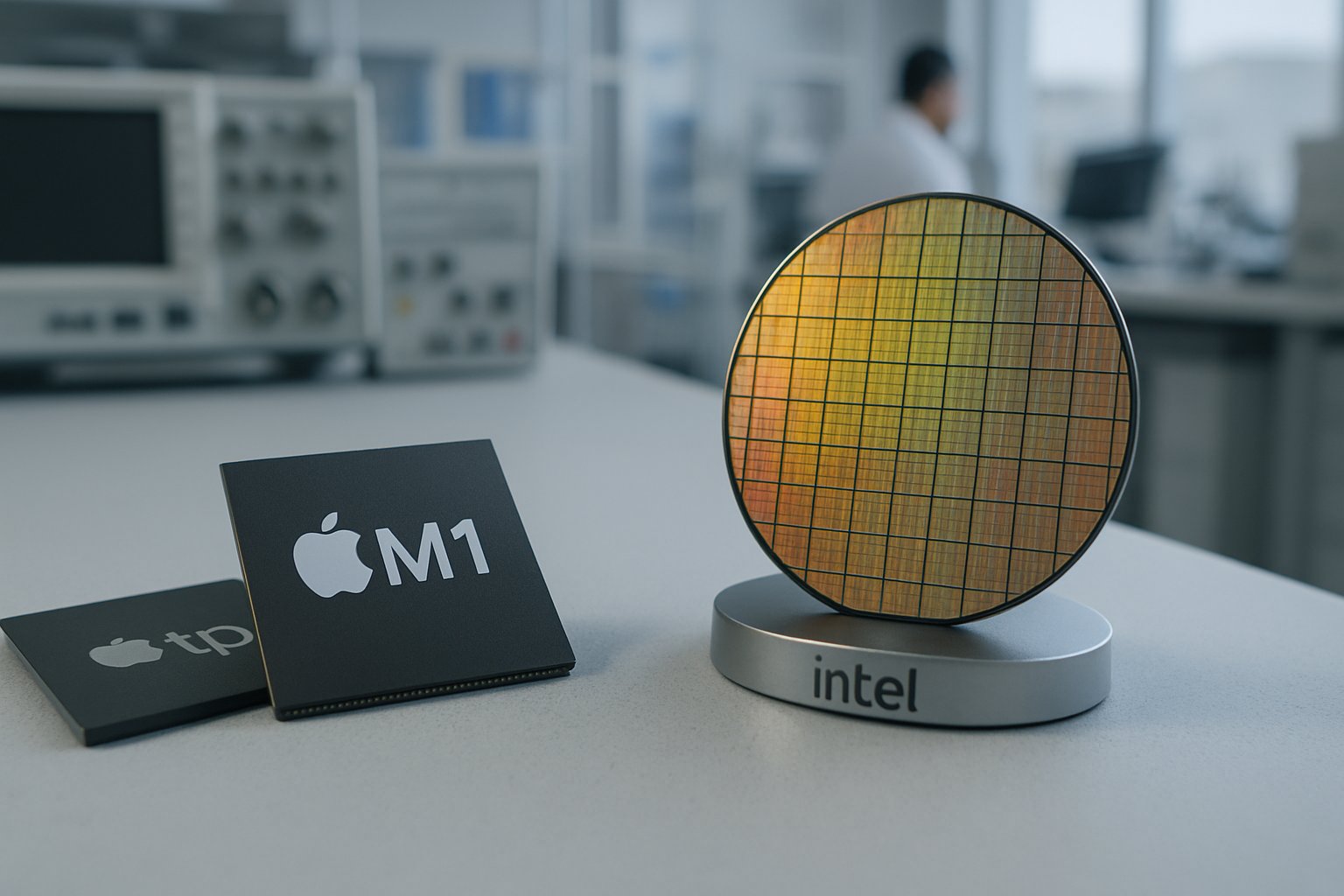
In November 2025, analyst Ming-Chi Kuo claimed Apple signed an NDA and received Intel’s early 18AP PDK. Consequently, many outlets treated that PDK hand-off as material evidence of ongoing qualification work. January 2026 brought another note from GF Securities’ Jeff Pu, who reiterated Intel Partnership potential for some iPhone chips.
Pu projected Intel’s 14A node could enter Apple’s supply chain around 2028 for non-Pro iPhones. Meanwhile, Kuo’s earlier forecast targeted mid-2027 shipments of entry M series chips fabricated on 18AP. Therefore, consensus now frames 2027-2028 as the critical proving window.
The rumored program reportedly focuses on entry-level Apple AI Chips to limit exposure. These overlapping timelines illustrate momentum yet confirm nothing formally. However, the chronology sets context for subsequent analysis.
Why Diversification Now Matters
Apple relies almost exclusively on TSMC for advanced production today. In contrast, TSMC is juggling explosive AI accelerator demand from Nvidia and others. Consequently, capacity allocation and pricing have tightened.
Moreover, geopolitical tension over Taiwan heightens long-term supply risk. U.S. policymakers increasingly urge domestic manufacturing for critical technologies. Therefore, sourcing some Apple AI Chips from U.S. fabs would answer both commercial and political pressures.
- Reduced single-source dependency for Apple AI Chips if TSMC experiences geopolitical disruption.
- Improved negotiation leverage during future wafer pricing cycles.
- Closer alignment with Inflation Reduction Act incentives for domestic production.
- New marketing narrative around sustainability and regional manufacturing.
Furthermore, Intel’s foundry push needs anchor customers. Apple’s volumes, even limited, could validate Intel Partnership economics at 18A and 14A. These benefits strengthen Apple’s bargaining hand across the ecosystem. Subsequently, understanding Intel’s technical readiness becomes vital.
Intel Foundry Roadmap Explained
Intel’s manufacturing comeback plan hinges on rapid node releases labelled 20A, 18A, and 14A. However, only 18A has reached meaningful PDK distribution so far. Company executives claim 18A risk production will begin late 2026 in Arizona and Oregon.
Understanding Intel's 18A Node
18A roughly corresponds to a two-nanometer class process in TSMC terminology. Moreover, it introduces RibbonFET transistors and backside power delivery for efficiency gains. Analysts caution yields must match TSMC N3E before Apple signs purchase orders. Consequently, Intel released PDK v0.9.1GA for early evaluation in late 2025. PDK v1.0 is promised during Q1 2026, followed closely by v1.1 with enhanced parasitics data. Therefore, Apple’s internal design teams are stress-testing libraries to validate timing closure.
PDK Milestones And Yields
Every Apple AI Chips tape-out requires a qualified, frozen PDK and proven high-volume yields. Meanwhile, Intel must demonstrate defect density comparable to TSMC before 2027. Kuo’s report states entry M chip volume could hit 15–20 million units annually. Furthermore, Intel would initially target smaller MacBook Air and iPad segments to minimize exposure. If yields lag, Apple can revert volumes back to TSMC without end-user disruption.
These milestones create a clear, measurable yardstick for both partners. Industry observers will scrutinize every yield disclosure for signs of competitiveness. Consequently, the next twelve months will determine technical viability.
Potential Volumes And Timelines
Analysts supply a tentative shipment calendar based on current roadmap disclosures. Importantly, the first Apple AI Chips leaving Intel fabs would target cost-sensitive notebooks. Entry M series on 18AP could ship during Q3 2027 if PDK v1.1 finalizes on schedule. Non-Pro iPhone SoCs on 14A might follow in 2028 or 2029.
- Q1 2026: PDK v1.0 release for 18AP evaluation.
- Q4 2026: Intel risk production and yield learning.
- Q3 2027: First commercial Apple AI Chips from Intel fabs, low-end M family.
- 2028-2029: Possible iPhone non-Pro rolls on 14A.
Volume estimates remain modest relative to Apple’s total silicon demand. Motley Fool cites 15–20 million annual chips, roughly one tenth of Mac shipments. Therefore, Intel Partnership would diversify risk without displacing TSMC dominance. These forecasts outline a phased, risk-managed roll-out strategy. Nevertheless, the numbers presuppose flawless execution in process, yield, and logistics.
Risks And Open Questions
No binding contract has surfaced, leaving every timeline subject to change. Moreover, Apple guards supply chain decisions until hardware ships. Therefore, analysts warn against treating speculation as confirmation.
Yield risk tops the list because Apple AI Chips carry strict power and performance targets. In contrast, Intel’s historical yield struggles on 10nm still color investor sentiment. Additionally, packaging integration between Intel wafers and Apple’s existing back-end partners could increase complexity.
Pricing dynamics also remain opaque. Analysts debate whether Intel can undercut TSMC enough to justify qualification overhead. Meanwhile, regulatory disclosure may become necessary if any equity investment accompanies manufacturing deals.
These uncertainties keep risk-adjusted enthusiasm tempered. Consequently, due diligence should track official statements and PDK audit results.
Broader Industry Implications Reviewed
Intel securing Apple volume would mark its largest external foundry validation to date. Consequently, Intel Partnership buzz already influences competitor negotiations such as AMD’s packaging talks. TSMC would still hold flagship programs, yet competitive pressure could soften wafer price negotiations. Moreover, geopolitical voices favoring U.S. fabrication would gain a high-profile example. Nvidia’s growing TSMC share also shows how AI workloads reorder fab priority queues.
- Intel Foundry Services gains credibility, likely attracting additional cloud ASIC customers.
- Apple increases resilience against regional instability and capacity shocks.
- TSMC diversifies revenue beyond smartphone silicon toward AI accelerators.
Professionals can enhance their expertise with the AI Security Compliance™ certification. Furthermore, understanding secure manufacturing pipelines becomes critical as supply chains grow more distributed. Collectively, these shifts signal a more multipolar manufacturing era. However, confirmation of shipping Apple AI Chips through Intel remains the missing catalyst.
Intel and Apple have not yet inked a public contract. Nevertheless, analyst breadcrumbs outline a plausible path toward limited production of Apple AI Chips inside U.S. fabs. Furthermore, diversification would ease supply pressure and satisfy political stakeholders demanding domestic manufacturing. Consequently, the next 18 months will be decisive as PDKs lock and yield data emerges. Procurement teams should monitor partnership milestones, TSMC pricing, and regulatory filings for definitive signals. Meanwhile, security architects can future-proof workflows by studying trusted manufacturing frameworks. Professionals aiming to lead such initiatives can validate skills through industry certifications. For example, the AI Security Compliance™ course covers secure design and supply auditing. Act early to capture competitive advantage as chip manufacturing realigns.


