

AI CERTs
2 hours ago
Intel Buyback Signals Semiconductor Sovereignty Push in Europe
Intel stunned industry watchers on 1 April 2026 with a $14.2 billion move. However, the transaction was not an acquisition but a reversal. Consequently, the company will repurchase Apollo’s 49 percent stake in Fab 34, Leixlip. This decision underscores the ongoing Semiconductor Sovereignty Push shaping European policy discussions. Moreover, it illustrates how chipmakers now prioritise full ownership of advanced nodes. Fab 34 already ships Intel 4 and Intel 3 wafers powering AI Demand Processors across servers and laptops. In contrast, the 2024 sale to Apollo Global Management had offered quick liquidity during an aggressive build-out phase. Now Intel signals restored confidence, stronger cash flows, and renewed Strategic Control over its European flagship plant. Industry professionals must therefore gauge financial, operational, and geopolitical ramifications. The following analysis unpacks the buyback mechanics, market logic, and future outlook in clear detail.
Buyback Deal Overview Context
The joint venture formed in June 2024 allowed Intel to sell 49 percent of Fab 34 for $11.2 billion. Meanwhile, Apollo Global Management gained a predictable cost-plus return while Intel retained operational control. The fresh agreement sets a $14.2 billion price, implying a tidy $3 billion premium for Apollo. Additionally, Intel will fund the transaction using cash and about $6.5 billion in new debt. Regulatory approvals appear limited because ownership simply reverts to Intel. Nevertheless, both parties expect closing during the second quarter.
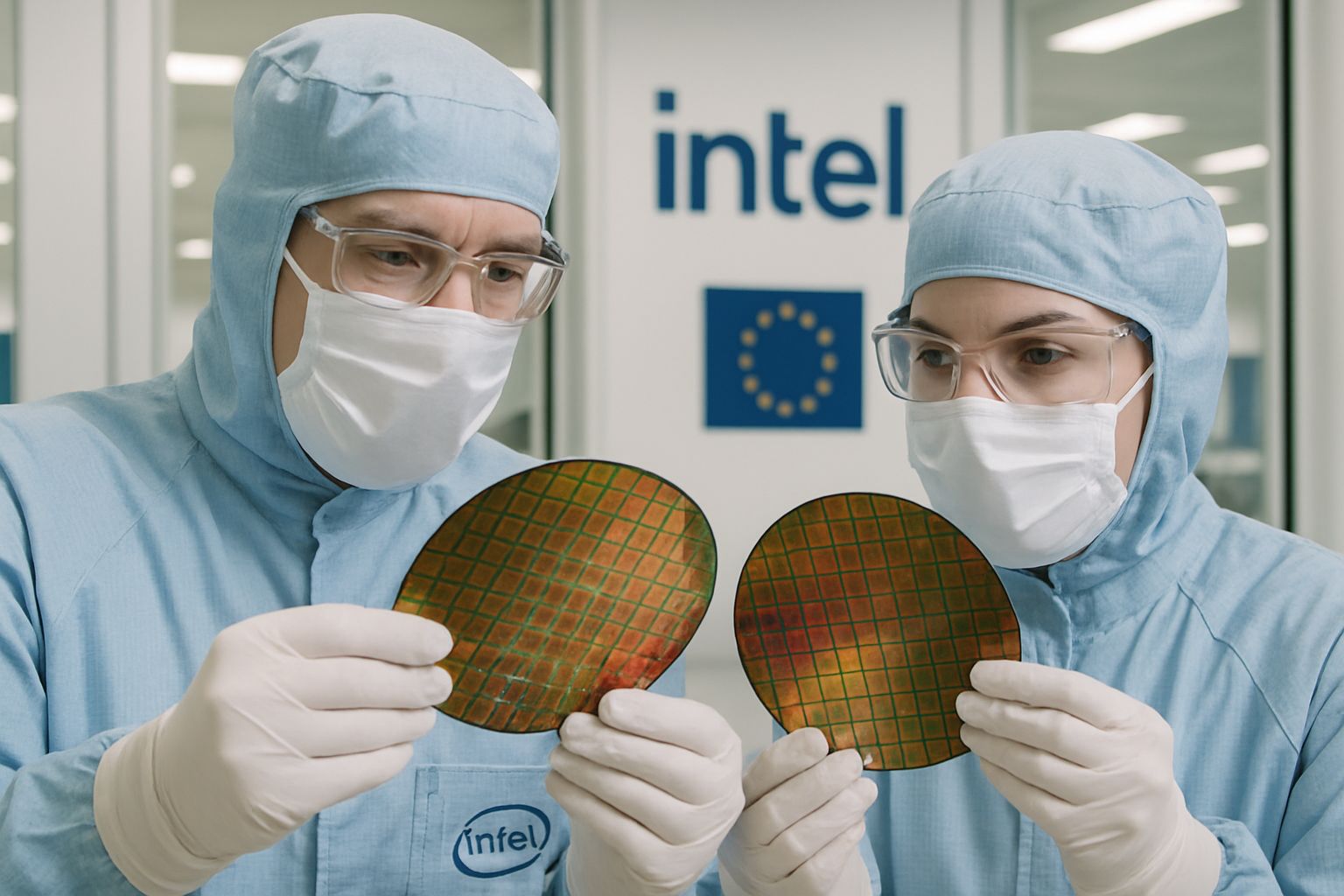
Fab 34 began high-volume production in September 2023 on the Intel 4 node. Therefore, it provides the first European extreme ultraviolet lithography capacity under Intel ownership. Products include Core Ultra for clients and Xeon lines aimed at AI Demand Processors within datacentres. Such volumes make the plant a centrepiece in the wider Semiconductor Sovereignty Push narrative promoted by Brussels and Dublin.
Intel is paying more yet regaining full ownership swiftly. Consequently, understanding financing details becomes critical.
Therefore, we next examine the funding mechanics.
Financial Mechanics Explained Clearly
Intel ended 2025 with $37.4 billion in cash and short-term investments. However, it plans to preserve flexibility by issuing $6.5 billion of new debt rather than depleting reserves entirely. Goldman Sachs acts as exclusive advisor and lead underwriter. Meanwhile, rating agencies have yet to publish formal reactions. Additionally, the financing strategy supports the Semiconductor Sovereignty Push pursued by regional policymakers. Intel insists the move will become earnings-accretive from 2027 as JV margin leakage disappears.
The headline metrics clarify the balance-sheet effect:
- Repurchase price: $14.2 billion
- Cash portion: roughly $7.7 billion
- New debt: approximately $6.5 billion
- Premium over 2024 sale: $3 billion
- Projected EPS accretion: beginning 2027
Moreover, Intel projects that full ownership boosts free cash flow because wafer profits no longer share with Apollo Global Management. In contrast, the incremental interest expense may trim margins short term. Nevertheless, management argues that stronger Strategic Control outweighs financing costs given rising AI Demand Processors market growth.
Debt adds leverage, yet reclaimed margin promises upside later. Therefore, investor focus shifts toward strategic reasoning.
The next section explores those competitive drivers.
Market And Strategic Rationale
Chip demand tied to generative AI servers remains explosive. Consequently, hyperscalers require advanced CPU and accelerator supply lines within Europe for resilience. Full ownership of Fab 34 lets Intel allocate dies quickly and capture premium pricing. Furthermore, the company can align production with its foundry customers pursuing AI Demand Processors built on Intel 3 and forthcoming 18A nodes.
The repurchase also removes contractual volume commitments that limited Intel’s flexibility. Therefore, Strategic Control over pricing, product mix, and customer prioritisation returns entirely to Santa Clara. Analysts note that Apollo Global Management’s exit illustrates how private capital can monetise risk when chipmakers rebuild balance sheets.
Additionally, market reaction mirrored confidence. Shares rose between six and ten percent on announcement day. Investors interpreted the move as a concrete manifestation of the Semiconductor Sovereignty Push, especially as European policymakers debate subsidy expansions.
Intel gains agility, while Apollo books an attractive return. Consequently, operational implications deserve deeper attention.
We now review effects on manufacturing capacity.
Implications For Manufacturing Capacity
Fab 34 currently represents the company’s leading European Manufacturing Capacity for EUV processing. Moreover, Intel plans incremental tool installations to raise output through 2027. By owning 100 percent, management can schedule capital upgrades without negotiating cost sharing. This autonomy supports rapid ramping for AI workloads and high-performance PC chips.
Local stakeholders welcome expanded hiring pipelines. IDA Ireland projects employment at the Leixlip campus could surpass 6,000 once Intel installs additional Intel 3 modules. Meanwhile, supply chain partners gain clearer volume forecasts, reinforcing the broader Semiconductor Sovereignty Push across the EU.
Professionals can enhance security governance for such advanced fabs through the AI Security Compliance™ certification. Consequently, teams will better address evolving threat models surrounding lithography equipment.
Capacity growth, workforce expansion, and ecosystem benefits look promising. Nevertheless, every upside carries accompanying risks.
The following section addresses potential downsides and critics.
Risks And Alternative Views
Critics highlight the $3 billion premium and fresh leverage. In contrast, paying that amount to Apollo Global Management enriches investors who assumed only 22 months of risk. Furthermore, higher interest rates could erode projected accretion if credit markets tighten.
Analysts also flag execution uncertainties. Yield ramping on Intel 3 must proceed flawlessly; otherwise Manufacturing Capacity sits underutilised. Additionally, competing foundries already target AI Demand Processors with aggressive node timelines. If Intel misses schedules, the benefit of renewed Strategic Control dwindles.
Moreover, opportunity costs persist. Cash devoted to the repurchase cannot finance other fabs, buybacks, or advanced packaging lines. Consequently, Intel must balance multiple investment fronts while honouring the Semiconductor Sovereignty Push commitments.
Financial strain and operational risks could offset margin gains. Nevertheless, management expresses confidence in execution.
The outlook section evaluates whether optimism is justified.
Outlook And Next Steps
Closing is expected within weeks, pending customary conditions. Subsequently, Intel will publish updated capex guidance during its second-quarter earnings call. Market watchers await debt pricing details to gauge long-term balance-sheet health.
Meanwhile, European policymakers may cite the deal as evidence supporting subsidy legislation. That political momentum reinforces the Semiconductor Sovereignty Push narrative while driving regional demand for secure AI Demand Processors supply chains.
Furthermore, Intel intends to transition Fab 34 toward 18A pilot runs in 2028, expanding Manufacturing Capacity for foundry customers. Customers seeking bespoke chips gain confidence knowing Strategic Control remains entirely with the manufacturer.
Timely execution and favourable financing will determine success. Consequently, professionals should monitor quarterly disclosures closely.
We conclude with actionable insights.
Conclusion And CTA
Intel’s Fab 34 repurchase represents a calculated advance in the ongoing Semiconductor Sovereignty Push. The deal restores Strategic Control, promises higher margins, and strengthens European Manufacturing Capacity for AI Demand Processors. However, the premium paid to Apollo Global Management and added leverage introduce measurable risks. Nevertheless, projected EPS accretion and political alignment suggest a favourable long-term trajectory. Industry leaders should track yield metrics, debt covenants, and node transition milestones to validate management projections. Moreover, security professionals supporting advanced fabs must keep compliance frameworks current. Therefore, consider earning the AI Security Compliance™ credential to bolster operational resilience.


