

AI CERTS
2 hours ago
Inside the TechForce robotics exhibit: RaaS debut at CES 2026
Industry watchers view the moment as pivotal for Robotics-as-a-Service, or RaaS. However, investors also demand evidence matching the company’s ambitious revenue statements. Therefore, this article unpacks the product lineup, market context, financial realities, and potential pitfalls. Additionally, it outlines how professionals can prepare their teams for rapid automation adoption. Throughout, the TechForce robotics exhibit functions as a case study for assessing promise versus proof. Consequently, readers will gain a concise yet balanced briefing before the show floor opens. Nevertheless, objective verification remains essential amid marketing excitement.
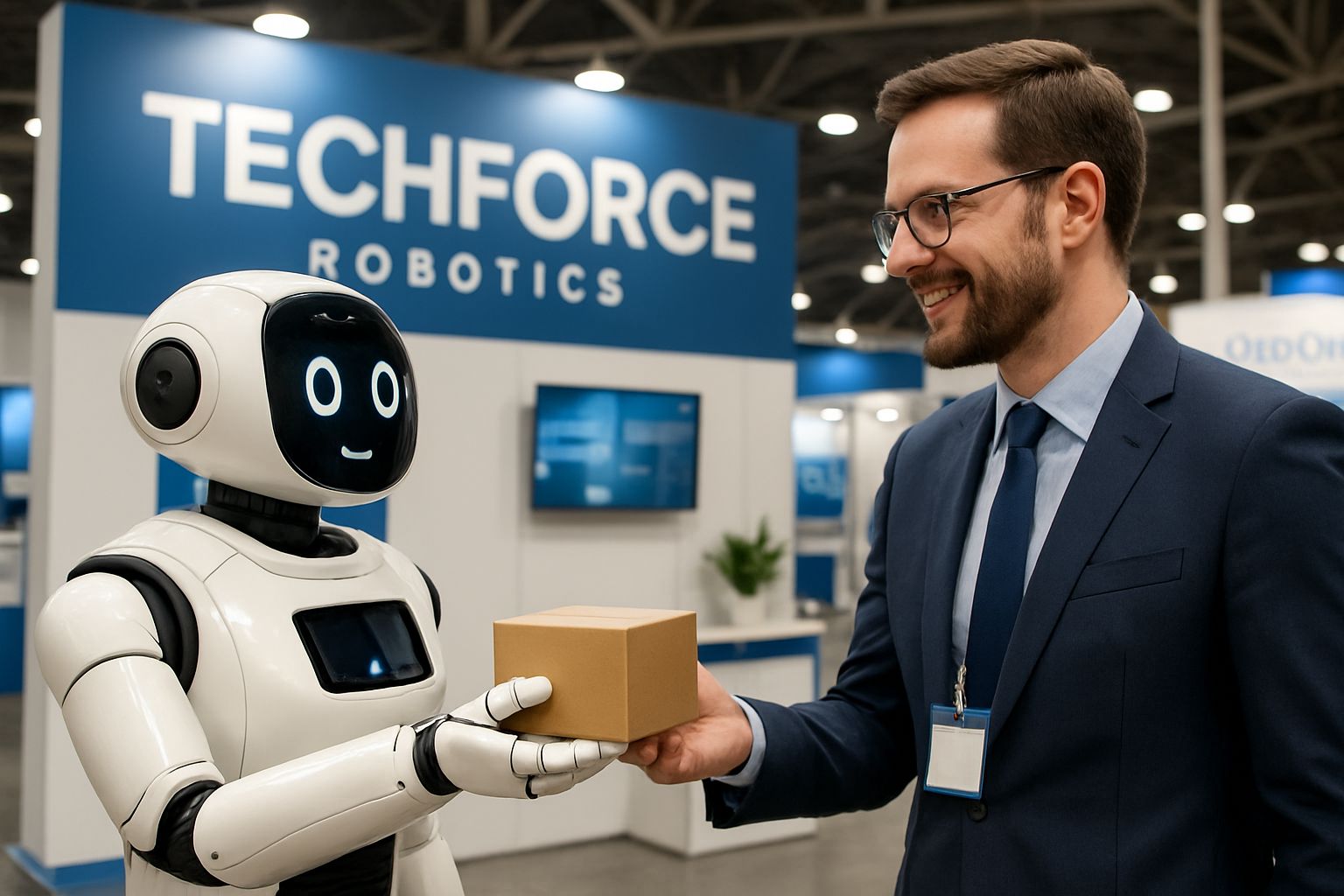
RaaS Momentum Builds Fast
However, TechForce promotes a flexible subscription structure rather than outright hardware sales. The approach follows broader RaaS adoption across hospitality venues dealing with persistent labor shortages. Moreover, monthly fees bundle maintenance, updates, and cloud analytics. Consequently, operators avoid heavy upfront capital commitments.
TechForce executives claim pilots delivered measurable efficiencies. Ried Floco highlighted throughput improvements during a recent shareholder call. Additionally, the company argues its hotel ownership allows frictionless in-house testing before commercial rollout. Nevertheless, independent case studies remain scarce.
Early momentum around the TechForce robotics exhibit suggests viable demand. However, concrete product details will matter most on the exhibition floor. Those specifics shape the next discussion.
Key Products On Display
Visitors approaching the TechForce robotics exhibit will first meet the Beverage Bot. The autonomous dispenser mixes draft cocktails and soft drinks while tracking real-time sales analytics. Furthermore, kitchen robots handle frying, flipping, and plating tasks behind transparent safety glass. An adjacent cart manages laundry collection through machine-vision sorting.
All units run on a shared AI orchestration layer secured through NVIDIA Connect tooling. Consequently, software updates propagate across the fleet without manual intervention. Moreover, management dashboards provide uptime metrics and predictive maintenance alerts.
- Drink throughput: up to 120 servings hourly
- Kitchen cycle time: 30% faster than human baseline
- Laundry capacity: 25 bags per hour
Press photos of the TechForce robotics exhibit released in December preview sleek white chassis designs. These product claims sound impressive. Nevertheless, enterprise buyers will evaluate proven reliability before signing contracts. Competitive forces intensify that scrutiny.
Market Context And Competition
In contrast, several mature vendors already operate in hospitality robotics. Bear Robotics, Pudu, and SoftBank Robotics lead dining-room automation with thousands of deployed units. Furthermore, Miso Robotics focuses on kitchen frying stations. Therefore, TechForce must differentiate through RaaS pricing flexibility and integrated multi-zone coverage.
Industry studies forecast strong growth for service robots, yet numbers vary widely. Grand View Research cites a potential $170 billion service robotics market by 2030. However, segmentation differences complicate direct comparisons. Consequently, analysts recommend focusing on unit economics instead of headline totals.
TechForce positions its order pipeline within high-volume venues such as stadiums, casinos, and large commercial kitchens. Additionally, its own hotels provide captive proof points absent in many competitor stories. Analysts visiting the TechForce robotics exhibit expect detailed cost disclosures.
Competitive dynamics appear fluid. Therefore, rigorous financial transparency becomes crucial. The next section details the numbers.
Financial Claims Under Scrutiny
During a TechForce robotics exhibit preview, Nightfood announced approximately $10 million in annualized revenue during October 2025. However, third-party data aggregator StockAnalysis lists trailing twelve-month revenue near $1.26 million. Consequently, journalists have flagged a material gap requiring clarification.
Jimmy Chan attributes the higher figure to hotel, acquisition, and pilot projections rolled into one run-rate estimate. Nevertheless, audited SEC filings remain unavailable, complicating verification efforts. Moreover, the company trades on OTCQB, an arena associated with heightened investor risk.
- Request signed purchase orders from pilot customers
- Confirm revenue recognition policies across hotel and robotics units
- Review manufacturing capacity and cash reserves
Financial clarity will influence buyer confidence. Subsequently, operational hurdles add another evaluation layer. Those challenges surface next.
Deployment Challenges And Risks
Implementing robots in busy hospitality corridors introduces navigation, safety, and cybersecurity concerns. Therefore, TechForce plans redundant sensors and remote override features to satisfy regulators. Additionally, sustained uptime requires regional service technicians and spares inventory.
Hardware scaling can strain supplier commitments when demand surges. In contrast, software bugs propagate rapidly across fleets if version control falters. Consequently, buyers will demand strict service-level agreements within any commercial contract.
Mitigation plans must be transparent. Meanwhile, workforce upskilling supports safe daily operations. Such assurances must appear during the TechForce robotics exhibit demonstrations.
Certification Pathways For Teams
Engineering and operations staff will need foundational AI literacy. Furthermore, prompt engineering skills accelerate troubleshooting and integration. Professionals can enhance their expertise with the AI Prompt Engineer™ certification. Training allows staff to operate units shown at the TechForce robotics exhibit safely.
Moreover, vendor-agnostic courses on robotics safety and RaaS finance strengthen procurement decisions. Consequently, enterprises build internal champions able to validate TechForce deployments objectively.
Structured learning mitigates adoption risk. Therefore, trained teams can extract full automation value. Attention now turns to broader outlook.
Conclusion And Outlook Ahead
The TechForce robotics exhibit encapsulates both promise and uncertainty. RaaS momentum, integrated products, and early pilots showcase notable progress. However, financial transparency and large-scale reliability remain open questions.
Nevertheless, hospitality operators facing labor shortages will likely explore these automated options. Consequently, vendors able to balance innovation with audited performance could capture substantial commercial share. Further due diligence at CES 2026 will reveal whether TechForce delivers on its bold timeline.
Meanwhile, readers seeking competitive advantage should evaluate certifications and prepare teams for rapid automation shifts. Explore the linked program and stay tuned for our on-site coverage.


