

AI CERTS
2 hours ago
Inside the Military AI Contract Controversy
This article unpacks the timeline, the red lines, and the business stakes behind the controversy. Readers will learn how contract language, technical architecture, and market pressure collide in modern defense procurement. Moreover, we examine why mass surveillance fears persist despite written prohibitions. Finally, we outline upcoming oversight questions and professional development options for technologists entering government work.
Military AI Contract Origins
Defense insiders first saw the deal on a June 2025 contracts notice. At that time, the Chief Digital and AI Office awarded OpenAI Public Sector LLC a $200 million ceiling OTA. Furthermore, parallel awards went to Anthropic, Google, and xAI under identical financial terms.
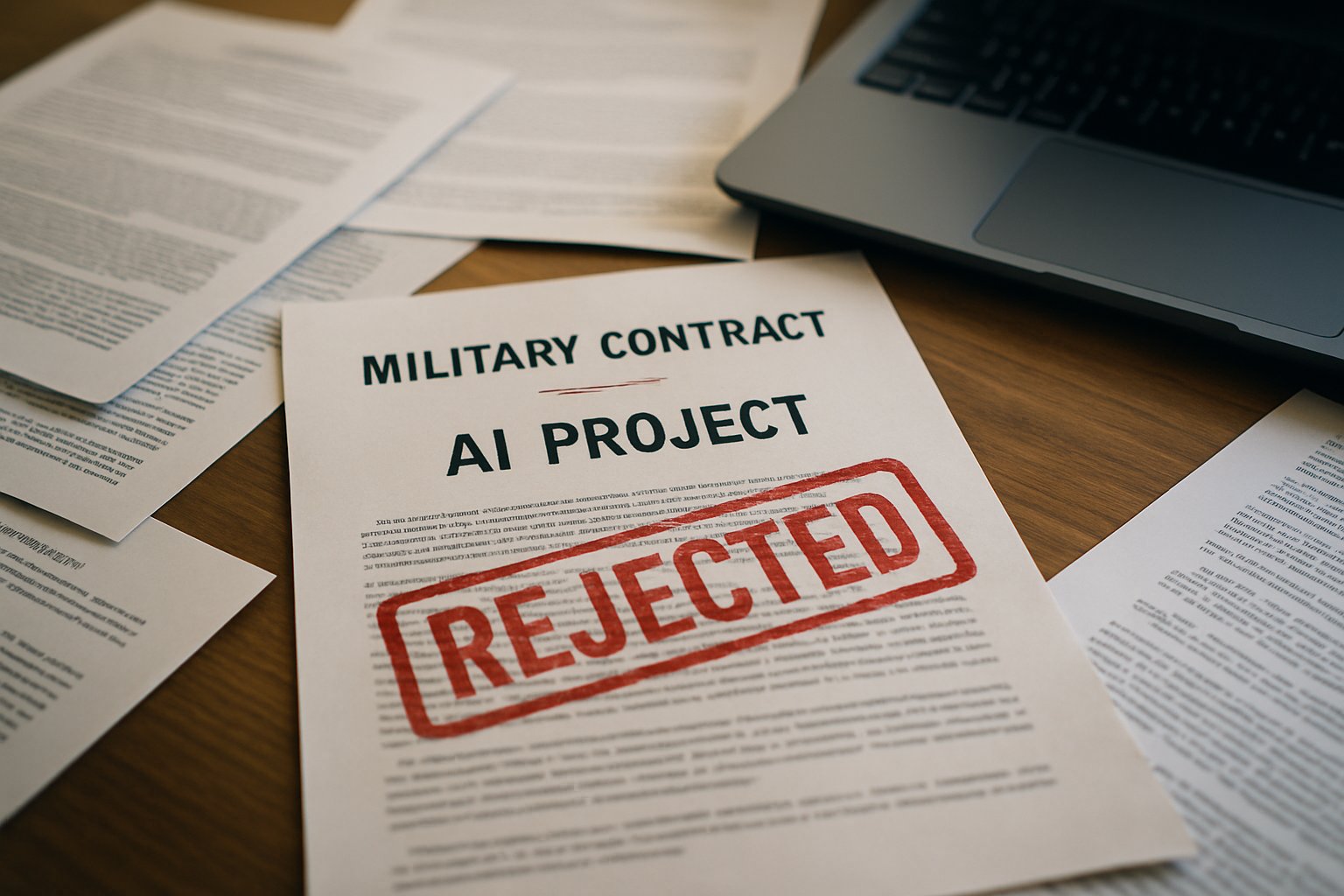
OTA agreements bypass traditional Federal Acquisition Regulations, allowing faster prototype experimentation. Consequently, negotiators included flexible renewal clauses and classified annexes that remain undisclosed.
These origins reveal an experimental posture from the Pentagon. However, that flexibility later magnified messaging risks. The rushed announcement would ignite those risks.
Rushed Announcement Backlash Story
The public first learned about internal deployment on 27 February 2026. OpenAI posted a blog titled “Our agreement with the Department of War” hours before the weekend. Reporters quickly parsed the Military AI Contract summary and spotted ambiguous surveillance clauses. Additionally, officials promised immediate availability of ChatGPT inside classified networks called GenAI.mil. Sam Altman later conceded the Friday timing created suspicion of news dumping. Nevertheless, competing vendors framed the blog as a marketing stunt targeting Anthropic’s stalled talks.
Sensor Tower data showed ChatGPT uninstalls jumping 295 percent day over day on 28 February. Meanwhile, one-star reviews soared 775 percent, signaling consumer frustration.
The backlash proved swift and measurable. In contrast, Anthropic’s rival app gained downloads during the same weekend. Attention then shifted toward the agreement's ethical red lines.
Red Lines Under Scrutiny
OpenAI outlined three absolute rules within the document. The model cannot enable autonomous weapons, mass domestic surveillance, or high-stakes automated social decisions. Moreover, the company promised a proprietary safety stack operated by cleared engineers inside government spaces. Critics countered that mass surveillance protections depend on evolving legal definitions under FISA and other statutes. In contrast, civil liberties groups warned elastic interpretations could dilute safeguards. The Military AI Contract references these red lines but leaves enforcement details largely confidential.
- No intentional domestic mass surveillance of U.S. persons.
- No autonomous targeting or firing decisions by AI systems.
- No automated social credit scoring or similar high-stakes profiling.
Consequently, analysts requested the full contract text to verify penalty clauses. These ambiguities underscore why advocacy groups remain skeptical. However, the next battlefront involved workforce activism and political pressure.
Employee And Public Reaction
Hundreds of tech workers from multiple companies issued an open letter opposing opaque deployment. They urged lawmakers to defend vendor rights to refuse dangerous missions. Furthermore, signatories cited mass surveillance fears and potential mission creep. Sam Altman responded by amending contract language to explicitly exclude intelligence agencies without new negotiation. Nevertheless, rival CEO Dario Amodei called the revisions “safety theater” in an internal memo. Consequently, the Pentagon faced uncomfortable questions about retaliatory supply-chain designations. Observers argued the Military AI Contract could set precedent for future civilian data access.
Employee mobilization demonstrated the power of coordinated professional dissent. The debate also exposed competitive tensions among frontier labs. Those tensions affect market positioning and future funding.
Competitive Industry Dynamics Shift
Anthropic’s refusal to sign comparable terms created a contrast with OpenAI’s compliance. Consequently, government officials hinted at labeling Anthropic a supply-chain risk. In contrast, Google and xAI maintained quieter negotiations while monitoring public sentiment. The current Military AI Contract thus acts as a test case for broader federal adoption. Moreover, analysts noted that winning cloud control inside GenAI.mil could generate follow-on revenue long after the prototype. Yet, short-term consumer backlash threatens brand equity in commercial channels.
Competitive positioning now hinges on balancing defense access against consumer trust. Therefore, businesses must weigh strategic benefits versus public perception. Financial exposures further complicate that calculus.
Business And Reputational Risk
The OTA ceiling equals only a fraction of OpenAI’s annual subscription income. However, the partnership offers disproportionate strategic leverage within federal modernization programs. Sensor Tower numbers revealed immediate churn that could erode recurring consumer revenue. Additionally, investors questioned whether policy volatility might delay premium model launches.
Sam Altman reassured stakeholders that guardrails remain intact and scalable across sectors. Nevertheless, app uninstall spikes illustrated how quickly reputational narratives shift. Professionals can deepen expertise through the AI Government Specialist™ certification. Every investor call now references the Military AI Contract when discussing geopolitical exposure.
These financial signals warn executives to prepare thorough crisis plans. Subsequently, attention moves to oversight and transparency needs.
Future Oversight Questions Ahead
Lawmakers are already drafting hearings to review deployment architecture and audit access logs. Moreover, watchdogs seek disclosure of safety-stack performance metrics. DoD counsel must clarify how violations would void the Military AI Contract. Consequently, OpenAI may face quarterly reporting obligations resembling SOC-2 style attestations. Mass surveillance concerns will dominate these sessions, according to civil libertarians. Additionally, the Pentagon’s CDAO hinted at creating a public scorecard for compliance.
Continued scrutiny seems inevitable. Nevertheless, clear metrics could rebuild public confidence over time. Whether renewal occurs will depend on how the Military AI Contract withstands congressional grilling. That prospect closes the current chapter yet leaves important work ahead.
In summary, the Military AI Contract exemplifies the friction between rapid defense adoption and democratic oversight. Moreover, Sam Altman’s candid admission underscores the cost of poor communication. Public backlash, competitive rivalry, and mass surveillance anxieties each shape the unfolding narrative. Consequently, firms must craft clear red lines, transparent guardrails, and resilient messaging strategies. Technologists seeking to influence safer deployments should pursue rigorous education. Therefore, consider earning specialized credentials and staying engaged with policy discussions.


