

AI CERTS
3 hours ago
Inside OpenAI’s ChatGPT Ad Testing and Emerging Revenue Strategy
Therefore, analysts view the experiment as critical to sustaining ChatGPT’s rapid global growth. Moreover, regulators and competitors have already expressed concerns about trust, privacy, and market impact. This article examines the mechanics, motivations, and implications of ChatGPT Ad Testing for stakeholders.
Readers will gain context, quantitative estimates, and actionable insights for upcoming strategic decisions. Additionally, we highlight professional upskilling paths, including a marketing-focused AI certification, to navigate evolving conversational commerce. Consequently, organizations can align product roadmaps with emergent conversational advertising standards.
OpenAI Strategy Shift Explained
OpenAI’s announcement framed ads as an inclusion strategy rather than a mere cash grab. However, the company also stressed ballooning compute costs tied to model upgrades. Consequently, extra revenue streams became a board-level priority during late 2025 planning sessions. Executives chose ChatGPT Ad Testing because usage volume on the Free tier dwarfs paid adoption. Sam Altman noted 800 million weekly users, yet only several million convert to Plus subscriptions. In contrast, banner-style ads could monetize the remaining audience without disrupting conversational flow.
Furthermore, the team promised that ads would appear only below organic answers, clearly separated. Fidji Simo wrote that keeping assistant output untouched preserves product credibility. Nevertheless, critics question whether visual separation suffices once chat experiences feel seamless. These strategic choices underline OpenAI’s balancing act between accessibility and revenue optimization. OpenAI positions ads as access enablers while cushioning infrastructure expenses. However, execution quality will determine whether that narrative convinces skeptical users. Testing mechanics offer the next clues.
Testing Scope Details Unpacked
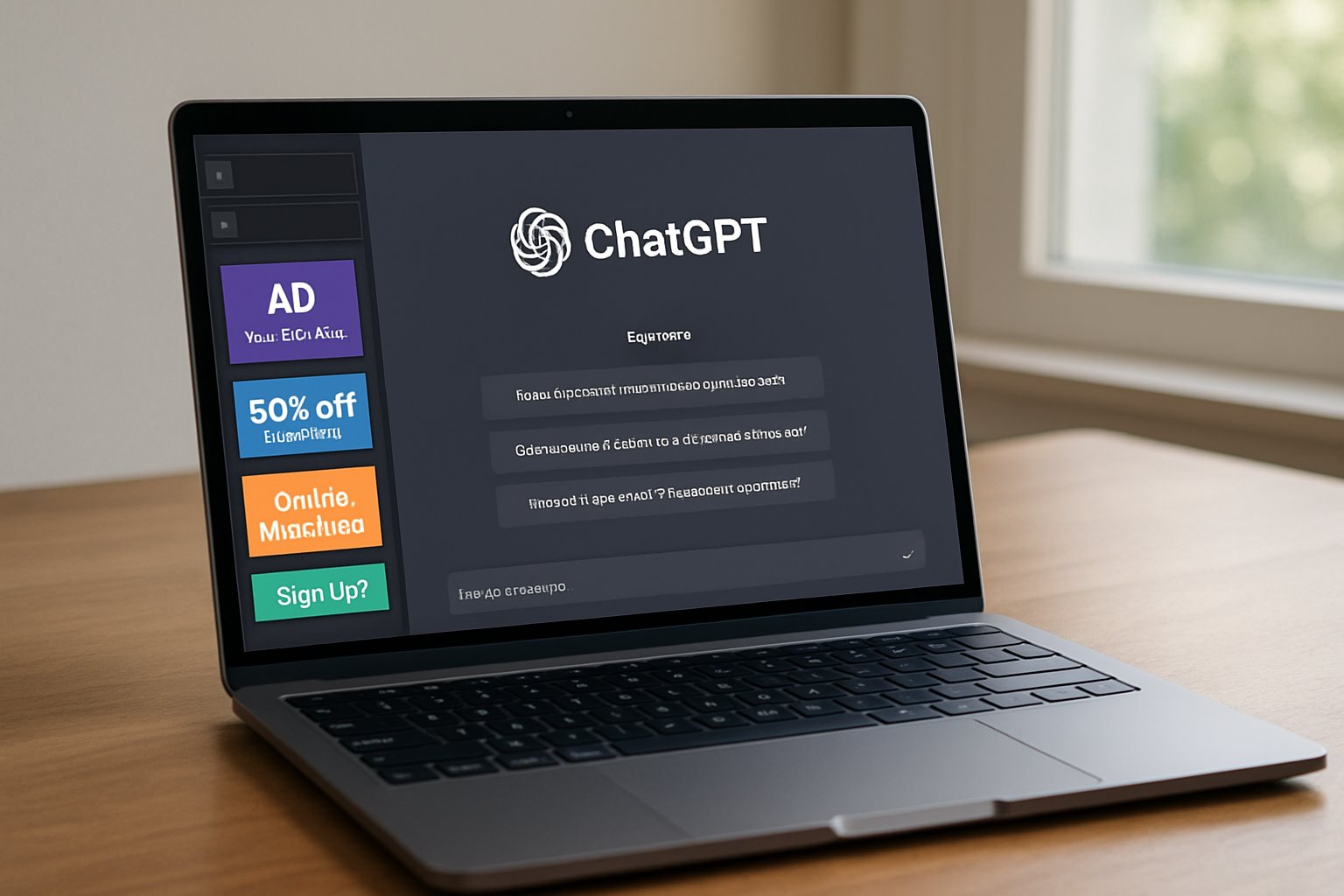
The limited rollout targets logged-in U.S. adults on Free and new Go tiers. Meanwhile, Plus, Pro, Business, Enterprise, and Edu customers remain ad-free. Additionally, OpenAI pledges no ads for users under 18, relying on age signals and prediction models. Ads will occupy a discrete panel beneath each ChatGPT answer, labeled “Sponsored” for transparency. Users can dismiss individual ads and access a “Why this ad?” explainer panel.
Moreover, personalization toggles allow clearing past interaction signals used for targeting. OpenAI also excludes sensitive categories such as politics, health, and legal advice from placements. Nevertheless, enforcement accuracy may shape public perception during ChatGPT Ad Testing. These mechanics outline strict guardrails. Consequently, early feedback will reveal whether controls meet regulatory expectations. Economic incentives drive those safeguards, explored next.
Monetization Drivers Analyzed Key
Running large language models incurs eye-watering GPU and data-center bills. Therefore, OpenAI seeks diversified revenue to fund compute roadmaps approaching trillion-dollar scale. Business Insider projects an ad business nearing $25 billion by 2030, assuming strong advertiser demand. Analysts list three primary drivers:
- High intent moments in chat during ChatGPT Ad Testing increase click-through probability, improving monetization efficiency.
- Massive Free user base offers reach larger than most media networks.
- Low subscriber ratio limits alternative revenue without ads.
Furthermore, OpenAI recently hired seasoned ad-tech executives, signaling commitment to building targeting, measurement, and billing pipelines. Professionals can strengthen skills through the AI Marketing Strategist™ certification. The program covers conversational monetization tactics and measurement best practices. These revenue levers demonstrate why ChatGPT Ad Testing attracted investor attention. However, trust concerns could undermine projected gains. Privacy risks appear next.
Trust Privacy Concerns Highlighted
Senator Ed Markey demanded detailed safeguards against blurred advertising inside conversational interfaces. Additionally, child protection groups warn that age inference algorithms can misclassify minor accounts. Demis Hassabis argued that ads within assistants may erode user trust compared with search placements. Meanwhile, OpenAI insists conversations remain private and never reach advertisers.
However, effective monetization typically relies on granular signals, creating tension between privacy and ad performance. Privacy advocates will scrutinize log retention, aggregation levels, and third-party integrations. Subsequently, any breach could spark regulatory penalties and user churn. Therefore, transparent auditing may prove as important as technical safeguards during ChatGPT Ad Testing. These concerns highlight trust as a fragile asset. Consequently, competitive reactions merit examination.
Competitive Landscape Responses Emerging
Google’s DeepMind team emphasized trust retention while continuing Gemini assistant development without ads. In contrast, Anthropic focuses on enterprise safety features before exploring revenue strategies. Microsoft, OpenAI’s cloud partner, could integrate ad inventory across products, boosting Revenue synergies.
Moreover, smaller startups position ad-free assistants as differentiation for privacy-sensitive audiences. Advertisers will compare bid prices, targeting accuracy, and conversion reporting across ecosystems. Consequently, early performance metrics from ChatGPT Ad Testing will influence budget allocation decisions. These industry maneuvers intensify the policy spotlight. Next, we analyze regulatory momentum.
Regulatory Scrutiny Intensifies Now
Markey’s letter sets a February 12 deadline for OpenAI to disclose detailed ad safeguards. Furthermore, the Federal Trade Commission monitors conversational advertising for deceptive design patterns. European regulators may apply Digital Services Act obligations if ChatGPT Ad Testing expands abroad. Additionally, OpenAI must prove exclusion of sensitive topics meets sector-specific guidelines, including health advertising codes.
Subsequently, audit trails and third-party assessments could become licensing requirements. Nevertheless, clear labeling standards could mollify some concerns. These regulatory pressures shape the final product roadmap. Consequently, strategic leaders should monitor live test telemetry closely. We now summarize key insights and next steps.
Conclusion And Outlook Ahead
ChatGPT Ad Testing represents OpenAI’s bold attempt to balance access, Monetization, and trust. Free users gain continued service, while advertisers secure novel reach within conversational contexts. However, product credibility depends on uncompromised answers, transparent labeling, and strict privacy governance. Regulators, competitors, and analysts will scrutinize every metric, from click-through rates to Revenue attribution.
Consequently, operational discipline and rapid iteration remain vital. Professionals should build conversational advertising expertise before budgets shift toward assistants. Additionally, earning the AI Marketing Strategist™ credential can accelerate market readiness. Act now to position your organization and career for the conversational commerce era.


