

AI CERTS
3 months ago
Infrastructure Scale: 500MW Data Centers Reshape Power
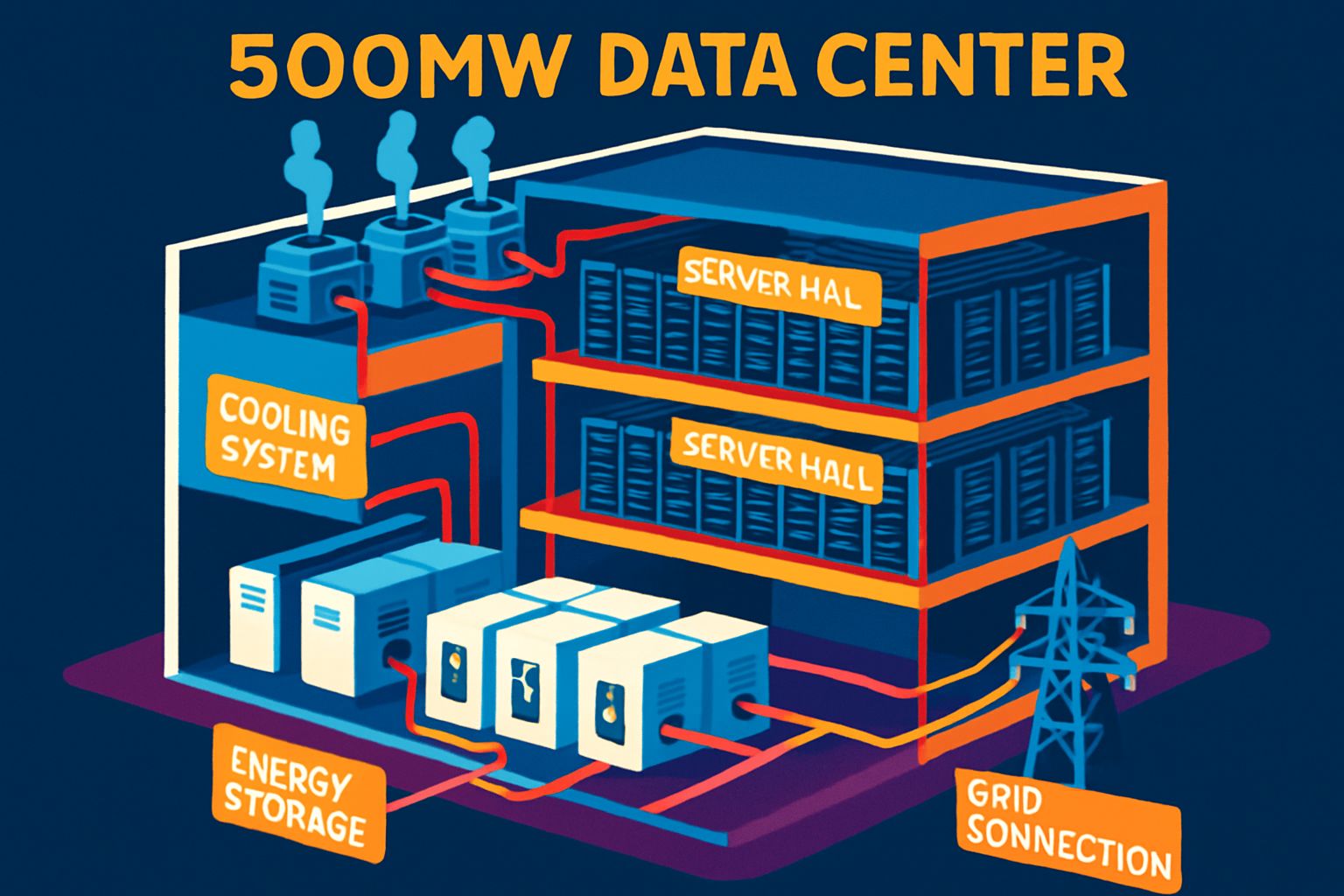
Moreover, stakeholders view gigawatt ambitions as the fastest route to meet hyper-scale demand.
McKinsey forecasts global facility power needs hitting 220GW by 2030, up from 25GW last year.
Therefore, many projects start at hundreds of Megawatts and scale quickly.
However, big power blocks raise grid, water, and community questions.
This article examines drivers, barriers, and innovations shaping the next decade of Infrastructure Scale builds.
Meanwhile, policymakers scramble to keep permitting frameworks aligned with the rising stakes.
Consequently, timing, financing, and sustainability now dominate board-room discussions worldwide.
In contrast, prior generations rarely surpassed 100 Megawatts per campus.
Furthermore, emerging AI clusters require dense network fabrics that favor consolidated footprints.
Consequently, Infrastructure Scale has become a strategic differentiator for both operators and investors.
Global Gigawatt Campus Surge
Developers across America, Europe, and Asia race to deploy 500MW to 1GW Data Center campuses.
Additionally, STACK Infrastructure publicized the Stafford site, citing multiple 300MW feeds and future Infrastructure Scale expansion.
Similarly, T5 committed to a 1.2GW Grayslake campus composed of twenty buildings, each near 60 Megawatts.
ECL, Energy Abundance, and KKR-backed ventures echo comparable ambitions, pushing planned Capacity into once unthinkable territory.
- STACK Stafford: 1+GW target, 500 acres, Northern Virginia.
- T5 Grayslake: 1.2GW plan, Chicago metropolitan area.
- ECL TerraSite-TX1: 1GW goal, hydrogen backed microgrid.
- Energy Abundance Data City: 5GW phased vision, Texas Gulf Coast.
- Equinix JV program: 1.5GW pipeline across multiple states.
Collectively, these announcements validate Infrastructure Scale economics and signal a gigawatt era has arrived.
However, unprecedented loads strain utilities and demand creative grid strategies, which we explore next.
Mounting Power Grid Pressures
Massive electrical appetites now converge faster than transmission expansions can keep pace.
Consequently, interconnection queues swell, and utilities warn of regional Saturation risks.
Dominion Energy, ERCOT, and PJM each logged multigigawatt Data Center requests in recent filings.
Moreover, single campuses drawing several hundred Megawatts rival new industrial zones, stressing transformers and generation reserves.
Developers therefore finance dedicated substations or behind-the-meter gas turbines to secure dependable Capacity.
In contrast, some projects pair solar, storage, and hydrogen microgrids to minimize grid impact.
Meanwhile, regulators debate cost allocation for new substations and high-voltage lines.
Some utilities propose special tariffs to match hyperscale load profiles.
Grid limitations reveal Infrastructure Scale complexities well beyond building shells.
Consequently, engineers refine designs to squeeze efficiency from every square foot and watt.
Rapid Design Innovations Rise
Architects answer power and space challenges with fresh Construction methodologies.
Additionally, standardized modular skids reduce onsite labor and accelerate schedules.
McKinsey estimates that mature prefabrication can shave 15 percent from Infrastructure Scale campus budgets.
Moreover, robotics assist in cable pulling and equipment placement, reducing onsite injuries.
Prefabricated corridors also speed inspections, because authorities review modules at the factory.
Liquid Cooling Tech Advances
High-density AI chips push racks above 80 kilowatts, making liquid cooling essential.
Consequently, facility footprints shrink, freeing valuable acreage for future expansions.
Moreover, immersive systems can lower PUE to near 1.1, boosting usable Megawatts without enlarging buildings.
Behind The Meter Strategies
Developers integrate onsite turbines, fuel cells, and batteries to bypass congested interconnection queues.
Consequently, Infrastructure Scale projects lessen exposure to uncertain transmission schedules.
In contrast, hybrid microgrids blend gas turbines with solar arrays to balance emissions and resilience.
Professionals can enhance their expertise with the AI Marketing Professional™ certification, aligning skills with these emerging models.
Design evolution demonstrates how thoughtful Construction offsets grid limits while maintaining aggressive Capacity goals.
Nevertheless, community sentiment remains a decisive factor for project timelines.
Intense Community Pushback Grows
Residents often worry about noise, diesel emissions, and water withdrawal.
Moreover, land conversion for sprawling enclosures can clash with local development priorities.
In Virginia, citizens challenged new transmission lines intended to serve Infrastructure Scale corridors.
Similarly, Arizona regulators tightened water reporting standards after repeated complaints about Data Center cooling loops.
Developers respond with dry cooling, buffer landscaping, and community benefit funds to ease Saturation fears.
Meanwhile, county boards request detailed environmental impact statements before granting zoning variances.
Transparency initiatives, such as interactive dashboards, let neighbors track hourly water consumption.
Managing perception now ranks beside financing as a key Infrastructure Scale task.
Ultimately, investment appetite hinges on risk adjusted returns, which we examine next.
Investment Outlook Through 2030
Private equity, sovereign funds, and pension managers allocate record sums to digital infrastructure.
Furthermore, McKinsey projects $1.7 trillion in Construction spending on core facilities by decade end.
Equinix and DigitalBridge structures illustrate how joint ventures share risk while securing bulk Capacity commitments.
Meanwhile, lenders scrutinize power purchase agreements to gauge revenue certainty.
Consequently, Infrastructure Scale remains a magnet for capital despite regulatory uncertainties.
Robust funding pipelines suggest gigawatt builds will persist, albeit with sharper due diligence.
Next, we distill the strategic lessons for leaders planning their own mega-campuses.
Mega-campus momentum shows no sign of slowing.
Furthermore, power innovation, modular Construction, and community dialogue will determine winners.
Challenges around grid Saturation and water use remain, yet capital flows stay robust.
Consequently, leaders should benchmark designs, secure energy early, and cultivate local partnerships.
Professionals eager to guide these programs can strengthen credentials through the linked certification above.
Act now to seize your role in shaping the next era of mega-watt computing.


