

AI CERTS
2 months ago
Infrastructure Project Management Drives Siemens AI Buildings
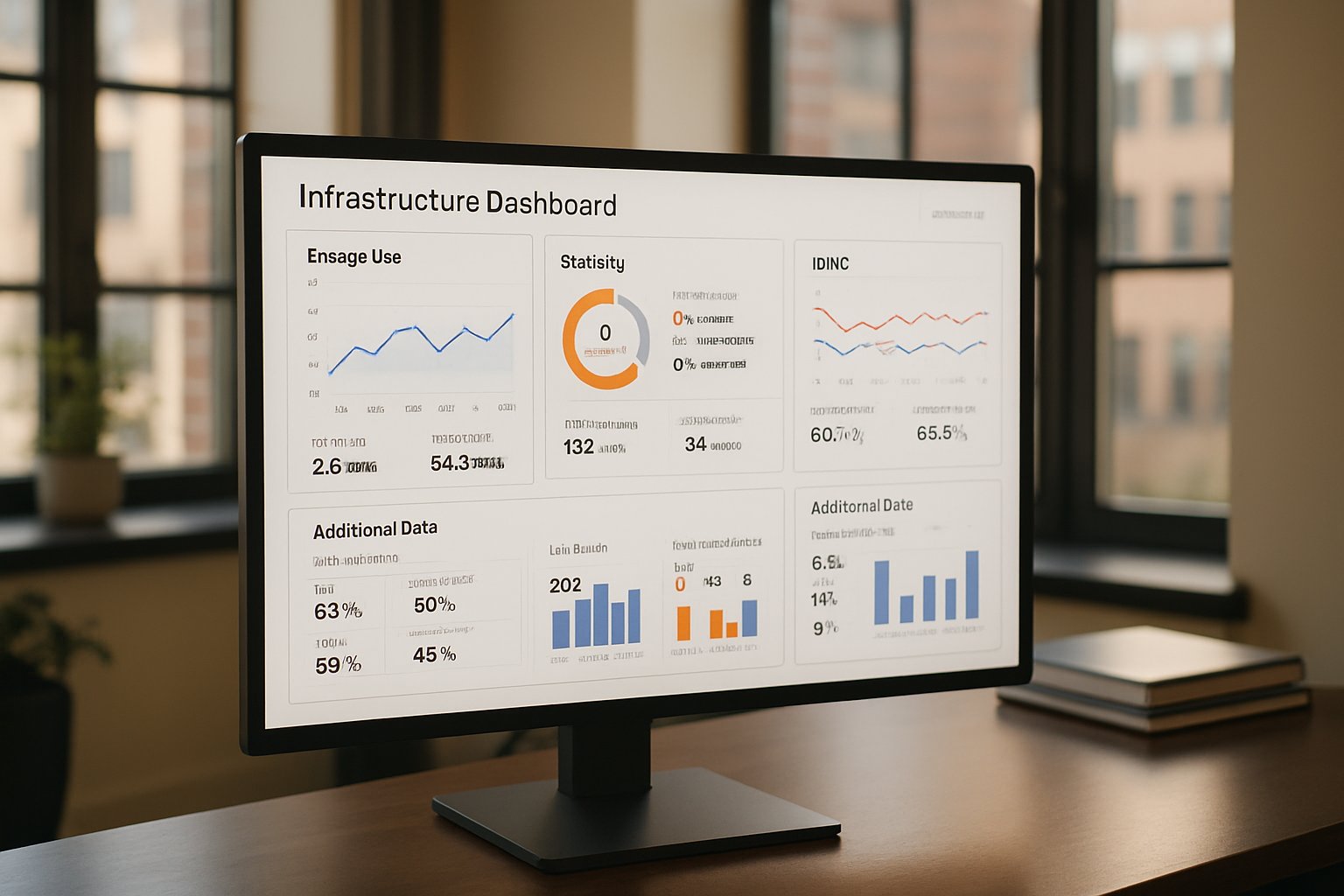
Siemens now positions Building X and Desigo as one AI enabled answer to that fragmentation.
The strategy aligns closely with Infrastructure Project Management goals for efficiency, risk control and stakeholder reporting.
Additionally, analysts expect the smart buildings market to exceed 140 billion dollars this year.
Therefore, leaders cannot ignore integrated platforms that promise quick energy, comfort and safety wins.
Market Pressures Shape Demand
IEA data shows Buildings and construction create about 36 percent of global energy emissions.
In contrast, executives surveyed in Siemens' Infrastructure Transition Monitor 2025 plan higher efficiency spending.
Specifically, 57 percent expect increased energy efficiency investments, while 55 percent target smart building technologies.
Moreover, 54 percent prioritize electrification programs that depend on granular operational data.
These pressures converge within Infrastructure Project Management, where budgets, timelines and carbon targets intersect.
Consequently, portfolio managers need unified telemetry to compare sites and justify capital requests.
Without that context, project risks escalate and payback assumptions crumble.
Market forces therefore demand systems capable of delivering credible, cross-discipline insights.
Such insights set the stage for the platform review that follows.
Siemens Unified AI Stack
Building X sits at the heart of the Siemens Xcelerator ecosystem.
The cloud SaaS suite links Desigo CC V9 controllers with edge gateways and partner sensors.
Furthermore, a hybrid model lets clients retain on-prem controls while sending encrypted feeds to the cloud.
Therefore, Infrastructure Project Management teams gain one data lake spanning energy, security and HVAC assets.
AI modules then forecast loads, detect anomalies and orchestrate cross-system workflows.
Moreover, the 360° Viewer employs NavVis scans to create an immersive digital twin for remote troubleshooting.
Matthias Rebellius describes the platform as the “antidote to data silos.”
Subsequently, Siemens announced copilots and generative AI additions that extend Building X analytics into natural language.
In contrast, many rival suites remain rule-based and isolated.
This architectural gap could influence procurement decisions in the next budget cycle.
Unified design sets the stage for advanced capabilities reviewed next.
Key Capabilities And Integrations
Building X ships with four modular applications.
Energy Manager aggregates consumption data and suggests carbon-optimized schedules.
Operations Manager consolidates alarms from Desigo field devices, reducing dispatcher fatigue.
Security Manager merges video, access and visitor logs within one incident workflow.
Meanwhile, the 360° Viewer overlays spatial scans onto live telemetry for rapid orientation.
- Single data lake covers HVAC, lighting, fire safety and metering.
- AI forecasting engine predicts hourly loads for energy, comfort and Sustainability targets.
- Workflow automation links Desigo alarms with maintenance tickets and procurement templates.
- Open APIs integrate NavVis spatial twins and third-party IoT applications.
- Multi-site dashboards enable Infrastructure Project Management comparisons across portfolios.
Digital twin data can also feed capital planning applications for envelope upgrades.
Furthermore, service partners can overlay augmented reality guides onto field devices for faster repairs.
Consequently, asset histories and warranties remain accessible at the equipment tag level.
Machine learning pipelines are retrained automatically using fresh telemetry, ensuring models adapt to occupancy changes.
Moreover, the open API layer uses standard Haystack schema to simplify third-party application development.
Event streams support near real-time notifications, empowering crews to respond before comfort complaints arise.
Meanwhile, platform analytics can surface poorly tuned loops that inflate thermal loads during partial occupancy.
Data lineage tracking provides auditors with evidence of source, transformation and retention policies.
Therefore, technical debt decreases because engineering teams avoid maintaining multiple overlapping data connectors.
Collectively, these features provide Infrastructure Project Management teams with actionable context that legacy reports lack.
Consequently, decisions move faster, and change orders become easier to justify.
The next section examines measurable benefits for owners and operators.
Benefits For Portfolio Leaders
Energy optimisation remains the headline benefit for most Buildings portfolios.
Moreover, Siemens modelling suggests seven percent savings during the first operating year.
Actual results vary, yet early pilots confirm material reductions in HVAC runtime hours.
Additionally, digital twins shorten fault isolation, cutting technician travel and idle labour.
Across Infrastructure Project Management programs, unified data streams reduce schedule overruns and avoid redundant sensors.
Furthermore, Sustainability officers gain verified carbon dashboards that simplify annual disclosures.
Operations staff also benefit from Desigo integration that preserves familiar workflows while adding AI insights.
Consequently, user adoption hurdles remain low compared with full rip-and-replace projects.
These quantified advantages strengthen the business case for smart retrofits.
However, responsible leaders must still address critical risks before deployment.
Risks And Mitigation Steps
Cybersecurity represents the most cited concern in recent industry surveys.
In contrast, Siemens promises encryption, segmentation and continuous patching across cloud and Desigo layers.
Nevertheless, customers should commission third-party penetration tests before enabling remote access.
Data governance poses another challenge, especially when occupant analytics intersect with regional privacy laws.
Therefore, Infrastructure Project Management charters must include consent policies and data residency reviews.
- Isolate HVAC and life-safety networks behind zero-trust gateways.
- Map Desigo point names to open Haystack tags for future vendor flexibility.
- Request audited Sustainability metrics to validate AI forecast accuracy.
- Negotiate exit clauses to reduce long-term platform lock-in.
Proactive controls can materially lower implementation risk.
Subsequently, attention shifts toward procurement strategy and talent preparation.
Procurement And Skills Outlook
Capital planners increasingly bundle software subscriptions with performance-based energy contracts.
Such arrangements align Infrastructure Project Management incentives with measurable operating outcomes.
Additionally, contracting teams should factor Desigo hardware refresh cycles into tender timelines.
Doing so avoids duplicate site visits and minimises overall labour.
Meanwhile, new skill profiles are emerging at the intersection of AI, controls and Sustainability reporting.
Professionals can enhance their expertise with the AI Project Manager™ certification.
The program covers governance, data pipelines and stakeholder engagement for Infrastructure Project Management in digitised Buildings.
Equipped with updated contracts and certified talent, organisations can accelerate smart-building returns.
Consequently, attention turns to pilots and portfolio-wide scaling, addressed in the closing section.
Conclusion And Next Moves
Siemens has fused Desigo controls, AI analytics and digital twins into one coherent platform.
Moreover, early adopters report tangible HVAC savings alongside streamlined Governance workflows.
Infrastructure Project Management now benefits from live, cross-discipline data rather than static spreadsheets.
Nevertheless, success depends on rigorous cybersecurity, transparent Sustainability metrics and skilled operators.
Therefore, leaders should launch limited pilots, validate forecasts and then expand across Buildings portfolios.
Ready teams can secure a competitive edge by pairing robust contracts with continuous learning opportunities.
Act now to explore certifications, refine strategies and unlock smarter, greener assets.


