

AI CERTS
2 hours ago
Infrastructure Land Battle: AI Supercharges High Voltage Lines
Meanwhile, artificial intelligence offers dynamic line rating, drone inspections and fiber sensing as near-term relief. Therefore, this feature examines the players, economics and policy stakes driving AI on high lines. It also investigates looming risks and certification pathways for professionals entering the field. Readers will gain a concise, data-rich map of an evolving market worth watching.
Infrastructure Land Battle Reality
Energy executives increasingly frame network upgrades as a land war of permits, easements and public approval. In contrast, AI-driven enhancements promise capacity without bulldozers. Market analysts label this tactical shift the Infrastructure Land Battle between concrete and code.
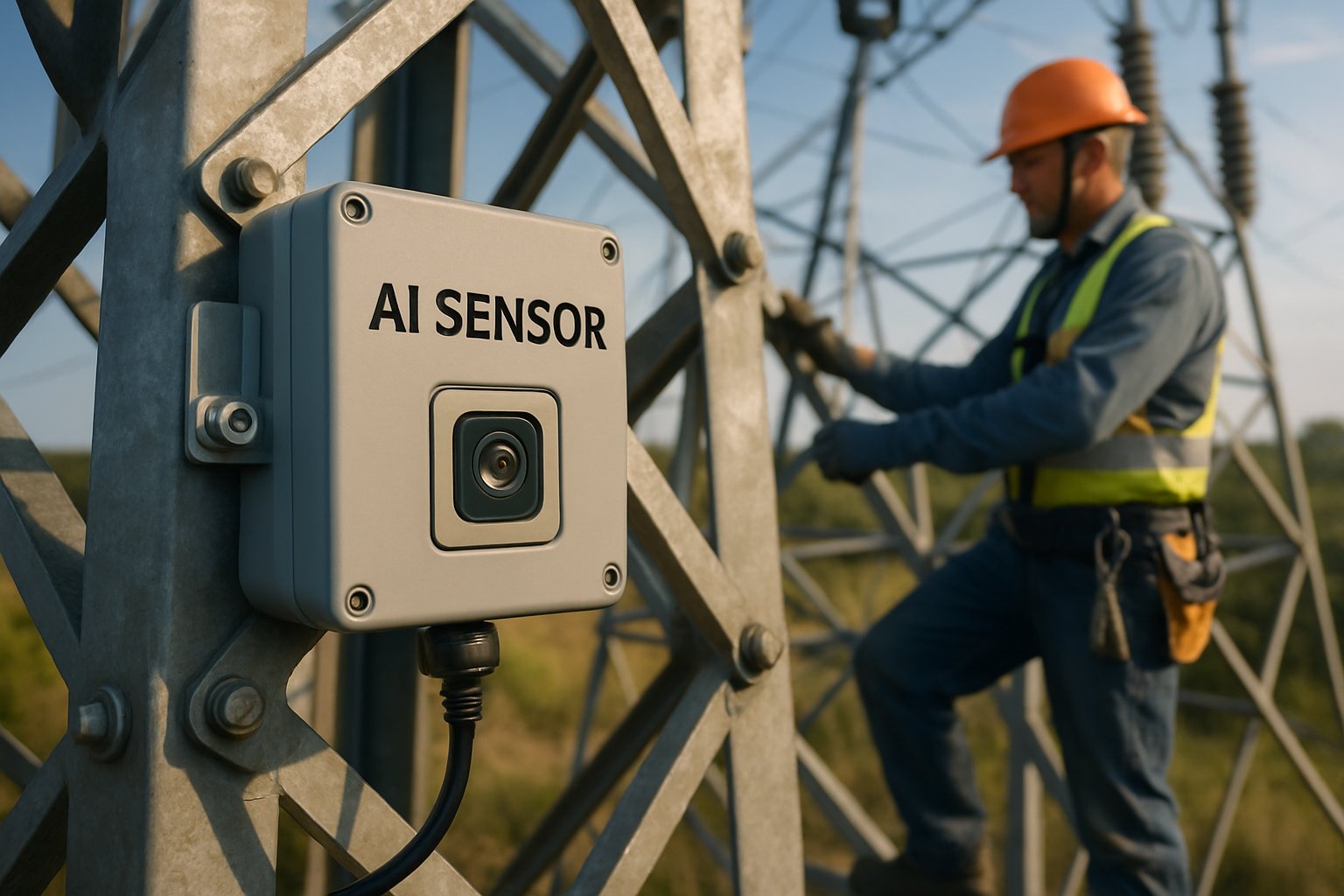
During 2026, utilities in Europe and North America launched record pilot volumes. Moreover, TransnetBW’s 120-kilometer trial with Prisma Photonics brought fiber sensing into mainstream news feeds. AP News carried the CEO quote about dynamic control enabling real-time dispatch flexibility.
Meanwhile, Ameren deployed thirty Heimdall Power Neuron sensors on congested Midwestern lines. Consequently, operators observed preliminary ampacity uplifts reaching double-digit percentages during windy hours. Such numbers intensify arguments that intelligent upgrades can delay expensive Transmission expansions.
These developments underline a key takeaway: data can substitute for steel, at least temporarily. However, every sensor rollout must face integration tests and regulatory audits. Those hurdles guide the next topic.
Accelerated pilots prove AI can unlock dormant capacity quickly. Nevertheless, integration challenges will decide how far those gains travel. Let us now examine the detailed capacity math powering these claims.
AI Upscaling Line Capacity
Dynamic line rating calculates safe ampacity using real-time weather and conductor data. Therefore, ratings rise on cool, windy days when sag and temperature stay within limits. LineVision, Ampacimon and Heimdall champion three methodological flavors: sensor-based, ambient-adjusted and hybrid.
LineVision’s tower-mounted radar avoids outages during installation. Ampacimon’s drone-installable SenseX clips reduce live-line exposure and shorten field crews’ schedules. Meanwhile, Heimdall’s Neuron provides conductor temperature and current plus cloud analytics.
- MarketsandMarkets projects drone inspection revenue reaching $23 billion by 2027.
- Credence sees DLR sensor sales jumping from $61.9 million in 2024 to hundreds of millions by 2032.
- AES and LineVision installed 42 sensors and recorded double-digit capacity increases on key circuits.
These statistics show robust commercial momentum behind AI-enhanced capacity. Consequently, investors now consider software a grid-grade asset class. Yet technical excellence alone does not guarantee regulatory acceptance.
Boosted ampacity must integrate with dispatch tools, market rules and reliability models. Therefore, standardization efforts are vital. We next explore those governance fronts.
Real-time ratings can relieve congestion quickly. Nevertheless, without secure standards their promise may stall. Security and governance now enter the spotlight.
Market Forces And Spend
Capital is flowing despite macroeconomic headwinds. Moreover, Distributech 2025 booths were packed with procurement teams hunting grid-enhancing technologies. S&P Global estimates GET investments will exceed several billion dollars by 2030.
AP News recently profiled National Grid’s multi-line DLR program, citing congestion cost savings. The story emphasized faster Grid Access for offshore wind entering British shorelines. Investors interpreted the piece as validation of rapid payback.
Meanwhile, U.S. incentives from FERC Order 881 push utilities toward ambient-adjusted ratings. Consequently, vendors created compliance accelerators bundled with analytics subscriptions. Infrastructure Land Battle rhetoric appears in many investor decks highlighting deferred Transmission builds.
Funding patterns signal confidence yet expose dependency on timely regulation. These finances underpin the security debate we address next. Understanding risks ensures money continues flowing.
Strong funding and media attention accelerate deployments. However, cybersecurity and model auditability could dampen momentum. Standards, security and governance now matter more than ever.
Standards Security Governance Urgent
Continuous sensor streams create tempting attack surfaces. Therefore, utilities demand proven encryption, redundancy and audit trails. The EPRI–Microsoft Open Power AI Consortium drafts baseline models with transparent training data.
National labs also test uncertainty bounds and false positive rates for computer vision inspections. In contrast, some proprietary algorithms remain black boxes, raising liability fears. Regulators may soon require third-party validation before mission-critical deployment.
Cyber concerns intersect with drone operations. Consequently, FAA and equivalent bodies scrutinize beyond-visual-line-of-sight requests. Percepto and Skydio underline hardened links and tamper-resistant enclosures in filings.
Professionals can sharpen defences through the AI Network Security™ certification.
Standardization progress remains uneven but accelerating. Nevertheless, governance debates will influence adoption timelines. Utilities next face practical grid integration choices.
Robust standards reduce cyber risk and uncertainty. Therefore, focus shifts to utility decision-making at the control room. The following section details that calculus.
Utilities Weigh Real Options
Control-room teams juggle weather data, market prices and stability margins. Moreover, sensor alerts must align with dispatcher tolerances and remedial action schemes. Operators fear false alarms that could trigger costly curtailments.
Pilots show mixed results across geographies. AES circuits gained capacity mainly during spring winds. Meanwhile, winter peaks in northern regions showed limited uplift because transformers constrained flow.
National Grid staff emphasized that DLR is one tool, not a silver bullet. Consequently, planners still file applications for selective Transmission reinforcements.
Utilities also monitor community sentiment. AP News interviews revealed residents prefer sensors to new towers crossing farmland. Such grassroots acceptance feeds political capital for further Grid Access initiatives.
Utility experiences confirm AI adds value yet cannot replace traditional planning. Nevertheless, policy shifts could tip the balance. We close with future outlooks and policy levers.
Future Paths And Policy
Forecasts suggest compound growth for DLR, drone inspection and fiber sensing through 2032. Moreover, integrated weather forecasting and reinforcement learning may automate curtailment decisions. Infrastructure Land Battle narratives will likely shape federal funding bills.
Industry insiders predict three near-term milestones. First, broad compliance with FERC 881 will normalize ambient-adjusted ratings across U.S. grids. Second, BVLOS drone regulations could standardize autonomous inspection frameworks in 2027. Third, open model libraries may converge under EPRI guidance, easing procurement friction.
Consequently, utilities that move early may capture congestion revenue and carbon benefits. Investors therefore watch adoption curves and political rhetoric closely. Infrastructure Land Battle champions will argue sensors saved construction budgets.
Policy signals will determine whether digital upgrades complement or postpone hard builds. Nevertheless, the technical trajectory appears irreversible. We now summarize key insights.
AI, sensors and autonomous drones are no longer experimental curiosities. They already deliver measurable capacity, safer inspections and faster Grid Access across diverse networks. However, victories in the Infrastructure Land Battle depend on secure standards and honest performance data. Utilities that ignore governance may face regulatory pushback and stranded investments.
Conversely, forward-looking teams can monetize congestion relief while deferring select Transmission rebuilds. Professionals should track evolving rules, pilot results and certification pathways. Therefore, consider earning the AI Network Security™ credential to strengthen implementation credibility. Join the Infrastructure Land Battle prepared and turn digital upgrades into lasting competitive advantage.


