

AI CERTS
2 hours ago
Information Economy Disruption: Answer Engines Drain Traffic
Moreover, regulators react as antitrust complaints mount in Europe and Britain. This article unpacks drivers, metrics, and strategic options for industry leaders. Consequently, understanding emerging referral patterns has become mission critical for publishers and marketers alike. Therefore, the following sections examine numbers, responses, and future scenarios.
Answer Engines Surge Ahead
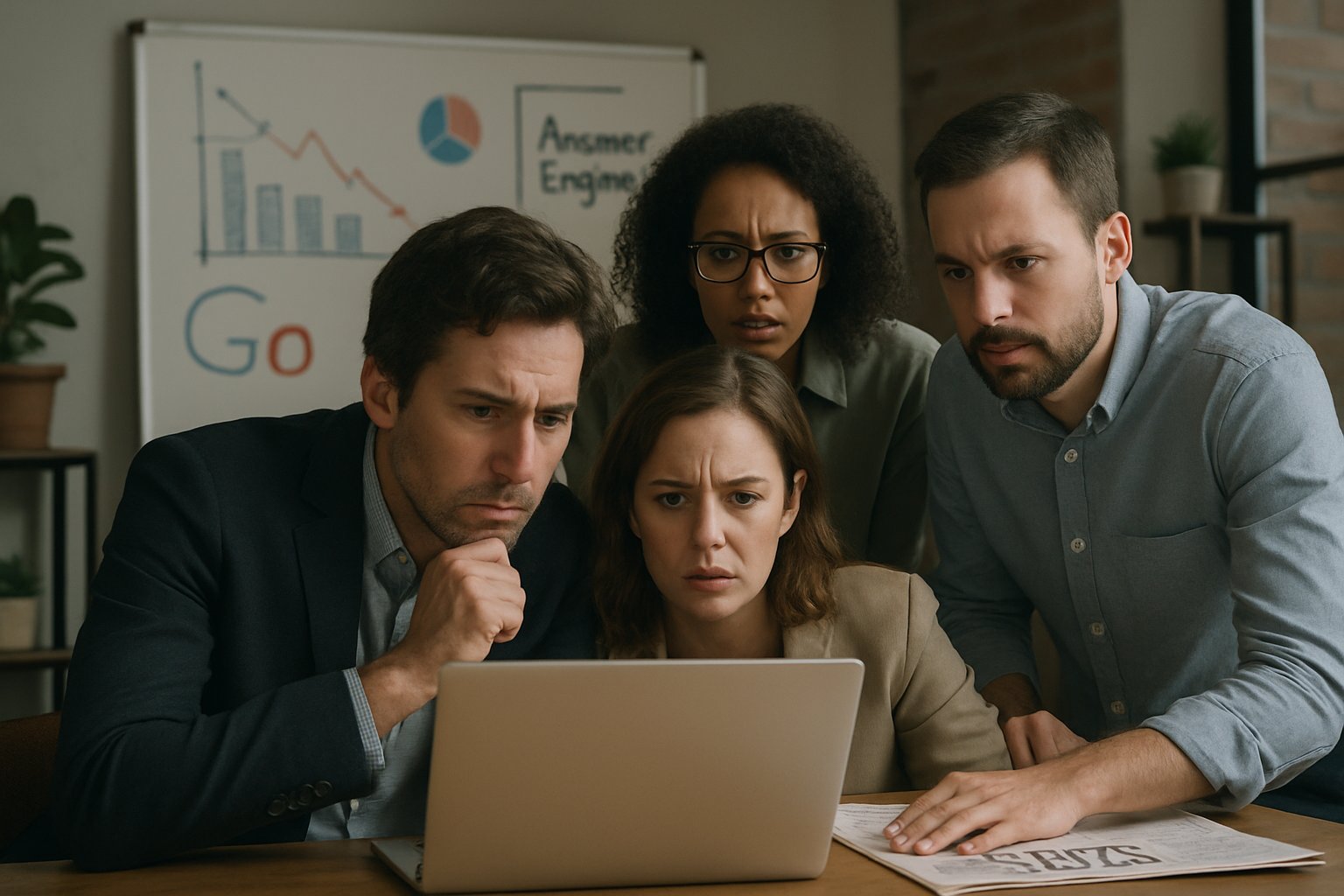
Answer engines now occupy prime space across global interfaces. Google’s AI Overviews, Bing Copilot, ChatGPT, and Perplexity each compress multi source answers into one box. Consequently, zero click behaviour has intensified. SparkToro reports 58.5 percent of United States queries ended without external clicks in 2024.
In contrast, SimilarWeb shows AI platforms produced roughly 1.1 billion outbound visits during mid 2025. However, that figure remains tiny beside Google’s trillions of annual referrals. Moreover, early AI referrals concentrate within shopping and technical niches, leaving newsrooms exposed.
Therefore, platform ambition, user convenience, and algorithmic prominence combine to accelerate this first wave. These drivers establish the structural foundation for further Information Economy Disruption.
These adoption metrics confirm huge behavioural realignments. Consequently, measuring downstream referral patterns is essential before crafting countermeasures.
Zero Click Trend Deepens
Chartbeat network data quantifies the fallout. Globally, Google referral visits to publishers fell thirty three percent between November 2024 and November 2025. Additionally, United States outlets experienced a steeper thirty eight percent drop.
Academic work supports correlation with causality. A February 2026 difference in differences study linked Google AI Overviews exposure to a fifteen percent traffic loss for English Wikipedia. Moreover, cultural topics suffered heavier attrition than science entries. This evidence strengthens the narrative of Information Economy Disruption inside the attention marketplace.
Consequently, key figures illustrate the magnitude:
- 58.5% zero-click rate in US Google queries (SparkToro 2024)
- 33% global publisher referral decline (Chartbeat 2025)
- 15% Wikipedia traffic reduction under AI Overviews (arXiv 2026)
- 1.1B AI generated referral visits mid-2025 (SimilarWeb)
Therefore, zero click prevalence generates severe traffic impact for information providers. Nevertheless, diverging referral sources complicate the picture, as the next section explains.
Referral Metrics Diverge Widely
Different measurement panels often produce conflicting baselines. SparkToro relies on browser clickstream data, while Chartbeat aggregates onsite analytics. Meanwhile, SimilarWeb interpolates device level behaviour across vast samples. Consequently, absolute counts vary, yet directional signals align.
In contrast, platform statements complicate interpretation. Google argues AI Overviews spur more search sessions and deeper engagement. However, publishers counter that session depth matters less than outbound volume. The resulting narrative battle shapes investor expectations and regulatory tone.
To navigate uncertainty, executives focus on relative deltas and opportunity pockets. For example, Walmart attributed twenty percent of referral traffic to ChatGPT during a seasonal campaign. Moreover, SimilarWeb identified fashion retailers gaining share from Perplexity citations. Interpreting these dashboards correctly determines survival amid accelerating Information Economy Disruption.
These divergent metrics underscore complex traffic impact patterns. Consequently, publishers are experimenting with fresh defensive and offensive tactics next.
Publishers Mount Defensive Moves
Publishers are not waiting idly. Many lodged antitrust complaints with the European Commission and UK regulators. Additionally, coalitions seek licensing arrangements that mirror music industry deals.
News organisations also tweak product portfolios. Consequently, subscriber funnels, newsletters, and mobile apps receive heightened investment. Some outlets experiment with AI friendly snippets and structured data schemas to attract answer engine citations.
Moreover, marketing teams upskill through specialised credentials. Professionals can enhance their expertise with the AI Marketing Strategist™ certification. Such programs teach AEO principles, schema markup, and performance measurement across emerging surfaces.
Consequently, proactive capability building equips teams for persisting Information Economy Disruption. In contrast, passive publishers risk further margin erosion, as the following regulatory pressures show.
Regulators Intensify Antitrust Scrutiny
Regulatory bodies have stepped into the arena. The European Commission opened a formal investigation targeting self preferencing inside Google AI Overviews. Meanwhile, UK authorities signalled readiness to impose interim conduct remedies.
Publishers argue that content reuse without compensation constitutes exploitation. Google counters that fair use shields summarisation and that links remain available. Nevertheless, legal precedent in this frontier remains unsettled.
Consequently, settlements or penalties could reshape revenue allocation across digital ecosystems. Any shift would ripple through advertising markets, boosting or damping traffic impact patterns.
Therefore, policy outcomes will either accelerate or temper Information Economy Disruption. Subsequently, technical optimisation becomes the decisive differentiator.
Optimizing For Generative Answers
Generative Engine Optimization emerged as a counterpart to classic SEO. Practitioners place concise facts atop articles, embed schema, and maintain authoritative citations. Meanwhile, structured knowledge panels feed answer engines directly.
Additionally, publishers monitor citation frequency within ChatGPT, Perplexity, and Bing Copilot dashboards. Early adopters who iterate weekly report modest but improving click through rates. Consequently, playbooks include targeted snippet updates, faster page speed, and rich multimedia.
In contrast, black box behaviours complicate attribution. Search referrals may vanish overnight after algorithm tweaks. Therefore, revenue diversification through subscriptions, events, and ecommerce partnerships remains essential.
These optimisation tactics offer resilience during unfolding Information Economy Disruption. Consequently, leaders must blend technical excellence with business model innovation.
Conclusion And Next Steps
Answer engines now sit at the heart of every content strategy discussion. Consequently, leaders who quantify traffic impact and act decisively outpace hesitant competitors. Meanwhile, successive algorithm waves will deepen Information Economy Disruption across global search behaviours. Therefore, companies should frame investments through an Information Economy Disruption lens when evaluating search and monetisation bets. Moreover, continuous experimentation, rigorous analytics, and proactive licensing can buffer organisations against further Information Economy Disruption. Explore certifications, adopt AEO tactics, and lead the transition before rivals capture tomorrow’s attention.


