

AI CERTs
2 hours ago
Influencer Fraud Detection Algorithms Protect Brand Budgets
Brands will pour almost $30 billion into influencer campaigns by 2027, yet fraud still threatens returns. Therefore, sophisticated Influencer Fraud Detection Algorithms have become essential shields against wasted budget and reputational damage. These models filter fake audiences, bot engagement, and even synthetic avatars before dollars change hands. However, detection accuracy, data access, and an adversarial arms race complicate success. This report examines current algorithms, vendor capabilities, and best practices for risk-averse marketers. Moreover, it outlines actionable steps to integrate verification, monitoring, and outcome metrics across campaigns. Readers will also find certification resources to strengthen internal expertise and governance. Consequently, technical leaders can defend spend while advancing transparent creator partnerships.
Influencer Fraud Detection Algorithms
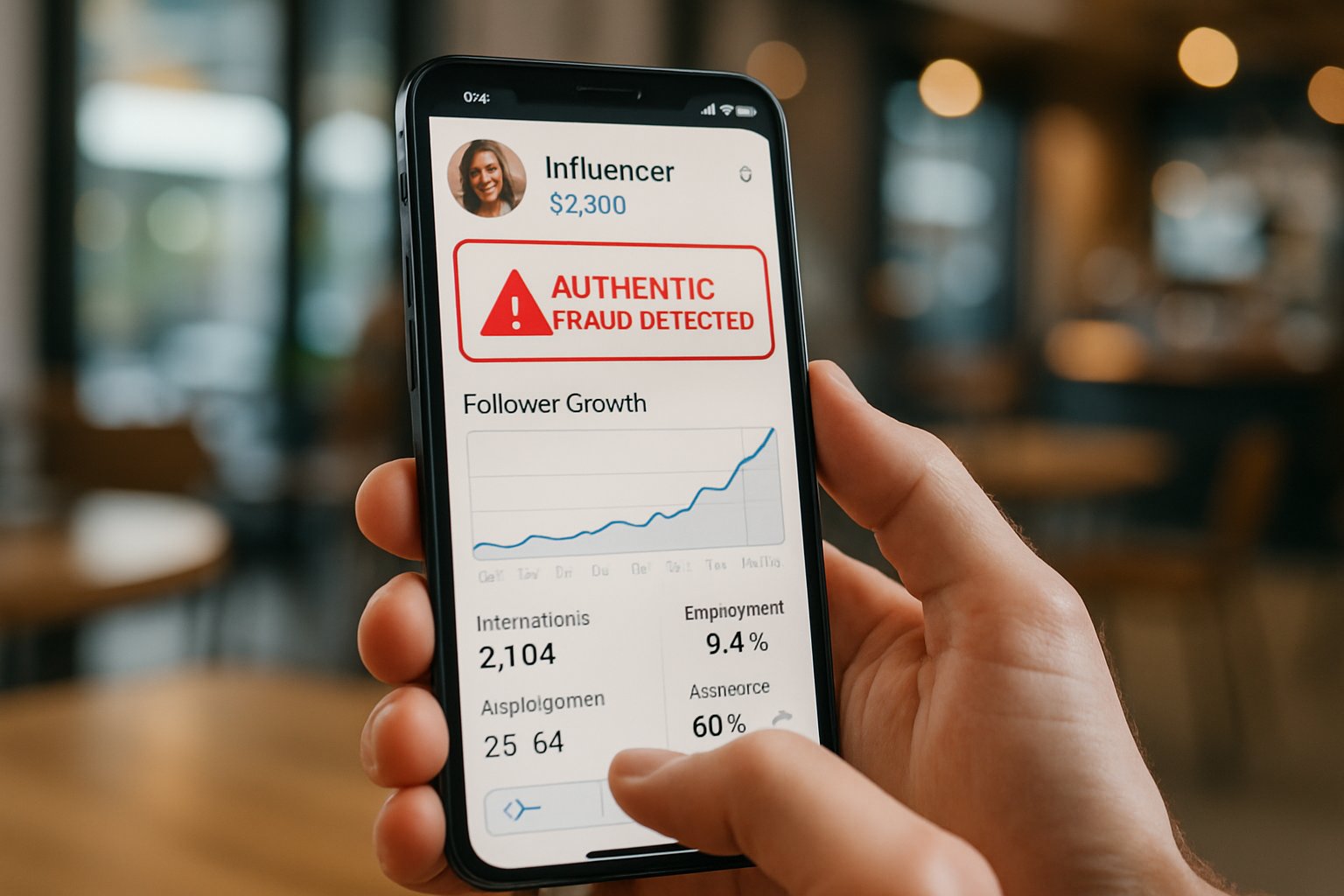
At its core, influencer fraud covers purchased followers, automated likes, engagement pods, and AI-generated personas. In contrast, detection algorithms combine metadata, network topology, and behavioral patterns to classify suspicious activity. Some academic LSTM models report over 90 percent accuracy on curated Instagram datasets. Nevertheless, production environments remain noisier, requiring hybrid heuristics and continual retraining. Influencer Fraud Detection Algorithms now integrate graph neural networks to reveal clusters that traditional metrics miss. Subsequently, brands receive audience-quality scores before signing contracts, improving negotiation leverage. Algorithms expose hidden manipulation at scale. However, market size data clarifies why vigilance matters.
Landscape And Market Scale
HypeAuditor estimates 40 percent of Instagram influencers show signs of fraudulent engagement. Meanwhile, global influencer spend may reach $22 billion on Instagram alone by 2025. Consequently, even modest fraud rates translate into billions of wasted budget. Key numbers illustrate the challenge:
- 15% of 2019 spend, or $1.3B, lost to fraud (Cheq study).
- $10.8B saved in wider ad fraud through industry collaboration (TAG/ANA/IAB, 2023).
- 45% of accounts impacted by suspicious activity in 2024 datasets (HypeAuditor).
Moreover, AI-generated virtual influencers accelerate audience growth, intensifying authenticity concerns. Fake follower detection tools struggle when synthetic personas hide behind realistic imagery. These data points underscore the financial stakes. Therefore, algorithmic vetting must accompany every campaign stage.
Algorithmic Methods Overview
Detection stacks now mix supervised classifiers, time-series anomaly models, and graph analytics. Additionally, multimedia forensics identify AI-generated faces and voice artefacts. Influencer Fraud Detection Algorithms employ community detection to catch coordinated engagement pods. Furthermore, behavioral baselines flag unusual follower spikes within narrow time windows. Hybrid systems assign weighted risk scores, triggering manual review when thresholds exceed policy. Trust analytics dashboards visualise these signals for campaign managers. Fake follower detection remains the foundational layer feeding every higher model. Influencer Fraud Detection Algorithms consequently adapt through continuous retraining against new evasion tactics. Hence, vendor differentiation often centers on data access breadth and labeling quality. Method diversity reduces single-point failure risk. However, vendor capabilities warrant separate scrutiny, which the next section provides.
Vendor Tools Insights
HypeAuditor markets its Audience Quality Score, claiming 95 percent fraud detection across 53 indicators. Furthermore, Meltwater's Klear platform offers True Reach metrics and real-time creator monitoring. CreatorIQ, Upfluence, and Kroll add investigative depth for high-risk collaborations. Trust analytics visualizations help executives justify spend during board reviews. Influencer Fraud Detection Algorithms underpin each dashboard, yet feature coverage differs by platform API access. Consequently, procurement teams should request methodology whitepapers and validate sampling procedures. Fake follower detection accuracy claims deserve third-party benchmarking before long-term contracts. These vendor comparisons reveal important trade-offs. Meanwhile, benefits become clearer once financial outcomes enter view. The following section quantifies those gains for brand budgets.
Benefits For Brand Budgets
Companies adopting automated vetting report measurable savings. HypeAuditor cites double-digit ROI lifts when fraud-impacted creators are excluded early. Moreover, continuous monitoring lets marketers withhold payments if post-launch anomalies emerge. Influencer Fraud Detection Algorithms reduce vanity metric reliance by shifting focus toward clicks and conversions. Brands also leverage trust analytics dashboards to demonstrate campaign integrity to regulators and partners. In contrast, teams without fake follower detection face higher refund disputes and reputational hits. Savings compound over multi-campaign cycles, freeing budget for creative experimentation. Therefore, detection investment often pays for itself within quarters. Financial upside now matches compliance imperatives. Still, technical challenges remain, as the next section details.
Ongoing Technical Challenges
Model false positives can block legitimate niche creators with atypical audience profiles. Nevertheless, human review panels mitigate these cases when organizations resource them properly. Data access limits present tougher friction because platforms restrict telemetry after privacy reforms. Furthermore, adversaries continuously update bot behavior to mimic authentic human intervals. Academic studies show graph attacks that hide fraudulent nodes by altering network edges. Influencer Fraud Detection Algorithms must retrain frequently to sustain recall against such adaptive threats. Moreover, standardization gaps hinder cross-platform trust analytics reporting. These limitations highlight the need for industry collaboration. Consequently, practical guidance becomes vital, which the upcoming checklist supplies.
Practical Action Checklist
Marketers can operationalize the research through layered safeguards. Consider the following steps:
- Request audience quality reports and raw samples for manual spot checks.
- Link payment milestones to verified clicks, conversions, or sales events.
- Deploy continuous fake follower detection during and after each campaign.
- Combine vendor dashboards with in-house trust analytics investigations.
- Upskill staff via the AI Foundation certification for stronger algorithm literacy.
These actions embed Influencer Fraud Detection Algorithms deeply within governance workflows. Therefore, strategic outlook becomes optimistic when leaders iterate consistently. The conclusion summarizes key insights and future priorities.
Influencer marketing will continue expanding, yet fraud threats will evolve in parallel. Nevertheless, organizations armed with Influencer Fraud Detection Algorithms can minimize waste and reinforce accountability. Moreover, fake follower detection and trust analytics together create a transparent feedback loop for stakeholders. Cross-industry standards, richer APIs, and continual model retraining will further improve precision. Therefore, early adopters should double down on robust vetting, monitoring, and contractual safeguards. Leaders ready to deepen skills can explore the linked certification and champion data-driven influencer governance. Act now to protect every future campaign. Consequently, marketing teams will convert saved dollars into innovative creator experiences that resonate authentically.


