

AI CERTs
3 hours ago
Influencer Audience Overlap Intelligence Boosts Unique Reach
Marketers once relied on raw follower counts to gauge potential reach. However, duplicated audiences silently drained budgets. Consequently, brands demanded sharper visibility. Influencer Audience Overlap Intelligence now answers that call with data-driven clarity. The capability calculates how many individuals follow, view, or listen to multiple creators. It exposes unique reach before spend commits. Moreover, the feature has moved from niche add-on to industry staple inside major influencer and media platforms. Statista values the influencer market at $24 billion for 2024 and projects $32.6 billion next year. Therefore, even small percentage gains from smarter planning translate into millions saved. Additionally, rising privacy regulation forces planners to embrace first-party metrics and probabilistic models. This change makes overlap analysis harder yet more essential. This article explains why the practice matters, how new tools work, and what guardrails leading vendors recommend. It also shows how media planning AI and precise creator targeting cooperate with overlap data to unlock incremental reach.
Surging Influencer Market Context
Moreover, the money at stake continues to balloon. Statista forecasts $32.6 billion in influencer spend during 2025. In contrast, brands still waste up to 25 percent of reach because of duplicated audiences, according to Avalan benchmarks. That inefficiency invites sharper measurement.
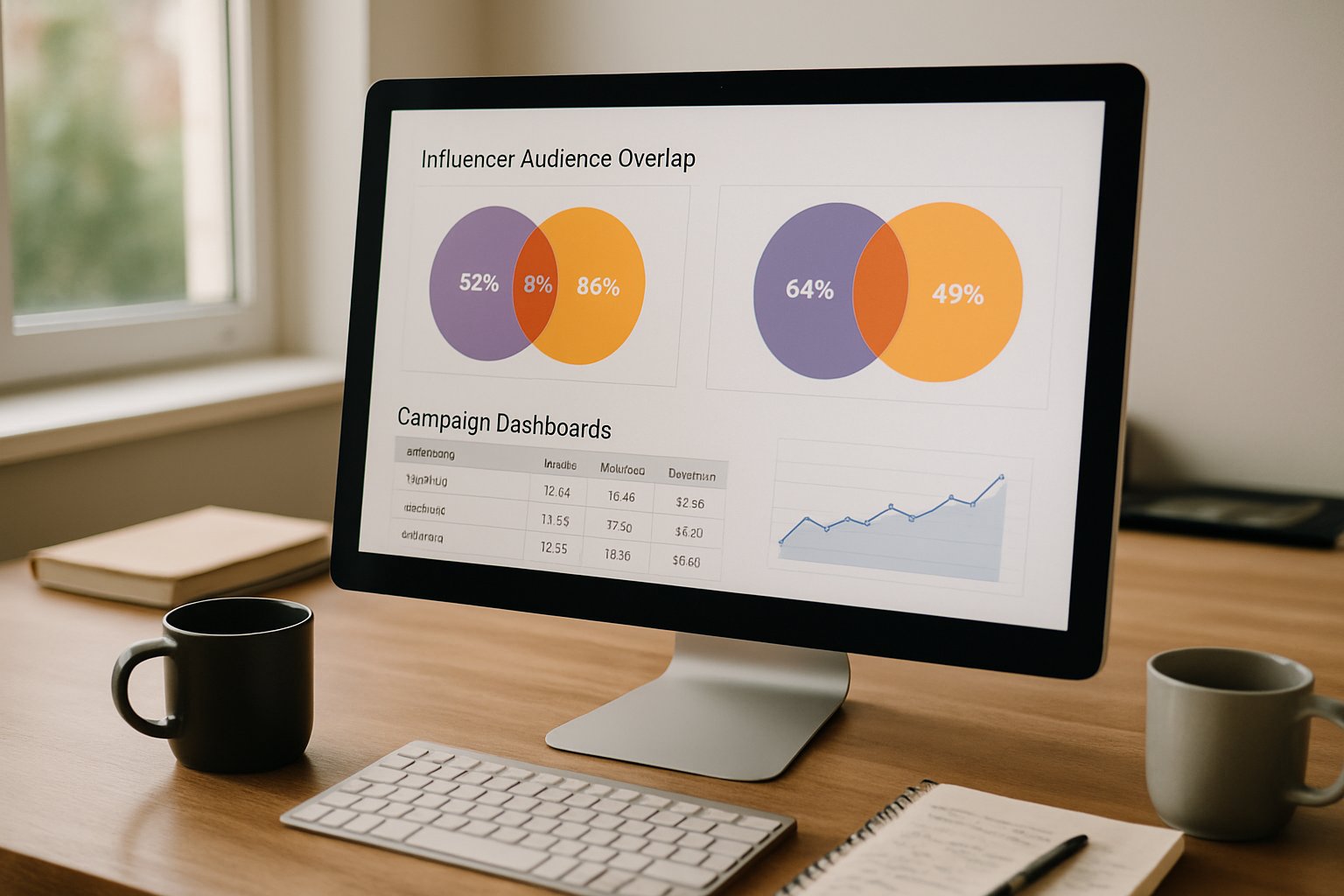
Influencer Audience Overlap Intelligence therefore becomes a boardroom talking point. Furthermore, the feature aligns with media planning AI budgets already earmarked for performance tools. Consequently, executives view overlap dashboards as quick wins because they unlock immediate media savings without large creative overhauls.
These commercial pressures spotlight the growing discipline. Subsequently, we must unpack the underlying concepts.
Key Audience Overlap Concepts
At its core, audience overlap represents the percentage of identical people exposed to two or more creators. Reach equals unique individuals, impressions equal total views, and frequency equals impressions divided by reach. Without deduplication, marketers inflate reach and misprice deals.
Influencer Audience Overlap Intelligence uses deterministic or probabilistic models to correct those distortions. However, TikTok’s feed complicates follower math because many viewers are non-followers. Therefore, first-party post-level insights are essential for accurate creator targeting choices.
These definitions create a shared vocabulary. Consequently, we can examine tool capabilities next.
Data Powered Toolset Landscape
Multiple vendors now surface overlap matrices directly in discovery workflows. CreatorIQ, HypeAuditor, and Avalan expose shared-reach percentages before a single contract is signed. Podscribe extends the idea to podcasts using household identifiers. Additionally, Similarweb tracks shopper overlap across retail domains.
Most platforms integrate media planning AI modules that automatically flag risky duplication. Influencer Audience Overlap Intelligence within these suites often leverages first-party APIs such as TikTok Creator Marketplace.
- CreatorIQ – deterministic matching with TikTok post analytics.
- HypeAuditor – Instagram overlap matrix and authenticity filters.
- Avalan – real-time guardrail scoring for planning.
- Podscribe – podcast audience duplication reports.
For each tool, Influencer Audience Overlap Intelligence underpins the reach projection calculations.
Tool diversity lets brands match budget, channel, and risk tolerance. Nevertheless, selecting settings requires clear guardrails.
Campaign Optimization Guardrails Explained
IQFluence recommends under 20 percent overlap when reach is the primary goal. Conversely, nurture campaigns may tolerate 30–40 percent to build recency and consideration. Retargeting bursts sometimes push duplication beyond 60 percent, yet teams must monitor frequency caps.
Influencer Audience Overlap Intelligence dashboards visualize these thresholds in real time, alerting buyers before final approval. Moreover, many platforms output projected cost per unique reach, turning abstract percentages into concrete dollar trade-offs.
Brands can enhance oversight by earning the AI+ Network Security™ certification, which deepens analytic governance skills.
Guardrails convert raw data into actionable levers. Subsequently, practitioners need step-by-step processes.
Practical Implementation Best Practices
Start by defining measurable objectives and an acceptable overlap ceiling. Next, pull a wide creator shortlist then run overlap scoring before negotiations. Meanwhile, media planning AI modules can auto-suggest low-overlap combinations based on demographic gaps.
Here, Influencer Audience Overlap Intelligence can be toggled as a live filter within the planning interface. Successful adoption of Influencer Audience Overlap Intelligence often begins with tight cross-functional workshops.
Marketers should demand post-level screenshots or API exports to validate projected reach after launch. Additionally, run A/B pilots that compare lineups with 10 percent versus 35 percent duplication. Measure cost per unique reach, engagement, and CPA, then refine creator targeting parameters for scale. Nevertheless, document all data sources within contracts to ensure privacy compliance.
These steps embed discipline across planning, activation, and reporting layers. Therefore, understanding current limits remains vital.
Current Limitations And Future
Privacy statutes restrict deterministic identifiers on many platforms. Consequently, vendors often rely on probabilistic demographic matching, which introduces confidence intervals. In contrast, first-party integrations such as TikTok Creator Marketplace improve accuracy but require formal partnerships.
Vendor claims also remain self-reported, with few independent audits available today. Nevertheless, momentum favors greater transparency as brands demand verifiable overlap data before budget sign-off.
Influencer Audience Overlap Intelligence will likely merge with unified household graphs and retail data soon. Moreover, streaming IDs promise finer deduplication across devices. Regulators may soon require Influencer Audience Overlap Intelligence outputs to follow auditable standards.
Limitations persist, yet innovation shows no sign of slowing. Consequently, marketers should monitor standards bodies and API roadmaps.
Strategic Takeaways And Action
Influencer Audience Overlap Intelligence saves budget, improves unique reach, and aligns with growing privacy demands. Surging market size magnifies every percentage point gained through media planning AI and refined creator targeting workflows.
However, teams must apply guardrails, validate data sources, and invest in skills like the previously mentioned certification. Moreover, pilot tests and post-campaign audits should become standard operating procedures. Consequently, organizations that embed these habits will capture incremental reach and measurable ROI.
Act now by benchmarking existing plans against overlap thresholds and encouraging teams to secure the linked credential.


