

AI CERTs
2 months ago
Industry Voices Warn China AI Gap Widens
Beijing’s AGI-Next summit opened 2026 with blunt warnings about the China AI Gap. Senior researchers conceded that headline breakthroughs hide widening deficits in compute and advanced chips. Meanwhile, massive IPO proceeds fueled exuberance that many insiders see as premature. Consequently, investors and policymakers seek clearer signals on how fast China can close ranks. This article distills summit statements, funding data, and external analysis to clarify the stakes. It also explores strategic options for organizations navigating volatile US Competition dynamics. Throughout, we balance cautionary voices with counterpoints on algorithmic momentum and policy support. Professionals will gain actionable context, rigorous numbers, and links to capability-building certifications. Therefore, read on to evaluate risks, opportunities, and practical next steps. In contrast, many global executives still assume equal footing across continents. Such assumptions ignore material resource gaps highlighted by those building models each day. Accurate situational awareness underpins sound budget, hiring, and infrastructure decisions. Moreover, geopolitical tensions continue shaping supply chains, regulatory timelines, and customer adoption.
Beijing Leaders Sound Alarm
Justin Lin of Alibaba openly placed sub-20% odds on overtaking OpenAI within five years. Tang Jie from Zhipu AI echoed that view, cautioning against misplaced triumphalism. However, Tencent’s Yao Shunyu highlighted targeted R&D in agent research to narrow performance deltas.
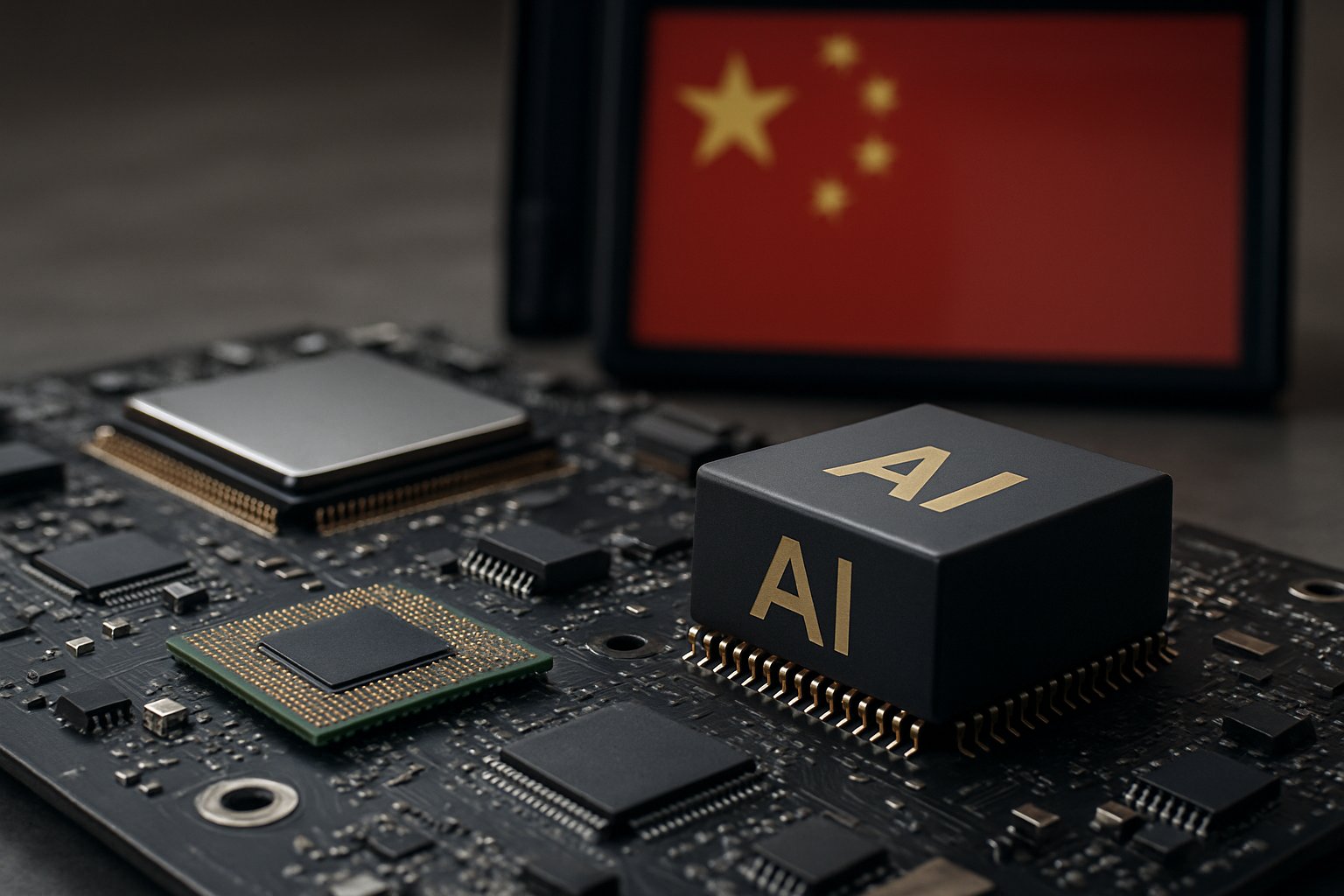
Panelists quantified compute access differences at one to two orders of magnitude. Therefore, Chinese labs must allocate scarce cycles carefully between product delivery and exploratory work. Such trade-offs limit repeat experimentation with expansive context windows or multimodal stacks.
Summit organizers urged government agencies to prioritize domestic accelerator programs and cloud credits. Additionally, they requested transparent metrics to benchmark progress against US Competition peers. These appeals framed the discussion that dominated hallways and breakout sessions.
Chinese leaders delivered a sobering diagnosis underscoring limited near-term upside. Consequently, attention shifts next to hardware constraints amplifying the China AI Gap.
Hardware Bottlenecks Still Persist
At heart of the debate lies silicon scarcity and export restrictions. Nvidia’s top datacenter GPUs remain mostly unreachable for Chinese clouds under current rules. Moreover, ASML lithography tools cannot ship advanced machines, delaying domestic foundry modernization.
Jefferies analysts noted China added 400 GW of power capacity, yet compute still lags. Consequently, data centers host larger deployments but train on previous-generation accelerators. In contrast, US Competition players exploit latest H100 clusters tuned for frontier research.
Industry insiders estimate the United States commands ten-fold effective training throughput. Therefore, iteration cycles shrink from months to weeks, compounding the innovation gap. Stakeholders agree hardware parity defines the long game more than single model releases.
Hardware choke points keep the China AI Gap firmly in place. However, algorithmic creativity offers partial relief, as the following section explains.
Algorithmic Progress Offers Hope
DeepSeek and Qwen teams recently published architectures extending context to millions of tokens. Such advances improve retrieval, summarization, and long-horizon planning without linear compute scaling. Furthermore, open-weight releases enable external scientists to iterate rapidly and contribute patches.
CSIS analyst Gregory Allen argued algorithmic gaps now close within months rather than years. Nevertheless, he emphasized that hardware leverage still multiplies experimental breadth. Brad Smith from Microsoft warned fast-improving open models could sway emerging markets.
Meanwhile, Tencent claims forthcoming agent frameworks will optimize compute usage across tasks. Consequently, observers expect more efficient scheduling, pruning, and knowledge distillation techniques. Economizing cycles narrows the China AI Gap even before silicon parity arrives.
Algorithmic ingenuity continues punching above its weight for constrained labs. Subsequently, we compare funding optimism with technological reality.
Market Funding Versus Reality
Zhipu AI and MiniMax collected over one billion dollars during the summit week. Investors raced to secure exposure amid global enthusiasm for generative services. However, multiple executives cautioned that capital cannot immediately solve hardware bottlenecks.
Consequently, valuations may price in breakthroughs whose probability leaders peg below twenty percent. Some analysts draw parallels to the 2021 electric-vehicle funding spike that later corrected. In contrast, US Competition firms invest retained profits back into internal compute grids.
- Compute disparity: China AI Gap equals ten-to-hundred-fold GPU deficit versus the United States.
- IPO proceeds: Zhipu AI raised $558 million; MiniMax raised $619 million.
- Probability metric: Justin Lin sees under twenty-percent odds of leapfrogging within five years.
- Export controls: Nvidia H100 shipments remain blocked by October 2025 export rules.
These numbers offer perspective amid exuberant headlines. Therefore, decision-makers should calibrate expectations and allocate capital toward sustainable differentiators.
Funding alone cannot erase structural deficits spotlighted earlier. Next, we assess geopolitical currents shaping the China AI Gap narrative.
Geopolitical Stakes Intensify Globally
Washington continues tightening export controls, viewing advanced accelerators as dual-use weapons. Meanwhile, Beijing accelerates domestic chip programs and downstream deployment incentives. Moreover, the European Union debates alignment, balancing supply chain resilience with security concerns.
Brad Smith warned inexpensive Chinese models could dominate Global South governments. Consequently, language data, standards, and values may tilt away from Western norms. US Competition lobbyists highlight that risk when urging additional semiconductor subsidies.
In contrast, some think tanks argue continued interdependence moderates escalation incentives. Nevertheless, supply shocks in one region ripple across global AI training timetables. Therefore, executives must map exposure to regulatory swings and multi-region alliance frameworks.
Geopolitical currents intertwine with technical factors to widen perceived gaps. Subsequently, strategic responses emerge, as outlined next.
Strategic Paths Moving Forward
Chinese firms pursue three broad countermeasures. First, they optimize architectures for efficiency, minimizing redundant tokens and parameter counts. Second, they pool compute across consortia, sharing expensive clusters among allied labs. Third, they invest in sovereign GPU design with older process nodes.
Meanwhile, multinationals hedge by building hybrid cloud footprints spanning allied jurisdictions. Moreover, procurement teams negotiate long-term contracts to lock down scarce accelerator inventory. Professionals can deepen oversight skills through the Chief AI Officer™ certification.
Investors adopt scenario planning that weights probabilities of hardware relaxation, algorithmic shifts, and cost shocks. Consequently, boardrooms request detailed compute audits before approving new generative rollouts. Such discipline reduces exposure if the China AI Gap expands unexpectedly.
Focused execution, not headlines, will decide competitive distance over the next cycle. Finally, we summarize lessons and actionable steps.
Outlook And Next Steps
China’s AI future remains both promising and precarious. Export controls, compute scarcity, and US Competition pressures confront sustained algorithmic ingenuity. Moreover, open-source momentum continues democratizing capabilities and shrinking the China AI Gap.
Key takeaways include realistic probability estimates, quantified hardware deficits, and nuanced geopolitical assessments. Additionally, leaders should match capital allocations with transparent compute tracking and talent development. Professionals committed to bridging the China AI Gap can formalize strategies via disciplined education.
Consequently, enroll in the Chief AI Officer program to master governance, procurement, and geopolitical risk navigation. Continual learning will empower you to thrive amid fast-evolving global AI fault lines. Therefore, act now and convert uncertainty into strategic advantage.
China AI Gap dynamics will keep shifting with policy, hardware, and research advances. Stay informed to anticipate the next inflection.


