

AI CERTs
2 hours ago
Industrial Robotics Vision Systems: Sub-Millimeter Precision
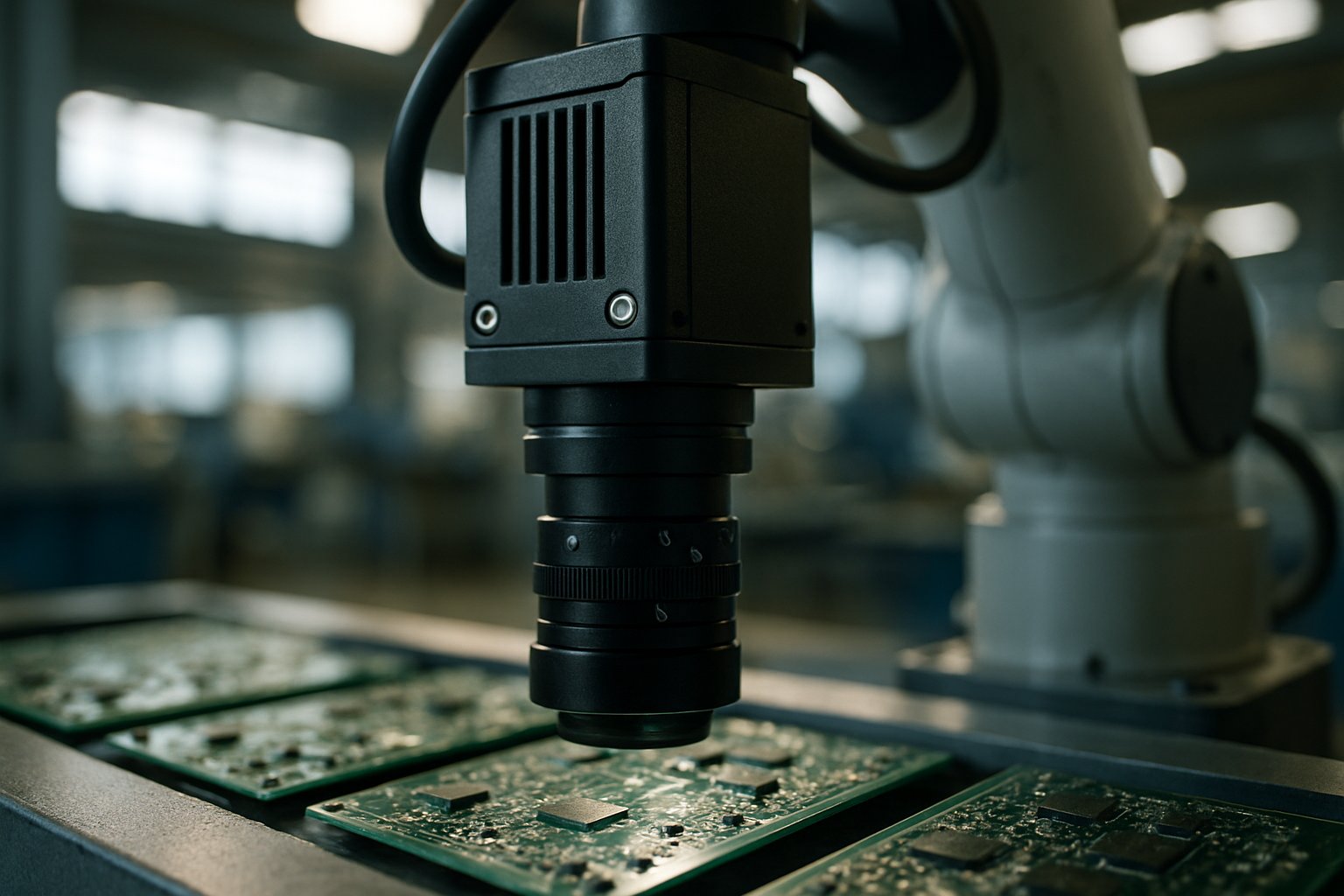
Manufacturers feel growing pressure to raise assembly precision without ballooning costs. Consequently, many plants now deploy Industrial Robotics Vision Systems to bridge that gap. The technology merges high-resolution imaging, edge processing, and AI guidance. Moreover, recent product launches promise sub-millimeter accuracy while cutting changeover downtime. Investors notice similar momentum, with market forecasts projecting strong double-digit expansions. However, adoption requires understanding technical stacks, vendor roadmaps, and integration pitfalls. This article distills new research, market data, and expert commentary for engineering leaders. Meanwhile, secondary audiences such as supply-chain strategists will also gain actionable insights. The goal remains simple: reveal how vision-guided robotics consistently elevate line performance. Therefore, read on to examine trends, benefits, challenges, and practical next steps.
Key Market Momentum Drivers
Global machine-vision revenue reached roughly USD 14.81 billion during 2024, according to MarketsandMarkets. Furthermore, analysts expect CAGR near 8.3 percent through 2030, driven by 3D imaging demand. Robot-vision subsegments mirror that trajectory, expanding as vendors embed cameras directly into controllers. Consequently, buyers now focus on integrations that shorten deployment times.
Labor gaps further accelerate interest. Meanwhile, electronics assemblers face connector tolerances below 0.2 millimeter, reinforcing the vision imperative. Analysts link automation AI adoption with a notable reduction in skilled labor dependency. Government re-shoring incentives also push factories toward flexible, low-fixture setups. Therefore, demand coalesces around solutions proving quick ROI and measurable precision gains.
Market expansion springs from converging economic, labor, and tolerance pressures. However, Industrial Robotics Vision Systems will convert growth projections into operational wins.
Precision Technology Stack Evolution
Modern stacks blend 2D, 3D, and edge inference to direct robot motion. Additionally, embedded GPUs now execute visual processing within 5-10 milliseconds, reducing control latency. Edge architectures therefore avoid cloud round-trips that previously derailed cycle time. In contrast, early systems relied on offline calibration alone, limiting dynamic adjustments. Computer vision manufacturing frameworks increasingly rely on shared code repositories and open standards. Visual servoing now uses continuous feedback, maintaining sub-millimeter pose accuracy throughout the operation. Moreover, 3D sensors based on structured light or ToF capture depth maps vital for connector insertion. High-resolution optics and AI segmentation further isolate features on reflective or textured surfaces.
- Smart cameras delivering AI inference at the sensor head.
- 3D scanners producing dense point clouds for depth-critical tasks.
- Controller APIs mapping vision coordinates to robot frames in milliseconds.
- Calibration suites automatically compensating thermal drift and vibration.
These components together enable fluid, fixturing-free assembly. Consequently, Industrial Robotics Vision Systems now reach repeatability below one micron in lab trials. Precision advances rely on cohesive hardware, software, and control loops. Next, we examine how vendors commercialize these capabilities.
Leading Vendor Strategy Moves
Cognex released the In-Sight L38, pairing AI classification with micrometer-level 3D measurements. Furthermore, its SnAPP update simplifies counting and inspection using drag-and-drop training. Many releases bundle automation AI engines that self-tune inspection thresholds. FANUC integrates 3DV cameras inside cobot controllers, showcasing vision-guided screwdriving at Automate 2025. Meanwhile, ABB's OmniCore platform combines EyeMotion vision and path planning on one codebase.
Keyence markets inline 3D sensors claiming 0.5-micron repeatability for high-speed electronics lines. In contrast, startup Cambrian Robotics bundles edge inference with turnkey bin-picking cells. Analysts argue such vertical integration shortens commissioning from months to weeks. Consequently, Industrial Robotics Vision Systems become accessible even to mid-sized manufacturers.
Vendor roadmaps prioritize embedded vision, pre-trained models, and unified software stacks. These moves set the stage for quantifiable business benefits.
Benefits Outweighing Current Challenges
Vision-guided cells deliver placement accuracy near ±0.2 millimeter in commercial phone assembly lines. Moreover, inline inspection detects defects early, cutting scrap rates dramatically. Reduced fixturing lowers tooling costs and eases product changeovers. Additionally, image archives provide traceability, supporting regulatory compliance and analytics. Therefore, manufacturers deploying Industrial Robotics Vision Systems often report accelerated defect discovery and higher yields.
- Sub-millimeter repeatability reduces rework expenditure.
- Flexible presentation diminishes custom fixture investments.
- Real-time quality control lowers defect throughput.
- Digital records enable predictive maintenance analytics.
Nevertheless, challenges persist across optics, calibration, and cybersecurity. Reflective surfaces confound depth sensors, requiring tailored lighting or multi-modal sensing. Calibration drift also threatens accuracy if maintenance lapses. Edge compute upgrades therefore become mandatory to preserve takt time under heavy inference loads.
Consequently, ROI varies widely for mid-market adopters facing capital constraints. Experts advise pilot projects that benchmark cycle time, defect reduction, and payback period. The upside remains substantial when integration hurdles are managed proactively. Understanding use case patterns clarifies deployment priorities.
Adoption Use Case Patterns
Electronics assembly leads adoption because connector alignment tolerances demand extreme precision. For example, vision-guided screwdriving stations achieved 0.21-millimeter pose error in recent studies. Automotive plants follow closely, employing 3D vision to align battery modules and weld seams. Logistics operations also benefit as robots pick unstructured items from deep bins.
Meanwhile, medical device makers pilot systems for catheter tip inspection and micro-assembly. Food processors experiment more cautiously because optical variability complicates recognition. Industrial Robotics Vision Systems therefore appear wherever tolerance, safety, or labor scarcity intersects automation. However, success depends on matching sensor modality to material properties.
These patterns illustrate sector-specific maturity levels. Next, practical deployment tips can shorten learning curves.
Deployment Best Practice Tips
Firstly, engage multidisciplinary teams covering robotics, optics, and IT security. Early workshops clarify tolerance targets, lighting constraints, and data governance policies. Secondly, implement a structured pilot that measures baseline defect rates and cycle time. Edge inference hardware should mirror production specifications to avoid false conclusions.
Thirdly, plan rigorous hand-eye calibration routines and recalibration triggers. Automated calibration suites reduce downtime and sustain repeatability. Fourthly, establish change-management protocols for model updates and version control. Cybersecurity reviews must protect proprietary images traveling between cell and MES.
Finally, invest in workforce upskilling to interpret analytics dashboards. Professionals may upskill through the AI Supply-Chain Strategist™ certification. Consequently, disciplined processes transform pilot successes into sustainable competitive advantages. Industrial Robotics Vision Systems then become foundational infrastructure rather than isolated tools.
Best practices mitigate technical risks while fostering organizational buy-in. Strategic implications emerge when we assess the road ahead.
Strategic Takeaways Moving Forward
Industrial Robotics Vision Systems are no longer optional for precision-driven manufacturers. Moreover, computer vision manufacturing platforms now merge AI, 3D, and controls into cohesive packages. Consequently, executives deploying such systems often unlock rapid payback through reduced scrap and faster changeovers. Meanwhile, robust computer vision manufacturing ecosystems continue expanding with turnkey edge devices and pretrained models. In contrast, firms delaying investment may struggle as competitors embrace automation AI at scale. Therefore, leaders should pilot Industrial Robotics Vision Systems within high-variance assemblies first. Subsequently, lessons learned can support enterprise rollouts that maximize analytics and maintain control latency targets. Ultimately, Industrial Robotics Vision Systems, computer vision manufacturing tools, and automation AI together redefine factory competitiveness. Act now by assessing gaps, piloting solutions, and leveraging certifications to build internal expertise. Explore the linked certification to future-proof your supply-chain strategy today.


