

AI CERTS
3 months ago
Industrial Friction Halts Pharma AI Lab Plans
Initial reports cite misaligned budgets, data quality obstacles, and uncertain ROI as core factors. Consequently, executives classified the lab as Non-Essential after a heated board review. In contrast, supporters argue the project would have streamlined Workflow across discovery and manufacturing.
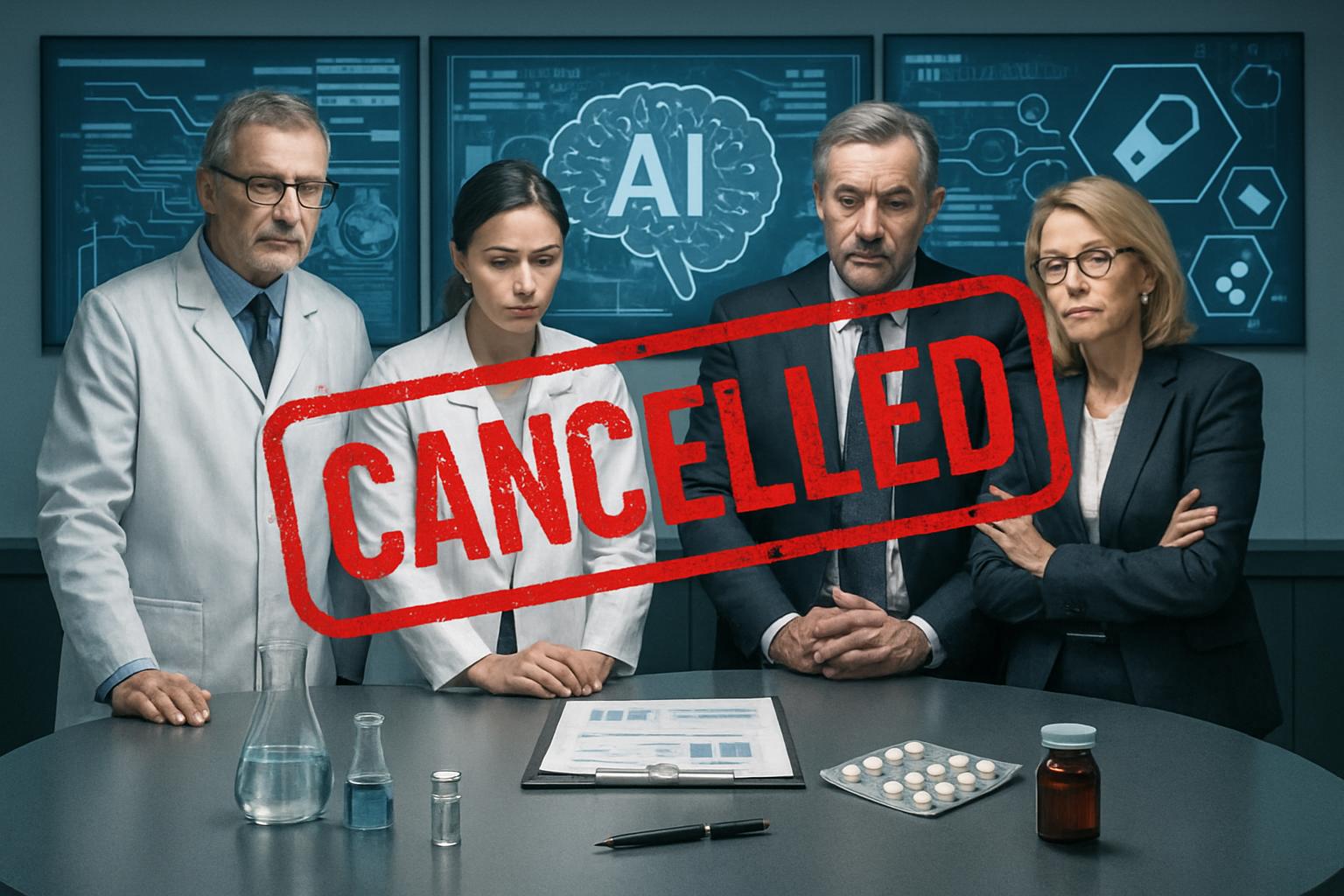
This article unpacks the surprise Cancellation, explores economic consequences, and offers strategic lessons for R&D leaders facing similar pressures. Additionally, professionals can enhance their expertise with the AI Product Manager™ certification, which addresses cross-functional AI delivery.
Therefore, understanding the root causes behind the withdrawal offers a blueprint for mitigating Industrial Friction in future digital programs. Meanwhile, it clarifies how governance, talent, and timing collide in highly regulated Pharma environments.
Sudden Market Shock Explained
Analysts first noticed the disruption when procurement contracts for the AI lab were paused without notice. Subsequently, vendors received formal Cancellation letters that cited cost containment directives. Public filings later revealed a 12% decline in forecasted drug revenues. Therefore, leadership sought immediate savings to offset the unexpected gap.
Internal memos describe mounting Industrial Friction between research and finance teams. Moreover, compliance officers worried that accelerated data ingestion pipelines might breach evolving privacy rules. The tension widened once an external auditor flagged gaps in source documentation. Consequently, executive risk tolerance plummeted.
These events illustrate how revenue pressure triggers rapid AI defunding. Nevertheless, opaque communication intensifies organisational confusion. Moving from external shocks to stakeholder dynamics uncovers further insight.
Key Stakeholder Concerns Heighten
Investors demanded a clear ROI timeline before approving any new capital request. Meanwhile, scientists emphasized the long experimentation cycles typical in Pharma discovery. In contrast, operations managers prioritized immediate throughput gains within existing Workflow constraints. Additionally, Industrial Friction surfaced in vendor negotiations over data ownership.
Moreover, regulatory liaisons advised against deploying black-box neural networks without extensive validation. They labeled such tooling Non-Essential for near-term submissions. Consequently, the stakeholder map fragmented into competing priorities, delaying consensus.
Competing agendas stall unified governance. Furthermore, risk perception varies drastically across functions. Operational obstacles now come into sharper focus.
Major Operational Barriers Surface
Detailed process audits uncovered inconsistent data schemas across preclinical instruments. Additionally, legacy equipment could not transmit real-time metrics without costly adapters. The lab therefore faced daily Industrial Friction in synchronizing batch records.
Auditors summarised three immediate blockers:
- Fragmented user access policies hindered automated provisioning.
- Separate validation logs delayed cross-site Workflow visibility.
- Unpatched firmware raised Non-Essential cybersecurity alerts.
Consequently, remediation budgets exceeded initial estimates by 35%. Technical debt magnified routine costs. Moreover, each fix added schedule risk. A pivot in data strategy soon followed.
Urgent Data Strategy Rethink
The cancelled lab intended to centralize experimental results within a cloud lakehouse. However, privacy experts warned that cross-border transfer rules remained unresolved. Meanwhile, the looming Cancellation forced architects to accelerate design reviews. Therefore, architects drafted an on-prem alternative with restricted API exposure.
Subsequently, the steering committee questioned whether new pipelines justified incremental ROI given the tightening launch window. In response, data scientists highlighted that lack of integration would increase manual reconciliation effort. Nevertheless, the Non-Essential label remained.
Shifting architectures eroded executive patience. Consequently, strategic clarity became elusive. Leadership then examined monetary fallout.
Comprehensive Financial Impact Analysis
Finance modeled three cost scenarios over five years. Baseline forecasts assumed moderate Industrial Friction with phased equipment upgrades. Optimistic forecasts expected 4% faster molecule selection and consequent profit uplift.
Key findings included:
- Capital outlay would exceed budget by $8 million.
- Annual maintenance would rise 22% under Industrial Friction stress.
- Regulatory delays could cut approval timelines by 15%.
Moreover, sensitivity tests showed break-even would slip beyond 2029. Numbers weakened support instantly. Therefore, the Cancellation appeared fiscally prudent. Attention shifted to cultural factors next.
Pressing Cultural Change Imperative
Employees had mixed feelings about algorithmic oversight. Some feared job displacement, while others expected enriched scientific Workflow. Furthermore, team charters lacked shared success metrics across IT and bench scientists.
HR tried to schedule reskilling workshops but received minimal enrolment. Consequently, executives deemed broader culture change essential before relaunching any AI venture. Moreover, professionals can reinforce change leadership with the AI Product Manager™ credential.
Culture emerged as the toughest barrier. Nevertheless, structured upskilling may reverse skepticism. Organisations now contemplate their next steps.
Optimistic Future Path Forward
Despite the setback, strategic planning continues. Therefore, the company will pilot smaller proofs with clear ROI checkpoints. Additionally, shared governance forums will address Industrial Friction early.
In contrast, external partnerships may supply validated models without heavy infrastructure demands. Subsequently, decision makers expect to re-evaluate Non-Essential classifications each quarter. Moreover, incremental wins should rebuild confidence across Pharma functions.
Iterative adoption can reduce sunk-cost anxiety. Consequently, innovation may resume with stronger guardrails. The concluding section synthesises lessons.
Conclusion. Pharma digital leaders face multifaceted hurdles when merging AI research with regulated production. This case shows how Industrial Friction, stakeholder misalignment, and legacy barriers can derail promising programmes. However, transparent ROI models, resilient data architectures, and proactive culture change mitigate such risk. Furthermore, phased experiments reduce perceived Non-Essential spending and simplify compliance. Consequently, disciplined governance transforms industrial headwinds into competitive momentum. Professionals ready to lead these transformations should explore the AI Product Manager™ pathway today.
Moreover, organizations that standardize cross-functional Workflow metrics can detect emerging Industrial Friction early and respond decisively. Therefore, the next AI wave will favor companies mastering financial discipline, agile culture, and robust compliance. Act now to future-proof your roadmap and capture measurable value.


