

AI CERTS
2 hours ago
Industrial Capital Reallocation Targets AI Infrastructure Boom
Unlike dot-com eras, the mantra has flipped to Atoms over bits. Travis Kalanick recently echoed that reversal during a closed investor roundtable. Moreover, institutional funds seek long-duration cash flows anchored by tangible contracts. Secondary voices still warn of bubble risk if construction races ahead of demand. Nevertheless, boardrooms now treat AI infrastructure as critical national capability, not optional spend.
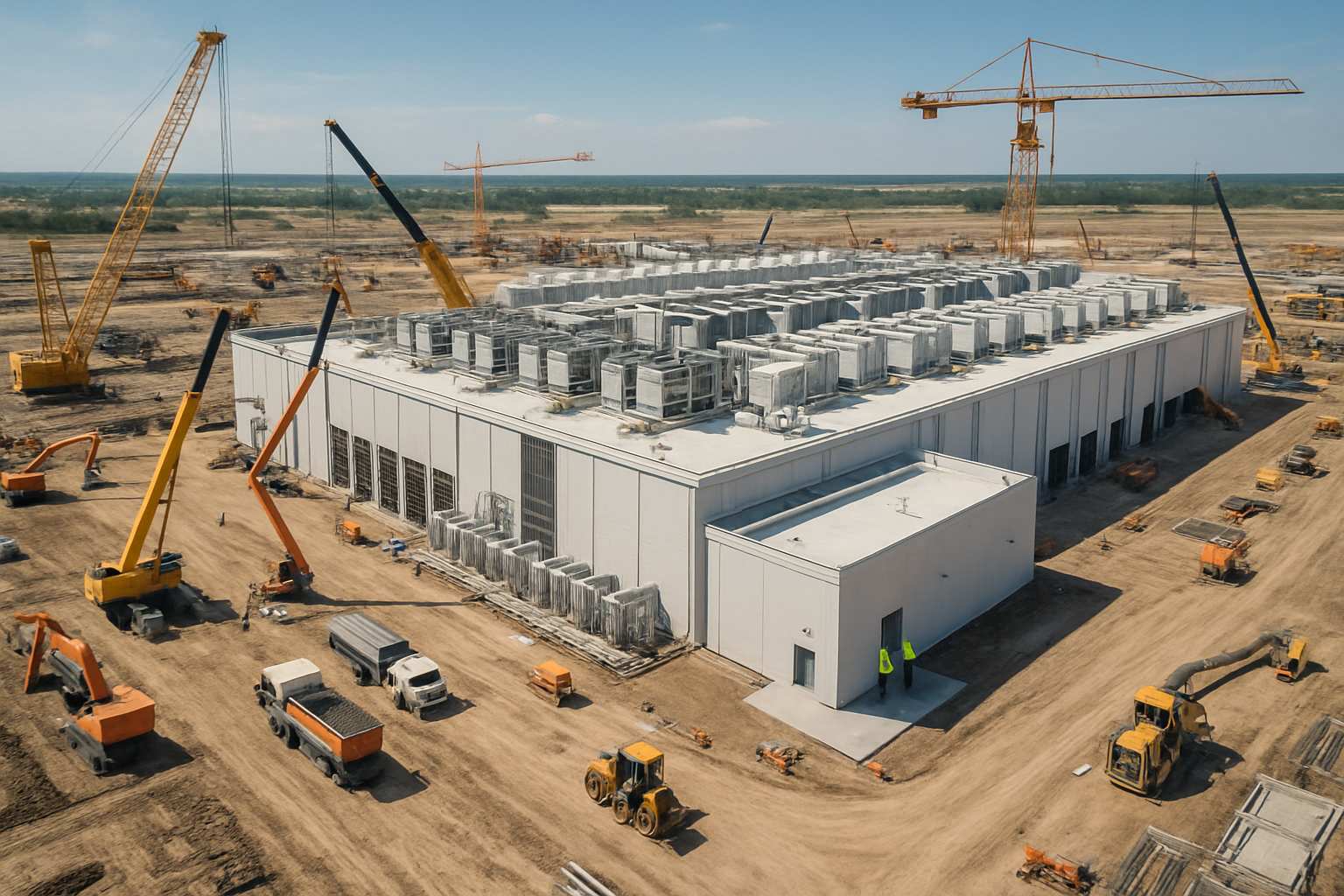
Key Capital Shift Drivers
McKinsey projects $6.7 trillion required to scale global compute by 2030. Therefore, investors hunt assets that convert soaring demand into stable revenue. Industrial Capital Reallocation accelerates because these assets resemble toll roads for data. Additionally, sovereign funds pursue strategic autonomy through domestic data-center fleets.
Electricity needs will almost double to 945 TWh, according to the IEA. Consequently, ownership of generation and transmission now determines project viability. Atoms over bits thinking underpins this energy focus.
National security policies further incentivize local chip packaging and compute. In contrast, earlier cycles rewarded lighter capital software models. Industrial Capital Reallocation thrives because tangible assets can secure government incentives.
These drivers create durable demand and attract vast pools of pension capital. Subsequently, understanding asset categories becomes essential.
Core Asset Classes Defined
Investors group AI infrastructure into four principal buckets. Hyperscale data centers deliver dense GPU compute with advanced liquid cooling. Behind-the-meter power plants provide reliable megawatts without grid delays. Fiber and low-latency routes connect training clusters across regions.
- AI factories: campuses optimized for accelerator racks above 100 kW per rack.
- Dedicated power: gas, renewables, or small modular reactors backing turbines onsite.
- Connectivity: dark fiber, subsea cables, and metro ducts for low-latency workloads.
- Supply chain nodes: fabs, robotics lines, and advanced packaging facilities.
Brookfield labels the first category AI factories to stress industrial scale. Moreover, each bucket offers unique risk, contract tenor, and return profile. Industrial Capital Reallocation frameworks map these profiles to fund mandates.
Notably, physical land constraints limit suitable parcels near transmission lines. Therefore, early movers lock sites before permitting queues lengthen.
Defined categories help investors quantify opportunity and allocate teams. However, deal activity reveals where capital is already landing.
Major Deal Flow Signals
Consortium deals dominated 2025 headlines. BlackRock, Nvidia, and Microsoft paid about $40 billion for Aligned Data Centers. Additionally, SoftBank moved to acquire DigitalBridge, expanding its digital infrastructure footprint. These transactions symbolize Industrial Capital Reallocation reaching platform scale.
IEA figures show data-center capacity controlled by such platforms exceeds five gigawatts. Meanwhile, Vantage secured $1.6 billion to accelerate Asia-Pacific builds. Atoms over bits advocates cite these raises as proof of momentum.
Travis Kalanick reportedly explored partnerships for behind-the-meter energy at his cloud-kitchen campuses. In contrast, several venture voices caution about valuation multiples. Lux Capital’s Josh Wolfe warned collective build-out may become irrational.
Deal data confirms investor appetite but also spotlights competitive pressures. Consequently, scrutinizing risks remains vital.
Risks And Constraints Map
Rapid efficiency gains could strand recently built halls. Therefore, investors model scenarios where training demand slows or chips improve materially. Such capital strategies must incorporate flexible design standards.
Energy is another choke point. IEA tracks grid queues stretching several years in high-growth states. Moreover, water usage and community zoning challenges add complexity.
Financial hurdles include rising interest rates and huge upfront capex bills. Nevertheless, long contracts can mitigate rate volatility when negotiated early.
- Demand volatility: model compression and efficiency gains.
- Permitting delays: environmental reviews and local hearings.
- Supply concentration: limited GPU suppliers.
- ESG scrutiny: emissions, water, and labor standards.
Physical security also matters as campuses host valuable accelerators. Travis Kalanick argued that integrated security and logistics lower downtime risk.
Collectively, these risks can erode promised yields. Subsequently, investors craft proactive playbooks to safeguard returns.
Strategic Investor Action Playbook
Seasoned funds embed three core tactics. First, they secure take-or-pay leases with hyperscalers before pouring concrete. Consequently, revenue visibility supports cheaper project debt. Industrial Capital Reallocation thus aligns with liability-matching mandates.
Second, ownership of generation assets reduces exposure to volatile wholesale markets. Brookfield emphasizes combining renewables with gas peakers for firm capacity. Atoms over bits logic favours energy integration over abstract hedges.
Third, managers diversify across geographies, counterparties, and cooling technologies. In contrast, earlier data-center cycles concentrated portfolios in single metros.
Financing Structure Options Guide
Infrastructure teams now mix equity, mezzanine debt, and tax-equity credits. Moreover, sovereign partners often provide low-cost anchor capital. Industrial Capital Reallocation benefits from such layered instruments by smoothing returns.
Professionals can enhance their expertise through specialized credentials. For example, the AI Supply Chain™ certification deepens operational insight into compute logistics. Travis Kalanick notes trained managers accelerate deployment timelines.
Actionable tactics convert macro demand into bankable cash flows. However, future scenarios still warrant close monitoring.
Outlook And Next Steps
Most forecasts maintain double-digit capacity growth through 2030. Therefore, Industrial Capital Reallocation appears durable beyond the current hype cycle. Nevertheless, regulators may impose moratoria if grids become stressed. Atoms over bits advocates push for faster permitting reforms.
Travis Kalanick predicts modular microgrids will unlock brownfield supply. Meanwhile, chip diversification could ease supply bottlenecks.
Power Demand Surge Data
IEA expects data-center electricity draw to reach 945 TWh by 2030. Consequently, power developers hold outsized negotiating leverage.
Industrial Capital Reallocation success will depend on aligning policy, engineering, and finance. Physical resilience across climate zones will also shape deployment maps.
In summary, hardware may finally eclipse software in perceived strategic value. Consequently, stakeholders must stay informed and credentialed.
Conclusion And Action Steps
AI infrastructure has graduated from niche asset to core allocation target. Massive forecasts, marquee deals, and supportive policy keep momentum robust. However, grid constraints and valuation risk demand disciplined execution. Moreover, investors should diversify, lock contracts early, and secure low-carbon power. Professionals can sharpen their edge through certifications and continuous market monitoring. Take action today by exploring the linked credential and subscribing for future intelligence. Consequently, teams that integrate engineering, finance, and policy skills will dominate the next investment cycle. Nevertheless, vigilance around demand elasticity and regulatory shifts remains essential. Join the conversation and convert insight into resilient portfolio growth.


