

AI CERTS
3 hours ago
Industrial AI accelerates BHP copper exploration
The approach already influenced the Oak Dam discovery in South Australia and boosted recovery at Escondida in Chile. Nevertheless, discovery still needs drills, permits, and patience. This article unpacks the technology, the milestones, and the remaining challenges.
Exploration Landscape Shifts Quickly
Copper demand is climbing, while grades drop at aging mines. Meanwhile, BHP forecasts a ten-million-tonne supply gap within ten years. Moreover, the firm notes that mine development often spans decades. In contrast, data analytics can prioritize promising terrains within months. However, large datasets are messy and underused. Legacy drill logs, airborne surveys, and regional maps sit in archives. Industrial AI cleans, fuses, and interrogates those files, giving geologists higher-probability targets. These shifts underscore exploration urgency. Therefore, digital tools are no longer optional.
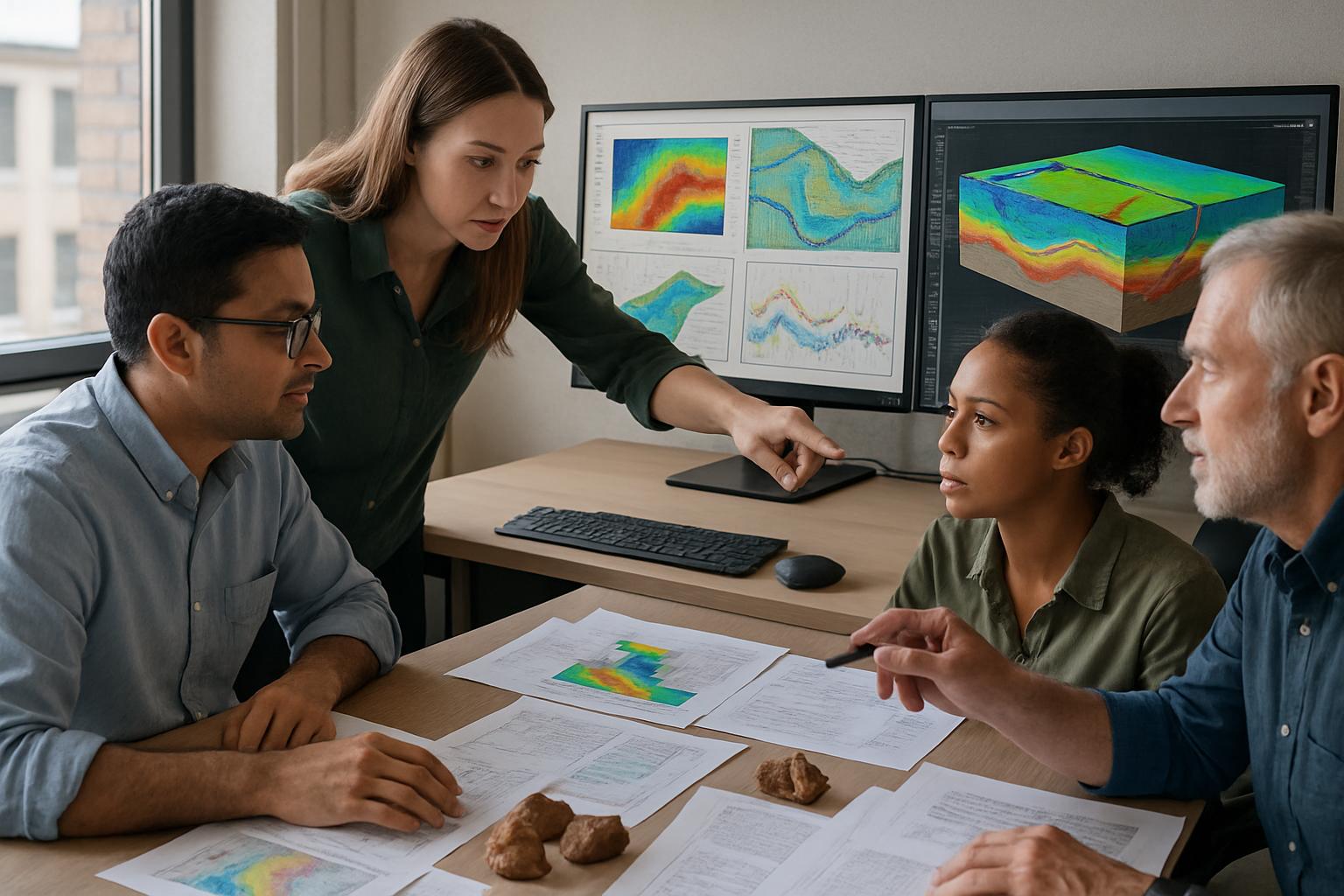
These dynamics intensify competitive pressure. Consequently, firms adopting advanced analytics may capture scarce resources sooner.
Industrial AI Drives Search
Machine learning scours petabytes of multivariate data for hidden patterns. For BHP, the standout proof resides at Oak Dam. The program re-analysed decades of Olympic Dam district records, combining them with fresh seismic imaging. Algorithms highlighted a deep conductive anomaly. Subsequently, drill rigs confirmed a bornite-rich system. BHP declared an inferred resource of 1.34 billion tonnes grading 0.66 percent copper on 30 August 2024.
Oak Dam Resource Milestone
- 1.34 billion t at 0.66 % Cu
- 220 million t at 1.96 % Cu above 1 % cutoff
- Announcement date: 30 August 2024
Furthermore, BHP’s 27 August 2024 filing stated that machine learning assisted discoveries in both Australia and the United States. Analysts await specifics on the American targets. Nevertheless, evidence mounts that Industrial AI can resurrect dormant datasets and convert them into actionable drill pads. These successes validate algorithmic triage. However, drill confirmation remains the arbiter of value.
Such milestones prove digital models can shorten targeting cycles. Consequently, investors view data competence as a differentiator.
Operational Gains Through Algorithms
Exploration is only half the story. Industrial AI models also run inside concentrators. At Escondida, the world’s largest copper mine, Azure-hosted models predict ore hardness and reagent needs hourly. Consequently, recovery improved while consumption fell. BHP reports saving more than three gigalitres of water and 118 gigawatt-hours of energy since fiscal 2022.
Escondida Plant Success Story
Microsoft’s John Montgomery called the joint project “transformative.” Moreover, Chief Executive Mike Henry highlighted sustainability gains in August 2024. The initiative shows how algorithms pay near-term dividends, unlike exploration which waits for permits. Additionally, similar models monitor equipment health, reducing unplanned downtime. Therefore, Industrial AI delivers value across the mine life-cycle.
These outcomes illustrate tangible returns. Meanwhile, scaled deployment could magnify margins across BHP’s global portfolio.
Risks And Governance Factors
No algorithm replaces core samples. Discovery still demands drilling, resource classification, and social licence. Moreover, poor data can mislead models, embedding bias into target ranking. Consequently, BHP stresses governance. Chief Technical Officer Johan van Jaarsveld notes the firm’s focus on explainability and oversight. In contrast, some analysts warn that hype may overstate near-term supply impact. Macquarie estimates data-centre growth could add only 200,000 tonnes of copper demand by 2030. Nevertheless, transparent methodologies help mitigate exaggeration.
These cautions highlight the importance of disciplined validation. Therefore, balanced expectations remain essential.
Market Implications And Outlook
Analysts from S&P Global argue multiple Oak Dam-scale deposits are needed to close the looming gap. Furthermore, Industrial AI can expand search space through deeper sensing, including muon tomography. Additionally, partnerships with Ivanhoe Electric and startups like KoBold extend BHP’s reach into U.S. terrains. Consequently, diversified data sources feed more robust models.
However, regulatory timelines in both countries could delay production beyond 2035. Therefore, supply relief may arrive later than optimists predict. Yet each validated discovery strengthens long-term optionality.
These market signals encourage continued technology investment. Subsequently, stakeholder collaboration will decide ultimate impact.
Skills Pathways For Professionals
Geoscientists now juggle code snippets alongside core trays. Moreover, mineral companies seek talent fluent in statistics, cloud platforms, and geology. Professionals can enhance their expertise with the AI Researcher™ certification. The program covers data pipelines, model governance, and business alignment, matching mining’s evolving needs. Additionally, hybrid skills boost career resilience amid automation.
These educational routes support workforce agility. Consequently, companies secure qualified practitioners to run Industrial AI safely.
Conclusion
BHP’s melding of algorithms and geology is shifting exploration and operations. Oak Dam demonstrates how Industrial AI turns forgotten files into sizeable resources. Escondida’s efficiency gains reveal complementary operational value. Nevertheless, drilling, permitting, and community engagement still dictate timelines. Therefore, stakeholders should view the technology as an accelerator, not a silver bullet. Furthermore, professionals upgrading their analytics skills will shape the next chapter. Explore certifications, stay curious, and help write mining’s digital future.


