

AI CERTS
2 hours ago
Indurex Raises Bar for Industrial Infrastructure Security
Moreover, market analysts predict rapid adoption if the startup delivers measurable gains in uptime and compliance. Industrial Infrastructure Security remains a boardroom priority, and Indurex intends to capitalise on that urgency.
Ransomware continues to spill into physical operations. Dragos reports that one in four attacks forces an OT shutdown. Therefore, boards now demand solutions that bridge digital and physical domains. Industrial Infrastructure Security investments have followed, with MarketsandMarkets projecting the OT security segment to almost double by 2030. Indurex hopes its contextual approach will stand out amid consolidation waves that saw giants like Mitsubishi acquire Nozomi Networks.
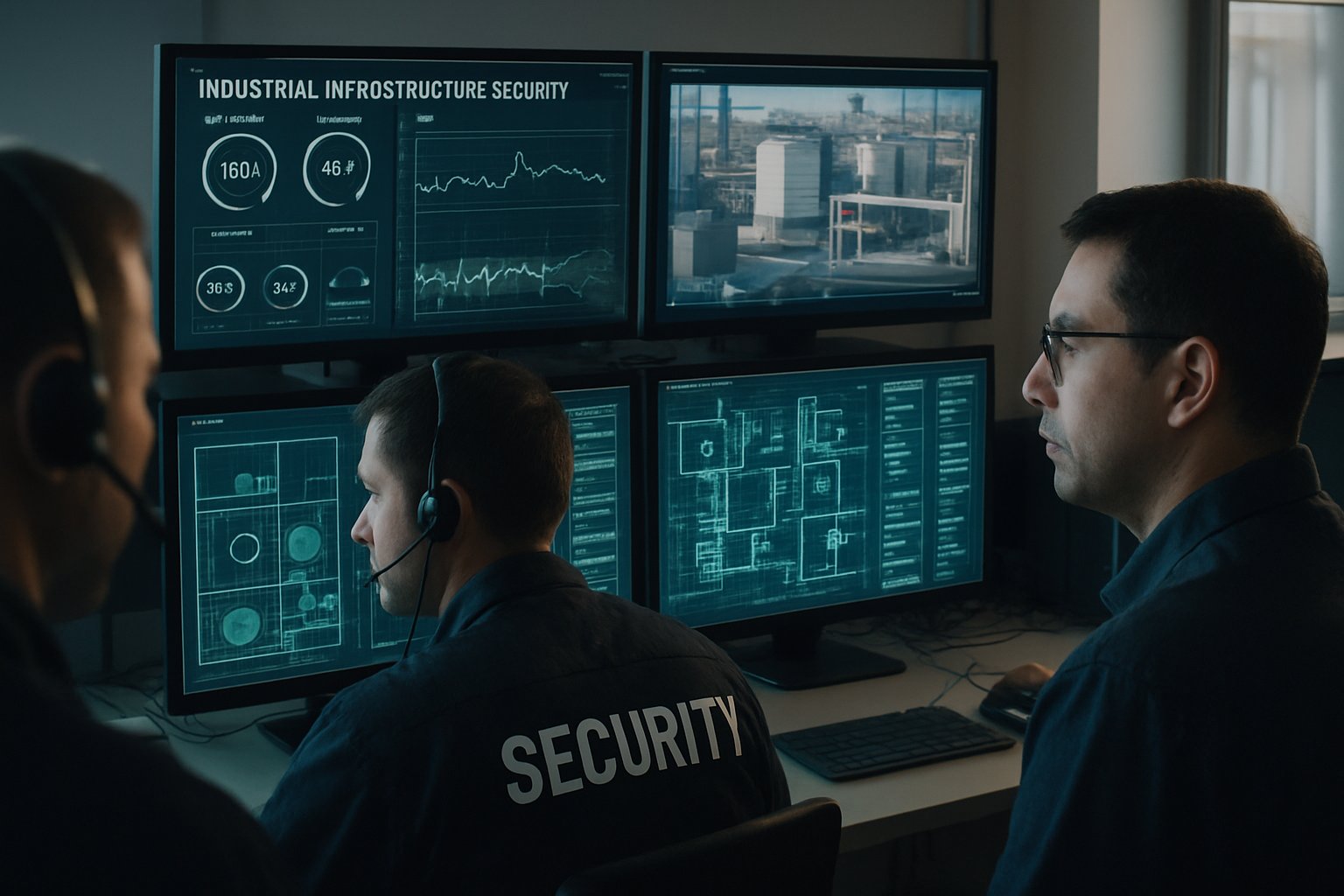
Industrial Security Market Landscape
Global spend on Industrial Infrastructure Security reached roughly USD 23 billion in 2025, according to MarketsandMarkets. Furthermore, researchers expect the figure to exceed USD 50 billion by 2030, representing a 16.5 percent CAGR. In contrast, traditional IT security growth sits in single digits. Operators clearly prioritise defences that protect pumps, turbines, and robotic lines.
Multiple factors fuel the surge. Firstly, governments tighten critical-infrastructure regulations. Secondly, ransomware crews now target OT layers because downtime profits them. Additionally, digital transformation projects connect legacy assets to cloud analytics, expanding attack surfaces. Cyberphysical disruptions no longer stay theoretical; they halt production and endanger safety.
Key vendors such as Claroty, Dragos, and Tenable compete by offering asset discovery and threat detection. However, many customers battle alert fatigue and siloed data. Industrial Infrastructure Security solutions must, therefore, provide prioritised, actionable insights. Indurex positions itself exactly there.
These trends confirm a lucrative opportunity. Nevertheless, new entrants must solve real operator pain. The following section explores Indurex’s technical edge.
Indurex Platform Technical Edge
Indurex brands its offering as “Engineering Cyber Intelligence.” Unlike tools focused only on network packets, the platform ingests historians, instrumentation asset systems, alarm managers, and endpoint logs. Moreover, machine-learning models correlate the diverse streams to generate adaptive risk scores. Consequently, noisy alerts shrink while critical events rise to the top.
OT engineers gain a unified dashboard that displays both cyber and process variables. For example, a valve anomaly accompanied by suspicious network traffic receives higher urgency. Cyberphysical context, therefore, drives faster mitigation. Additionally, Indurex promises non-intrusive data collectors supporting protocols such as OPC UA and Modbus.
Human-in-the-loop design remains central. CEO Bouhdada stresses explainable AI that presents root-cause factors rather than black-box scores. Furthermore, the company plans integrations with existing SIEM and SOC workflows. Professionals can also enhance their expertise with the AI Security Level 2 certification, which aligns with emerging OT defence skills.
The architecture aims to strengthen Industrial Infrastructure Security while respecting safety constraints. However, its success depends on field validation. We next examine the competitive landscape shaping that journey.
Competitive Forces And Gaps
Indurex enters a crowded arena dominated by firms with deep pockets. Claroty recently raised USD 150 million, while Nozomi Networks secured backing through a Mitsubishi acquisition. Moreover, Dragos continues to publish influential threat reports. Consequently, differentiating on features alone proves difficult.
Nevertheless, analysts note a gap in fusing engineering data with cyber telemetry. ARC Advisory Group’s Thomas Menze states that “autonomous resilience” requires such convergence because human reaction times lag. Indurex therefore targets a niche where process safety and cybersecurity overlap. If the platform reduces false positives by even 20 percent, buyers could justify switching costs.
Partnerships may offer another lever. Integrations with MSSPs and automation vendors could accelerate trust. In contrast, pursuing a purely direct-sales model would stretch the lean team. Thus, alliances could expand market reach without massive capital outlays.
The competitive pressures remain intense. However, Indurex’s differentiated context engine and founder pedigree provide an opening. The next part reviews early business momentum.
Early Business Momentum Signals
Currently, Indurex operates bootstrapped while preparing a pre-seed round. SecurityWeek reports active talks with European and U.S. investors. Moreover, the founders cite strong inbound interest from utilities seeking pilot projects. However, no customer names appear in public materials.
Industry observers watch funding sizes closely. Recent OT deals often exceed USD 20 million even at seed stage. Consequently, a modest raise might limit execution speed. Nevertheless, Bouhdada’s Applied Risk exit to DNV strengthens credibility with investors.
Headcount remains undisclosed, yet LinkedIn searches show at least eight employees across data science and industrial domains. Additionally, the company lists the Netherlands as its legal base, offering proximity to European critical-infrastructure operators.
These early signals suggest traction, but proof will emerge through successful pilots. The following section highlights challenges that could impede progress.
Challenges Facing New Entrants
Deploying sensors inside ageing plants is never trivial. Many facilities still rely on serial links and proprietary protocols. Therefore, collecting high-quality data without disrupting safety systems remains a hurdle. Moreover, operators often demand multi-month validation before approving persistent connections.
Trust represents another barrier. Engineers hesitate to delegate safety-related decisions to algorithms. Consequently, Indurex must provide transparent explanations and allow manual overrides. Additionally, national regulators scrutinise data export from critical sites, raising privacy concerns.
Market consolidation adds strategic risk. Larger vendors might copy contextual analytics or undercut pricing. Alternatively, Indurex could become an acquisition target, which would change roadmap priorities. Furthermore, economic headwinds could slow venture funding, shrinking the runway.
These obstacles highlight execution complexity. Nevertheless, resolved challenges could transform operator resilience. We now consider implications for end users.
Implications For Critical Operators
Utilities and manufacturers care most about safety, uptime, and regulatory compliance. Indurex’s promise to unify cyber and process data therefore resonates. Furthermore, reduced alert noise lets limited staff focus on real incidents. Adaptive scoring also supports automated maintenance scheduling, boosting efficiency.
Potential ROI becomes clear when viewed against reported outage costs. Dragos estimates a single OT shutdown can exceed USD 300,000 per hour. Consequently, even marginal improvements in incident response times deliver tangible savings. Industrial Infrastructure Security solutions that contextualise alarms may thus pay for themselves within months.
Operators seeking skills upgrades can combine platform deployment with professional training. The previously linked AI Security Level 2 credential offers structured knowledge on Cyberphysical threat modelling, making teams more self-reliant.
Overall, contextual intelligence enhances Industrial Infrastructure Security posture while supporting broader digital-transformation goals. Finally, we outline forward-looking recommendations.
Looking Ahead And Recommendations
Indurex should prioritise pilot transparency. Publishing anonymised case studies that show reduced mean-time-to-detect would validate claims. Moreover, collaborating with automation vendors could simplify data acquisition. Investors will, consequently, gauge momentum through integration counts and retention rates.
End users ought to evaluate platforms against specific workflows. Firstly, map existing historian, IAMS, and alarm sources. Secondly, request proof-of-concepts that demonstrate Cyberphysical correlation. Additionally, verify human-in-the-loop features to maintain safety standards.
Regulators could support adoption by clarifying guidelines on AI use in safety-critical environments. Meanwhile, academic partnerships may advance explainable-AI techniques, encouraging trust.
These steps collectively strengthen Industrial Infrastructure Security ecosystems. Continued collaboration will decide which vendors lead the next decade of resilient operations.
Industrial Infrastructure Security now stands at an inflection point. However, choices made today will dictate plant resilience tomorrow.
Therefore, stakeholders should track Indurex’s funding milestones, pilot outcomes, and roadmap disclosures. Success could redefine how Cyberphysical defences integrate with routine engineering tasks.
Finally, proactive professionals can future-proof careers by exploring advanced certifications and hands-on pilots.


