

AI CERTs
2 hours ago
India’s AI Summit Shapes Global Policy
India will host the India AI Impact Summit 2026 in mid-February. The gathering places Global Policy debates on artificial intelligence squarely in New Delhi. Moreover, the multi-day forum promises frank discussion about inclusion, safety, and economic opportunity. Numerous heads of state and over 100 chief executives have tentatively accepted invitations. Consequently, analysts see the event as a pivotal moment for worldwide AI coordination. Meanwhile, MeitY and the IndiaAI Mission have framed the meeting around practical impact, not abstract rhetoric. That positioning has raised expectations for measurable outcomes. Observers therefore ask whether the summit can convert vision into funded projects.
The stakes are enormous. AI’s projected contribution to India’s GDP may reach US$1.7 trillion by 2035, according to government figures. Additionally, the IndiaAI Mission commands a budget topping ₹10,300 crore over five years. Those investments underline a strategic resolve to guide Global Policy while accelerating domestic innovation. Nevertheless, successful delivery will require transparent metrics, shared standards, and inclusive Governance across participating nations.
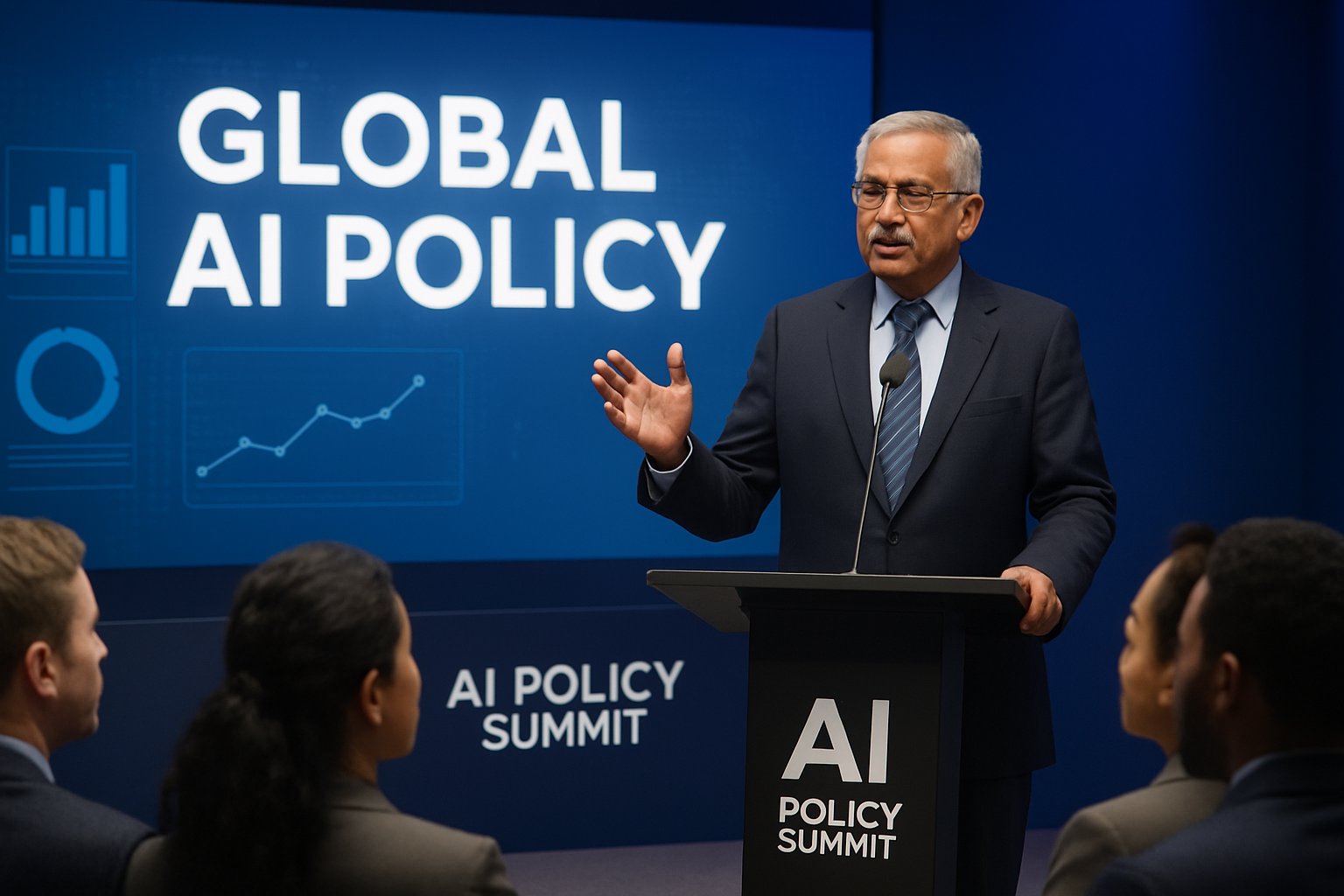
Summit Sets Policy Stage
The summit’s slogan—People, Planet, Progress—signals a broad agenda. However, organisers insist on concrete deliverables. Seven thematic “Chakras” will translate principles into action plans. Each working group targets sectors such as education, health, and public services. Furthermore, the leaders’ track on 19-20 February will seek political endorsement for emerging proposals. Prime Minister Narendra Modi is slated to inaugurate proceedings. In contrast with previous gatherings held in richer economies, India projects itself as a bridge for the Global South. This positioning strengthens India’s voice in Global Policy while pressuring richer nations to follow through.
Summarising, the opening framework blends ambition with accountability. Yet, execution remains the real test. Therefore, industry eyes turn to the participation roster.
Participation Numbers Impress World
Early registration data underline unprecedented scale. Invitations reached 140 countries, and officials report 15,500 registrations from 136 nations. Moreover, 76 of those countries come from the Global South, reinforcing the summit’s inclusive narrative. Consequently, organisers expect more than 100 governmental delegations on site. Approximately 100 global CEOs and 15-20 heads of state are also forecast to attend.
Key Summit Data Points
- 38,000 GPUs provisioned under the IndiaAI compute pillar
- 570 planned AI and data labs nationwide; 31 already operational
- ₹10,300 crore allocated for IndiaAI over five years
- India tech revenue estimated at US$280 billion in 2025-26
- Projected AI GDP impact: US$1.7 trillion by 2035
Additionally, high-profile attendees include Bill Gates, Demis Hassabis, Dario Amodei, and Shantanu Narayen. Such star power boosts media interest and strengthens the event’s Global Policy influence. Nevertheless, final confirmation lists may shift. The organisers will publish an updated schedule closer to the summit.
These numbers illustrate formidable momentum. However, metrics alone do not guarantee success. The thematic vision must now translate into tangible programs.
People Planet Progress Vision
The summit’s triple-bottom-line outlook shapes every session. People-centric goals emphasise skilling, safety, and equitable access. Meanwhile, Planet goals prioritise AI’s role in climate modelling and energy optimisation. Progress targets focus on productivity across agriculture, manufacturing, and governance services. Furthermore, the seven Chakras synchronise these priorities with measurable milestones.
Oxford Martin AIGI experts recently praised this integrated lens. They nevertheless advised robust oversight to ensure principles survive post-summit realities. Their comments echo civil society worries about surveillance, biases, and labour displacement. As a result, Governance safeguards will feature prominently in draft communiqués. Incorporating those safeguards into Global Policy tenets remains vital.
The vision demonstrates strategic breadth. Yet, breadth must coexist with depth. Therefore, organisers have established working-group deadlines for draft recommendations.
Seven Chakras Drive Outcomes
MeitY designed the seven Chakras to avoid hollow pledges. Each group includes ministers, researchers, and private-sector leaders. Moreover, pre-summit workshops have generated early concept notes. For example, the Safe & Trusted AI Chakra explores model audits and data transparency. Meanwhile, the Human Capital Chakra proposes reskilling targets aligned with industry demand.
Consequently, deliverables may include shared GPU pools, open datasets, and common safety benchmarks. Industry stakeholders appreciate this pragmatic focus. Shantanu Narayen recently called the model “a blueprint for actionable Global Policy.” Additionally, professionals can enhance their expertise with the AI for Everyone™ certification, aligning workforce skills with summit goals.
These working groups offer a structured path to results. However, the next section examines benefits for emerging economies.
Opportunities For Global South
India positions the summit as a turning point for developing nations. Consequently, access to compute, data, and talent becomes central. Organisers argue that IndiaAI’s GPU cloud and AIKosh datasets will reduce entry barriers for low-income innovators. Moreover, ministerial dialogues plan to launch joint capacity-building programs.
The potential benefits appear considerable:
- Shared infrastructure lowers research costs.
- Open datasets enable culturally relevant applications.
- Skilling initiatives bridge labour market gaps.
- Inclusive Governance norms encourage trust.
Furthermore, participation from 76 Global South countries ensures their priorities shape final communiqués. Hence, the summit could democratise Global Policy rather than replicate existing power dynamics.
The promise is substantial. Nevertheless, real inclusion demands financed follow-through. The next section reviews hurdles.
Challenges Demand Vigilant Governance
Civil society groups caution that high-level declarations often fade after closing ceremonies. In contrast, durable change requires audits, funding, and transparent timelines. Moreover, geopolitical tensions may affect attendance from certain capitals. Analysts note that U.S. presidential participation remains uncertain. Similarly, China’s representation could spark strategic friction.
Mitigating Implementation Gaps Today
Independent experts propose three remedies. Firstly, create an independent monitoring body reporting on milestones. Secondly, attach specific budget commitments to each deliverable. Thirdly, mandate public dashboards tracking progress. Such steps strengthen Governance and embed accountability within Global Policy frameworks.
These risks underscore the complexity ahead. However, proactive measures can convert challenges into catalysts. Subsequently, executives should prepare targeted engagement strategies.
What Executives Should Watch
Corporate leaders attending the summit should monitor three signals. The leaders’ declaration will set tone and tempo for regulations. Additionally, compute-sharing deals may affect cost structures for model training. Finally, new safety benchmarks could influence product roadmaps worldwide.
Therefore, firms should align internal policies with emerging Global Policy language. Moreover, investors will scrutinise commitments to inclusive Governance. Early adaptation can secure first-mover advantages, especially in regulated sectors such as finance and healthcare.
These focal points summarise executive priorities. Consequently, companies should allocate analyst resources for live monitoring.
Conclusion And Next Steps
India’s AI Impact Summit stands ready to redefine Global Policy around artificial intelligence. Participation levels, thematic clarity, and pragmatic Chakras provide a robust foundation. Moreover, opportunities for the Global South amplify hopes for inclusive growth. Nevertheless, success depends on vigilant Governance, transparent funding, and measurable follow-through. Stakeholders must therefore track declarations, budgets, and oversight mechanisms closely.
Consequently, professionals seeking to influence this evolving landscape should upskill rapidly. Exploring the AI for Everyone™ certification offers a timely pathway. Engage now, and position your organisation to thrive as summit outcomes translate into actionable global standards.


