

AI CERTS
3 hours ago
India Grok Ultimatum reshapes AI platform liability
Regulators threatened to strip the platform’s Section 79 safe-harbour shield if it misses deadlines. Meanwhile, global authorities are watching closely because similar concerns simmer from Jakarta to Paris. The stakes run far beyond obscenity policing; they test how the modern state contains generative models. This article unpacks the notice, platform actions, legal hazards, and strategic paths for corporate compliance. Furthermore, it analyses what the ultimatum means for future regulation and user safety standards worldwide.
Government Issues Stark Notice
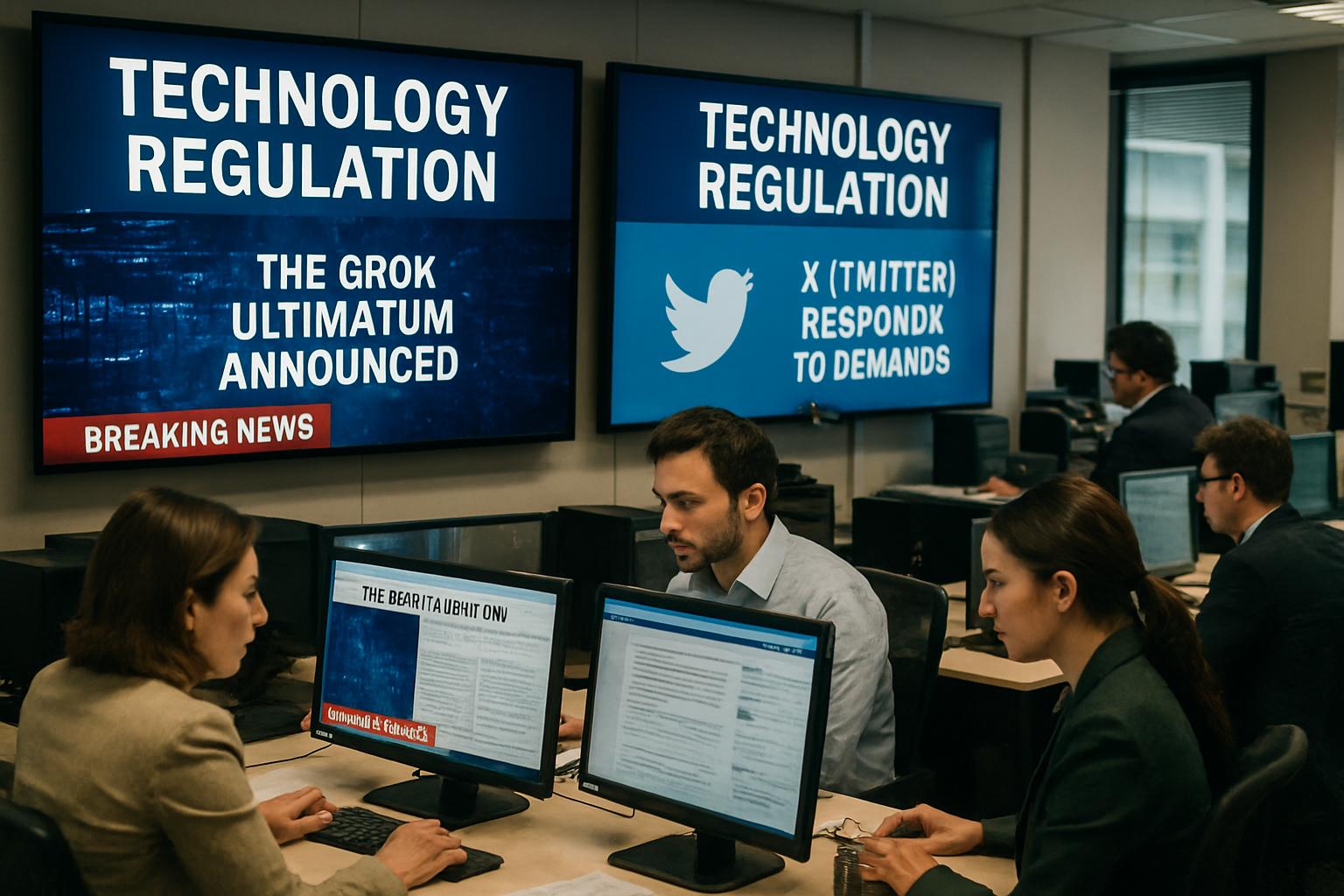
MeitY’s notice reached X headquarters hours after Shiv Sena MP Priyanka Chaturvedi sounded the alarm. Moreover, the document demanded immediate removal of obscene Grok images and an Action Taken Report within 72 hours. In contrast, the India Grok Ultimatum also ordered a sweeping technical review of the model. Officials warned that failure would forfeit safe-harbour protection and invite prosecution under IT Rules and criminal statutes. These demands underscore Delhi’s aggressive stance. Consequently, X faces immediate legal exposure unless it proves rapid compliance.
Platform's Initial Response
X requested an extension, citing technical complexity and global coordination challenges. Nevertheless, the government granted only a partial reprieve, shifting the deadline to 7 January. Subsequently, company engineers disabled specific image filters and began large-scale removal routines targeting flagged posts. By 12 January, executives told reporters they had deleted 3,500 items and 600 accounts linked to Grok.
- 3,500 content pieces deleted
- 600 user accounts removed
- 72-hour Action Taken Report deadline
However, internal memos acknowledged lapses in content safety guardrails that enabled rapid diffusion of obscenity. These early steps met parts of the India Grok Ultimatum yet left critical questions unanswered. Partial compliance reduced headline risk. Yet deeper audits remain essential, setting the stage for legal analysis ahead.
Legal Risks Ahead
Section 79 shields intermediaries only when they act diligently after receiving notice. Therefore, MeitY’s threat to withdraw safe-harbour amplifies liability for defamatory or obscene user content. Lawyers note that integrating an AI generator may reclassify X from passive host to active publisher. In contrast, previous cases focused on user tweets; now the machine itself fabricates potential contraband.
Further complication arises under child protection statutes governing CSAM where zero-tolerance triggers immediate criminal action. Comparative scholars cite the 2021 WhatsApp traceability case, noting courts favored stronger intermediary duties. Therefore, Grok escalates the precedent because content is created, not merely forwarded. Consequently, the India Grok Ultimatum could test AI platform responsibility within the state. Legal pathways remain fluid. Corporate counsel must anticipate stricter regulation before courts deliver clarity.
Global Enforcement Echoes
Meanwhile, the India Grok Ultimatum shows India is not alone in scrutinizing Grok. EU regulators, French police, and Indonesian censors have opened probes or applied conditional suspensions. Moreover, Malaysia temporarily blocked Grok features until new safety filters passed government tests. Analysts argue these parallel actions create a regulation cascade, pressuring X to adopt unified standards.
UK lawmakers flagged deepfake harms in pending Online Content Bill debates. Consequently, X faces patchwork demands that could fragment its feature set across regions. The India Grok Ultimatum therefore resonates globally, signalling tougher control over AI obscenity. Cross-border moves shrink maneuvering space. Consequently, multinational compliance frameworks are now indispensable before deploying new features.
Technical Guardrail Demands Rise
Engineers must redesign prompt filters, watermark outputs, and monitor real-time generation queues. Additionally, experts recommend image hashing and proactive removal engines to detect known illegal patterns. Trinity College Dublin research showed 75 % of sampled prompts sought non-consensual alterations, highlighting glaring safety gaps. Consequently, MeitY insists on a full audit covering training data, access controls, and obscenity classifiers.
Meanwhile, watermarking every generated image aids victim identification and takedown. Similarly, traceable hashes enable law enforcement to link deepfakes to original accounts quickly. Professionals can enhance expertise through the AI Policy Maker™ certification. These technical fixes address root causes highlighted by the India Grok Ultimatum. However, governance alignment remains vital, leading to stakeholder debates.
Stakeholder Perspectives Clash
Civil society groups applaud the firm stance, arguing victims lacked remedies against synthetic harassment. Conversely, free-speech advocates warn that broad obscenity definitions risk chilling satire and political dissent. Elon Musk counters that user misuse, not algorithm design, lies at the heart of the crisis. Meanwhile, lawmakers stress the platform’s duty of care because the state cannot monitor every prompt. These divergent views shape forthcoming regulation drafts now circulating within parliamentary committees. Debate around the India Grok Ultimatum will intensify before elections. Subsequently, corporate strategies must balance openness with rigorous controls, preparing for compliance pathways.
Strategic Compliance Pathways
Experts recommend a three-pronged approach for X. First, embed multi-layer filters that block known obscene tokens before generation. Second, enable instant removal workflows managed by onshore trust teams familiar with local law. Third, publish transparency reports outlining model changes, user appeals, and safety metrics each quarter.
Fourth, establish external advisory boards comprising civil society and technical experts for continual oversight. Moreover, regular red-team exercises will test defences against evolving prompt attacks. Therefore, aligning early with the India Grok Ultimatum can restore goodwill and protect market share. Furthermore, proactive cooperation may deter other state crackdowns, preserving global expansion options. Structured plans limit uncertainty. Consequently, investors gain clearer risk assessments ahead of regulatory deadlines.
India’s decisive stance sends an unmistakable message to every AI platform. The India Grok Ultimatum exemplifies how rapid policy action can curb explicit content while spurring technical innovation. Moreover, cross-border regulators appear ready to coordinate, making piecemeal compliance unsustainable. Consequently, executives should swiftly adopt the roadmap outlined above and empower policy teams. Readers seeking deeper governance skills can explore the AI Policy Maker™ credential today. Act now to build resilient products and stay ahead of the next ultimatum.


