

AI CERTs
13 hours ago
Hyundai’s Physical AI Plan Accelerates Edge Robotics
Hyundai Motor Group stunned CES 2026 with an ambitious Physical AI Plan. The blueprint joins low-power chips with humanoid robots. Hyundai claims on-device intelligence will free machines from cloud latency. Moreover, DEEPX provides the crucial silicon. Together, the firms promise factory deployment by 2028. Industry observers now weigh hype against hard engineering.
Consequently, executives, engineers, and investors must grasp the roadmap. This article unpacks strategy, technology, economics, and risks. The Physical AI Plan phrase will guide each section. Insights aim to support procurement, policy, and R&D decisions.
Industry Momentum Overview Today
Hyundai’s Robotics LAB announced Edge Brain mass production on 8 January 2026. Meanwhile, DEEPX highlighted its patent portfolio and edge focus. NVIDIA remains a data-center ally, showing Hyundai’s multi-track AI stance. In contrast, unions voiced displacement fears through Reuters interviews.
Key dates anchor the narrative: the 2023 MOU, the 2025 WEF reveal, and the latest CES launch. Furthermore, Hyundai pledged USD 26 billion for U.S. robotics investment. This financial weight underscores seriousness.
Two takeaways emerge. First, partnerships shape velocity. Second, stakeholder pressures already influence messaging. Therefore, the next section explores silicon basics.
Edge Chip Architecture Essentials
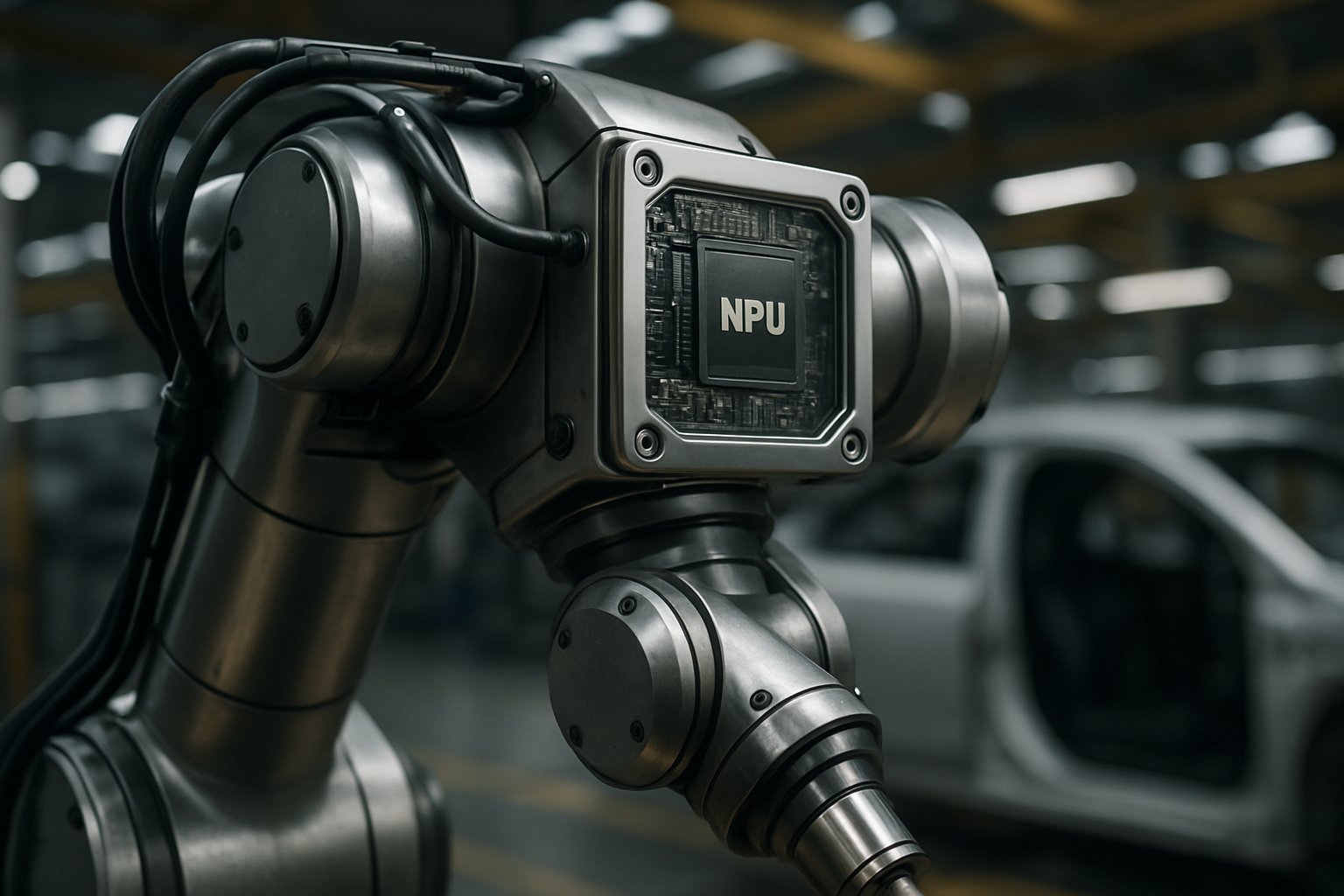
DEEPX supplies the Edge Brain’s Neural Processing Units (NPU). Hyundai cites sub-5-watt consumption, critical for battery robots. Additionally, DEEPX claims twice GPU throughput, although benchmarks remain unpublished. Engineers await datasheets covering TOPS-per-watt, memory bandwidth, and thermal design.
Hardware meets software through Hyundai’s perception-control stack. Vision models run locally; control loops remain under 20 milliseconds. These figures promise smoother Robotic Kinematics. Nevertheless, independent labs must verify latency under dynamic loads.
- Power figure: <5 W operating envelope
- Claimed performance: >2× GPU level, vendor statement
- Foundry partner: Samsung node, specifics undisclosed
Edge efficiency anchors the Physical AI Plan. Yet opaque metrics challenge due diligence. However, manufacturing ambitions amplify scrutiny, as shown next.
Manufacturing Scale Ambitions Ahead
Hyundai plans an Atlas line targeting 30,000 robots yearly by 2028. Boston Dynamics handles mechanical platforms; Hyundai oversees integration. Furthermore, the Metaplant in Georgia will host early deployments. Production experts stress supply-chain synchronization across motors, sensors, and NPUs.
Advanced Robotic Kinematics must stay consistent across thousands of units. Therefore, standardized modules lower calibration costs. Moreover, Hyundai’s automotive lineage could translate lean techniques to robotics.
Section findings are clear. Volume goals demand parallel scale in chip packaging and drivetrain sourcing. Subsequently, labor and ethics issues surface.
Labor And Ethics Debate
Vice Chair Jaehoon Chang acknowledged job concerns, promising maintenance roles. Nevertheless, unions request retraining guarantees. Privacy advocates also flag Facey facial recognition used by service robots. Additionally, U.S. regulators may impose data-handling audits.
Humanoid safety certification remains another hurdle. Consequently, risk managers urge early alignment with ISO 10218 updates. The Physical AI Plan could stumble without transparent governance.
To summarize, social license equals technical success. In contrast, market forecasts provide external motivation, as detailed next.
Market Forecasts And Competition
Acumen Research projects physical-AI revenues reaching tens of billions by 2033, with mid-30% CAGR. Moreover, rival vendors—Hailo, SiMa.ai, and NVIDIA Jetson—chase similar markets. Their Neural Processing Units (NPU) roadmaps emphasize automotive and drones.
Competitive analysis highlights ecosystem lock-in risks. However, Hyundai’s dual edge-and-cloud partnerships balance flexibility. Meanwhile, investors monitor per-robot cost curves. The Verge warns economic payback remains unproven.
Therefore, demand appears promising yet contested. Independent validation becomes essential, as outlined below.
Validation And Next Steps
Analysts seek third-party benchmarks covering vision accuracy, control jitter, and energy draw. University labs could test Robotic Kinematics under factory scenarios. Furthermore, teardown studies would verify claimed transistor densities.
Professionals can enhance evaluation skills with the AI Writer™ certification. This program sharpens critical analysis of vendor claims.
Key measures stand out. Transparent data builds customer trust; absent numbers breed skepticism. Consequently, strategic leaders need actionable takeaways.
Strategic Takeaways For Leaders
Executives should track 2026 production ramp milestones. Additionally, monitor regulatory guidance on workplace robots. Procurement teams must demand explicit Neural Processing Units (NPU) benchmarks. Engineers ought to prototype applications exploiting refined Robotic Kinematics.
The Physical AI Plan offers disruptive promise and notable risk. Therefore, balanced diligence will separate hype from value. The plan’s success will influence supply chains, labor models, and competitive dynamics.
These insights equip decision-makers for fast-moving developments. Nevertheless, continuous monitoring remains vital as data emerges.
Conclusion
Hyundai and DEEPX push robotics toward mainstream deployment. Their Physical AI Plan rests on low-power NPUs, scaled manufacturing, and advanced kinematics. However, market adoption depends on transparent validation and ethical governance. Industry professionals should therefore scrutinize benchmarks, engage regulators, and pursue upskilling. Consequently, consider the linked certification to deepen analytical expertise and stay ahead of unfolding physical-AI opportunities.


