

AI CERTS
4 hours ago
Hyperscale Data Eyes Record AI Compute Revenue in 2026
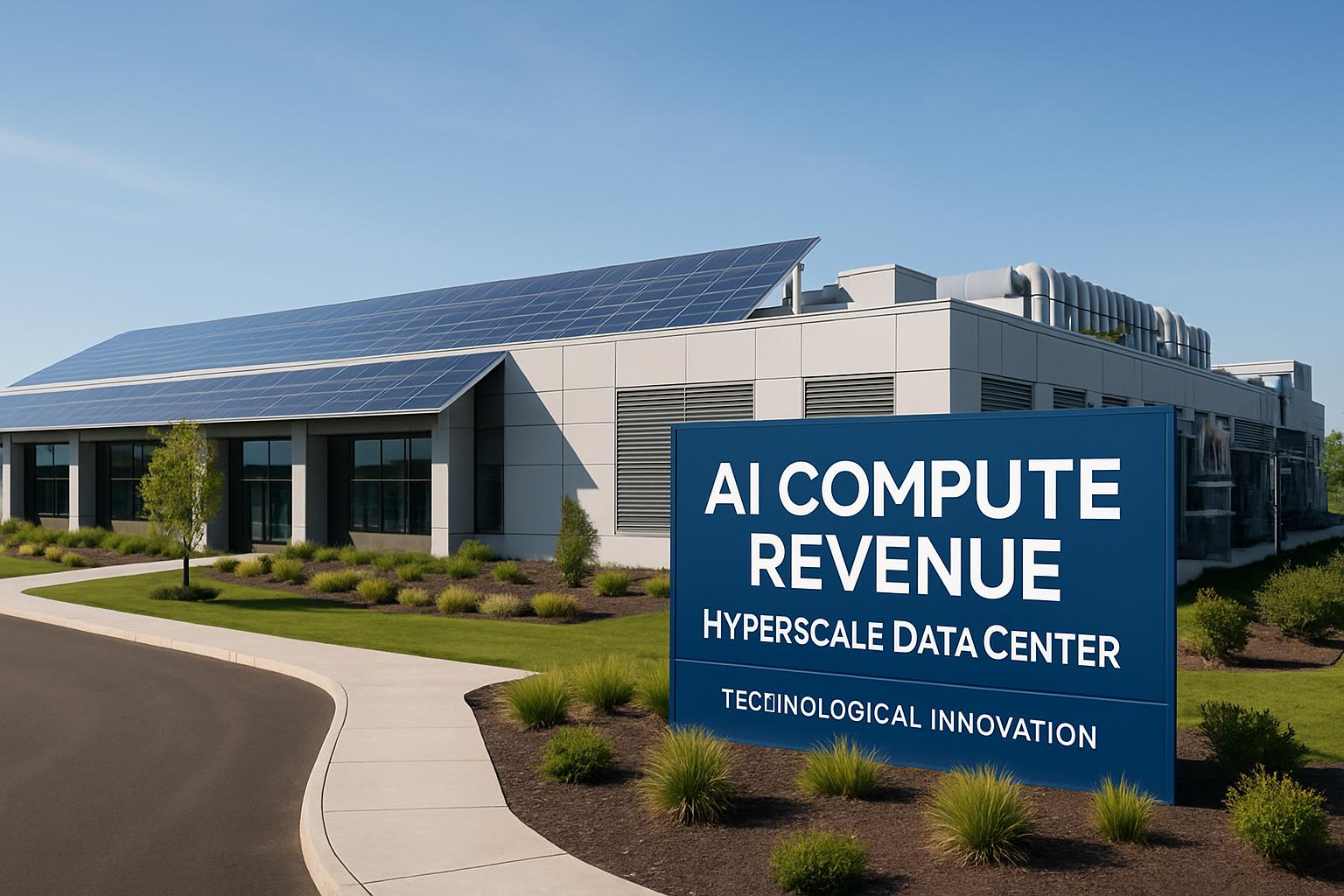
This feature unpacks the numbers, context, and risks behind that bold AI Compute Revenue projection. Furthermore, it examines how smaller data centers can thrive amid hyperscaler spending that now dominates infrastructure headlines. Finally, readers receive practical certification guidance for capitalising on the sector’s talent gap.
Market Demand Surge Continues
Global spending on cloud and AI infrastructure keeps climbing at breakneck speed. Synergy Research estimates hyperscaler CAPEX reached $127 billion in Q2 2025, up 72 percent year over year. Meanwhile, Axios projects aggregate budgets above $600 billion for 2026. Consequently, demand for high-density racks and reliable power now exceeds supply across many regions.
Hyperscale Data positions itself as a niche beneficiary of that wave. The firm targets tenants requiring GPU clusters for generative models and high-performance computing. Therefore, every incremental rack uplifts AI Compute Revenue while boosting utilization of existing assets.
In contrast, traditional colocation providers without expansion rights struggle to meet these megawatt-scale requests. These dynamics underline the urgency of securing land, permits, and substation upgrades early. Demand shows no signs of abating. However, supply constraints intensify competition, setting the stage for our next focus.
Hyperscale Data Strategy Evolves
CEO William Horne claims the company is now a pure-play operator after shedding noncore distractions. Nevertheless, the team still leverages hybrid Bitcoin mining to monetise idle GPUs during contract ramp-up periods. Such flexibility generates cash for infrastructure upgrades while attracting AI workloads requiring stable power and cooling.
The biggest strategic lever remains the full-year consolidation of Ballista Group. Management expects Ballista to contribute roughly $40 million, lifting AI Compute Revenue beyond organic growth. Additionally, Ault Lending should add up to $30 million through structured loans to hosting clients.
Consequently, higher-margin software and finance streams diversify results away from volatile hosting cycles. Such diversification supports another jump in AI Compute Revenue, targeted for the fourth quarter of 2026. Yet, strategic ambition alone cannot fund massive expansions, a reality explored next.
Michigan Capacity Plans Accelerate
Alliance Cloud Services signed an agreement-in-principle to boost the Michigan site from 30 MW to 300 MW. Moreover, utility partners agreed to deliver the additional power within 44 months, pending approvals. The company estimates build costs between $5 and $10 million per megawatt, excluding GPUs.
Key milestones stand out:
- Letter of agreement expected by Q3 2026, subject to financing.
- Engineering design targeted for completion within 12 months of final contract.
- Phase one adds 50 MW, earmarked for AI tenants under five-year leases.
- Full buildout could multiply company data centers footprint tenfold.
- Campus would rank among Midwest's largest data centers.
Furthermore, the site supports both Bitcoin rigs and GPU clusters, providing operational flexibility. Initial phase could generate hosting revenue within 18 months. If executed, the expansion would amplify AI Compute Revenue and strengthen bargaining power with hyperscalers. Still, capital intensity remains daunting, leading naturally to financing concerns. The Michigan vision offers transformative scale. However, funding realities could derail timelines, as the next section explains.
Financing Risk Factors Persist
Hyperscale Data relies heavily on convertible notes and preferred shares to fund growth. In September 2025, SEC filings showed negative EBITDA and short-term obligations exceeding cash on hand. Consequently, analysts warn that dilution or high-cost debt could offset operating gains.
Moreover, the 300 MW project may require up to $3 billion, even at the low cost estimate. Financing at double-digit rates would pressure margins and delay break-even profitability. Therefore, each financing round must align with milestones that directly elevate AI Compute Revenue without ballooning leverage.
Nevertheless, management cites improved cash generation from lending and software as partial mitigation. Investors will scrutinise audited revenue figures once the 10-K is filed, seeking proof of execution. Funding strategy remains the linchpin. Subsequently, competitive dynamics determine whether the gamble pays off.
Competitive Landscape Outlook Widens
The market teems with independent operators chasing hyperscaler contracts. Pure DCS, Compass, and Vantage all court the same enterprise AI workloads. Recent filings indicate revenue momentum accelerating for several competitors. In contrast, Hyperscale Data banks on Midwest power economics and its hybrid Bitcoin model.
However, hyperscalers increasingly sign multi-gigawatt agreements with only a few strategic partners. Consequently, smaller data centers must differentiate through speed, flexibility, and cost transparency. Delivering AI Compute Revenue growth faster than peers could attract joint-venture capital or takeover interest.
Meanwhile, local regulators weigh grid constraints, affecting project approval timelines for every competitor. These pressures force disciplined site selection and agile engineering. Competition favours scale and speed. Therefore, talent becomes a decisive weapon, explored below.
Upskilling For Growth Imperative
Market success ultimately depends on skilled professionals who can design, build, and optimise advanced compute estates. Furthermore, executives emphasise multidisciplinary knowledge covering power, cooling, networks, and financial modelling. Professionals can upskill via the AI Data Robotics™ certification.
Additionally, project managers who blend engineering savvy with financing insight often accelerate AI Compute Revenue realisation. Consequently, companies prioritise training budgets to protect long-term revenue streams despite broader cost controls.
A focused skills roadmap might include:
- Power systems design for high-density racks.
- Financial modelling for megawatt buildouts.
- Regulatory navigation across data-center markets.
Skilled teams convert capex into value quickly. Therefore, the right talent pipeline underpins every dollar of future growth.
Hyperscale Data's 2026 outlook reflects market demand, strategic acquisitions, and creative financing. However, executing a 300 MW build while managing leverage remains the central challenge. Continued access to capital will determine whether promised AI Compute Revenue materialises at scale. Meanwhile, hyperscaler spending trends suggest hosting demand should stay robust over the planning horizon. Consequently, professionals who master technical and financial disciplines will command outsized influence. Consider securing the featured certification to position yourself at the centre of this transformative wave. Act now and convert industry disruption into lasting career upside.


