

AI CERTS
3 hours ago
Humanoid Robotics Shine at China’s 2026 Gala
Unitree, MagicLab, Galbot, and Noetix seized the moment. Moreover, their synchronized Kung Fu routines highlighted mechanical dexterity and autonomy advances. Search traffic on JD.com surged within minutes, confirming consumer curiosity. Analysts therefore began recalculating 2026 shipment forecasts overnight. This article unpacks how the prime-time Gala reshaped technology, market, and policy conversations.
Prime-Time Humanoid Showcase
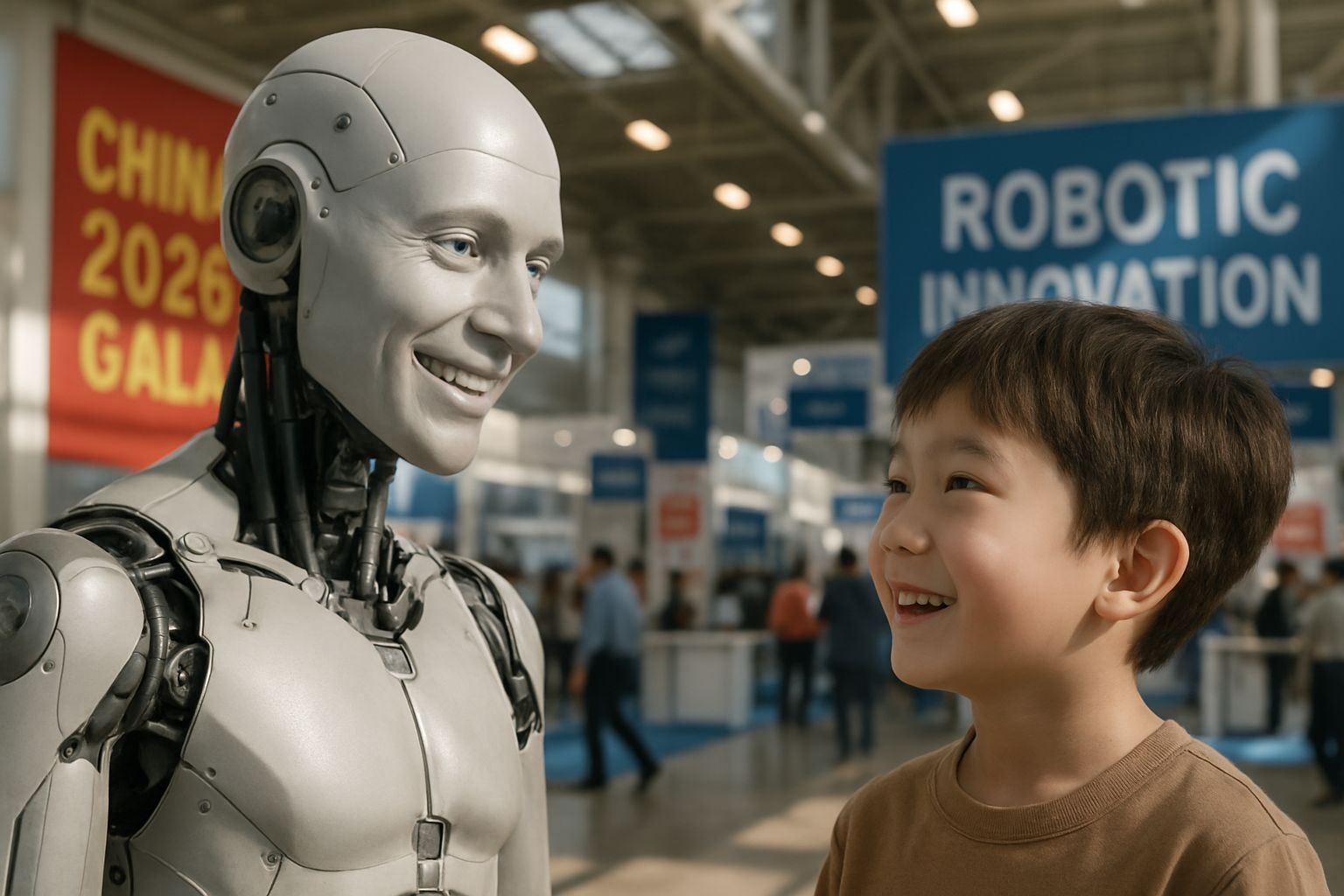
Organizers treated the Gala like China’s Super Bowl for technology. Furthermore, more than 700 million viewers witnessed Humanoid Robotics units performing complex Kung Fu sequences without visible cables. Unitree’s G1 series executed continuous backflips, stunning even seasoned stunt coordinators. Noetix’s child-sized Bumi balanced teacups while bowing, reinforcing public trust in everyday safety. Consequently, commentators compared the segment to earlier Boston Dynamics videos yet noted superior mechanical grace.
The broadcast also claimed several world-firsts, including synchronized eight-robot parkour across elevated tables. Moreover, live subtitles highlighted finger dexterity, crediting Galbot’s 22 degrees of freedom per hand. Experts later confirmed many motions relied on closed-loop cluster control rather than simple playback. These feats cemented public confidence in televised android skill. However, technical details behind the show deserve deeper scrutiny.
Behind The Dazzling Stunts
Beneath the choreography lay years of actuator research and control theory. Moreover, Galbot showcased multi-fingered hands containing over 30 micro motors for refined mechanical grasping. Cluster algorithms updated positions every five milliseconds, therefore allowing aerial flips to land precisely. In contrast, earlier prototype shows depended on human teleoperation hidden backstage. This time, companies claimed autonomy powered by embodied foundation models branded as AstraBrain.
Nevertheless, engineers admitted extensive rehearsal still reduced uncertainty thresholds. Humanoid Robotics thrived on improved lithium battery density, which extended runtime beyond 60 minutes under bright studio lights. Consequently, producers avoided mid-segment battery swaps that could break narrative flow. Technical advances delivered believable magic yet remained tightly stage-bound. The next question involves market traction beyond television sets.
Market Ripples And Numbers
Commercial impact followed the routine almost instantly. JD.com reported record searches within two hours of the Gala broadcast. Furthermore, inquiries jumped 460 percent, and confirmed orders climbed 150 percent.
- Unitree shipped 5,500 humanoids during 2025.
- Chinese domestic volume reached 18,000 units, says GGII.
- Global shipments hit 13,000 units, according to Omdia.
- Noetix priced Bumi presales at 9,988 yuan.
Meanwhile, Humanoid Robotics vendors issued upbeat shipment guidance. Unitree projected 10,000–20,000 units for 2026, doubling 2025 volumes. Moreover, Galbot’s December funding round raised over $300 million at a $3 billion valuation. Analysts stressed that several figures originated from corporate press releases, not audited filings. These numbers reveal surging optimism tempered by data gaps. Consequently, understanding investor behavior requires tracking eventual rollout metrics.
Key Players Driving Momentum
Several firms defined the evening’s narrative. Consequently, Unitree’s CEO Wang Xingxing framed the show as a large-scale stress test for production units. Galbot emphasized AstraBrain integration and dexterous manipulation. Additionally, MagicLab demonstrated a noodle-making robot, hinting at food-service Deployment possibilities. Noetix targeted family buyers with playful interactions and accessible pricing.
In contrast, Unitree addressed industrial needs through high-torque joints and robust mechanical design. Humanoid Robotics competition therefore intensified across consumer and enterprise segments. These companies now shape supply chains and talent pipelines. However, limitations still shadow their ambitions.
Technological Limits And Questions
Spectacle can obscure engineering realities. Nevertheless, stage routines differ from unstructured warehouse Deployment lasting months. Sensors may drift, and actuators overheat during heavy duty cycles. Furthermore, safety incidents already circulated online, including a viral Mechanical stumble by an XPeng prototype. Independent experts urge caution when equating a Kung Fu flip with sustained pick-and-place accuracy. Humanoid Robotics still struggles with cost, durability, and regulatory acceptance. These challenges highlight crucial gaps. Consequently, policy frameworks become increasingly important.
Strategic Signals For Policy
Beijing leveraged the Gala megaphone to broadcast innovation prowess. Moreover, analysts like UCLA’s Ramesh Srinivasan called the broadcast an unmistakable geopolitical statement. China Media Group’s reach therefore amplifies domestic manufacturing goals. Consequently, regulators worldwide examine supply chain dependencies and safety standards.
Professionals can enhance policy insight through the AI Policy Maker™ certification. In contrast, companies lobby for balanced oversight that accelerates Deployment without stifling exports. Humanoid Robotics policy deliberations now influence talent training and cross-border investment. Coordinated policy action could unlock global growth. Meanwhile, enterprises prepare for wider rollouts.
Preparing For Broad Deployment
Manufacturers are scaling factories, doubling motor machining capacity within months. Furthermore, cloud simulation accelerates training of motion policies before physical Deployment. Retail pilots place robots in appliance stores to gather user feedback. Humanoid Robotics adoption will hinge on service lifetime exceeding three years. Moreover, spare-parts logistics must match automotive standards. Kung Fu theatrics will remain useful marketing, yet real value lies in sustained productivity.
- Increase battery swap speed to under two minutes.
- Harden joints against dust, heat, and vibration.
- Deploy remote diagnostics for predictive maintenance.
These preparations position vendors for mainstream launches. Consequently, stakeholders anticipate shipment surges during late 2026.
Overall, the Lunar New Year broadcast redefined public expectations for Humanoid Robotics. Nevertheless, sustained value will emerge only when factory floors trust the machines under harsh conditions. Market signals remain strong, yet disciplined audits must verify shipment claims and cost assumptions. Furthermore, regulators will weigh safety standards against innovation speed during upcoming rulemaking cycles. Companies that align design, supply, and service will lead global Humanoid Robotics deployment waves. Professionals therefore should build policy fluency to guide responsible rollouts. Explore the linked certification to stay ahead and influence tomorrow’s robotic standards.


