

AI CERTs
2 hours ago
Humanity Protocol Unmasks Dating Deepfake Fraud
A harmless date should never begin with a synthetic face. However, Humanity Protocol’s new report shows exactly that danger. The startup orchestrated a controlled experiment on Tinder using generative AI. The result demonstrates how Dating Deepfake Fraud now dodges basic verification rails. Moreover, four synthetic profiles attracted 296 real matches across two months. Forty individuals even agreed to meet an illusion in person. Consequently, ordinary users faced emotional and security risks without noticing any signs. Humanity Protocol calls the outing a wake-up call for digital trust. Furthermore, the report challenges incumbents to rethink KYC and liveness detection. This article unpacks the findings, industry response, and next steps for stopping future threats. Meanwhile, regulators worldwide track rising romance scams costing victims billions. Therefore, the Tinder case offers timely proof of mounting systemic pressure. Readers will learn why verification layers must evolve before synthetic lovers strike again. In contrast, doing nothing invites repeat disruption across dating, finance, and democratic processes. Subsequently, platforms must adopt stronger proof-of-humanity concepts or risk escalating crises.
Experiment Reveals Platform Gaps
Humanity Protocol’s team built four AI personas with Midjourney faces and ChatGPT backstories. They then automated outbound swipes and replies using open-source TinderGPT. Consequently, each profile managed more than 100 concurrent chats without human oversight. The Dating Deepfake Fraud passed Tinder’s selfie verification and blue-tick badge. Meanwhile, manual review processes never flagged the synthetic selfies.
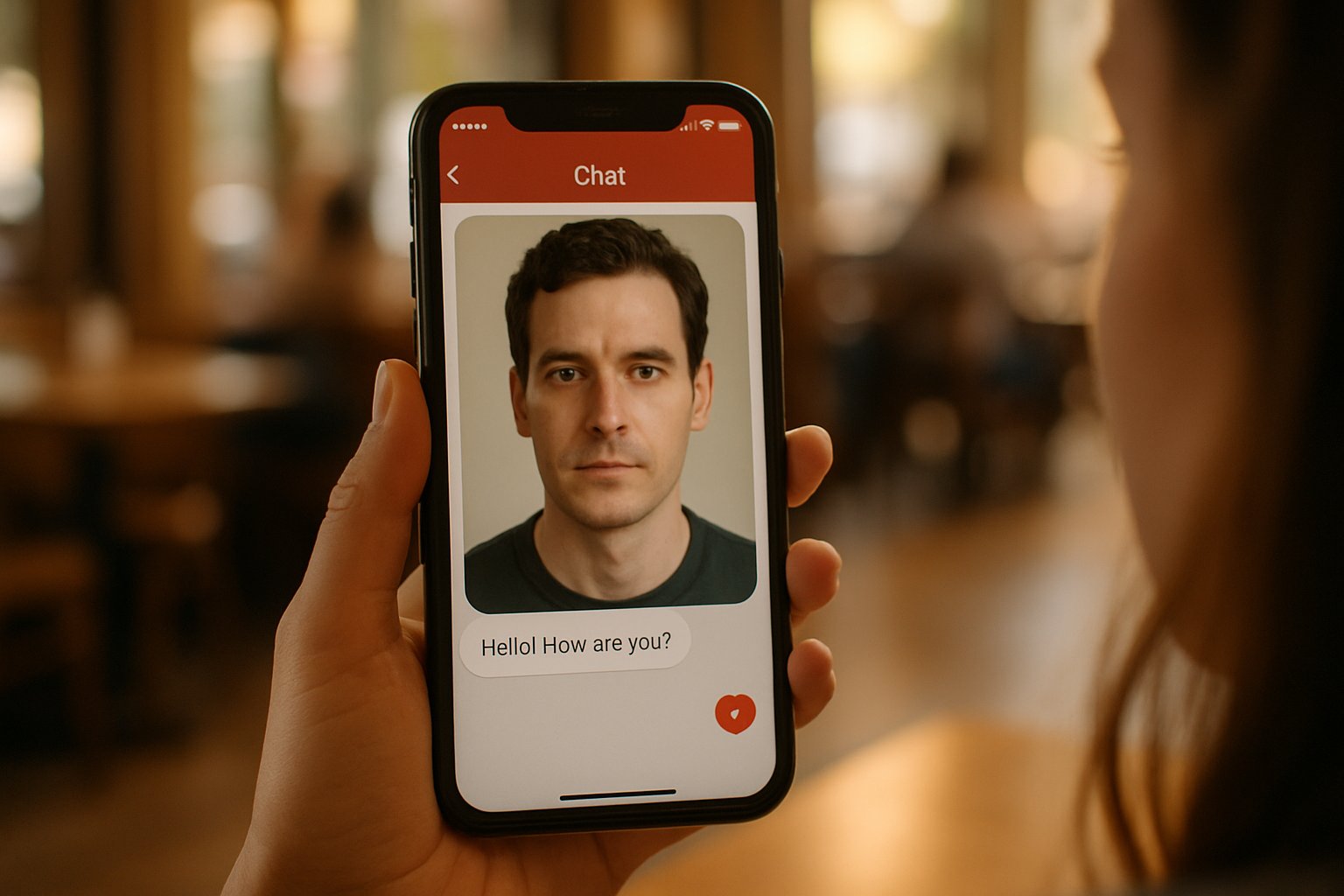
Moreover, location spoofing through Tinder Gold concentrated all matches in Portugal. Within eight weeks, 296 users shared messages, photos, and personal hopes. Forty participants set in-person dates, though the researchers debriefed everyone safely on arrival. Therefore, small resources exposed outsized risk for any app depending solely on legacy checks. Investigators recorded every interaction for audit purposes and ethics oversight. Subsequently, they anonymized data before publishing aggregate statistics.
These numbers underline systemic verification holes. However, understanding broader scam economics sharpens the urgency.
Scale Of Romance Scams
Romance fraud already drains enormous sums from consumers. According to the FTC, 70,000 people reported scams in 2022. Losses reached roughly $1.3 billion, surpassing any other consumer fraud category. Consequently, each technological advance that lowers attacker effort amplifies financial harm. Dating Deepfake Fraud slashes preparation time by automating conversation and visuals. Dating Deepfake Fraud combines romance narratives with photoreal avatars, scaling manipulation at unprecedented speed.
- Group-IB logged 8,065 deepfake KYC bypass attempts in eight months of 2025.
- Shufti launched a deepfake audit tool in January 2026 for historic KYC selfies.
- Biometric vendors report year-over-year spikes in synthetic identity incidents across finance.
Moreover, researchers observe deepfake-as-a-service kits sold on Telegram for minimal fees. Therefore, barriers to entry continue falling while rewards remain high. These patterns explain why detection must improve swiftly. In contrast, current KYC defences face growing strain, as the next section details.
KYC Barriers Under Fire
Legacy KYC systems rely on static document checks and basic liveness prompts. However, modern deepfakes now mimic blinks, head turns, and even blood-flow patterns. DuckDuckGoose AI warns that photoplethysmography signals can be simulated. Consequently, platforms receive a false sense of security. Dating Deepfake Fraud exploits this gap with minimal code.
Meanwhile, vendors like Shufti offer retrospective selfie audits to spot historical anomalies. Group-IB counts thousands of liveness bypass attempts in financial onboarding alone. Therefore, incremental patches appear insufficient. These challenges underscore the need for stronger identity assurance layers. Next, we examine a controversial proposal aiming to restore trust.
Proof Of Humanity Pitch
Humanity Protocol promotes a decentralized proof-of-humanity credential. Moreover, the system uses palm biometrics hashed into zero-knowledge proofs. Verifying parties confirm liveness without accessing raw biometric data. Therefore, a user can prove uniqueness across services while preserving privacy. Dating Deepfake Fraud would struggle against such cryptographic attestations.
The pitch also supports portable reputations for gig work and governance. However, critics fear biometric centralization and mission creep. Worldcoin backlash demonstrates potential public resistance to scanners in coffee shops. Nevertheless, Humanity Protocol says its open governance and audits will build trust. The approach offers promise yet raises difficult ethical questions. Industry collaboration may balance those trade-offs, as the next section shows.
Industry Steps Toward Trust
Multiple vendors have accelerated deepfake detection roadmaps since the Tinder revelation. For example, Shufti rescreens archived selfies with upgraded classifiers. Sumsub, Onfido, and FaceTec advertise multimodal signals combining voice and document texture. Additionally, banks share threat indicators through industry ISACs. These efforts seek to rebuild user trust after high-profile scams. Dating Deepfake Fraud now features regularly in vendor marketing decks as a cautionary tale.
- FIDO Alliance exploring identity-binding passkeys with biometric attestation.
- ISO launching standards work on synthetic media provenance metadata.
- EU AI Act mandating risk assessments for consumer platforms.
Consequently, a coordinated defense ecosystem is emerging. These moves strengthen resilience but require continuous tuning. Industry momentum is positive. Yet unresolved gaps remain, as outlined below.
Remaining Challenges And Risks
Technology alone cannot close every loophole. Regulatory fragmentation complicates cross-border identity assurance. Moreover, privacy advocates oppose large biometric databases even with zero-knowledge wrappers. Accessibility also matters because proof-of-humanity devices cost money. In contrast, romance scammers need only a GPU and internet café.
Meanwhile, deepfake generators improve every release cycle. Therefore, any static control will erode quickly. Dating Deepfake Fraud may soon include realtime video calls with synthesized eye contact. Consequently, blue ticks will provide even less assurance. Persistent vigilance and layered defenses remain critical. Practitioners can take practical actions outlined next.
Practical Actions For Platforms
Dating services should begin by mapping critical verification workflows. Subsequently, risk teams can score attack surfaces and expected impact. Moreover, adopting passive behavioral analytics detects bot-like swiping cadence. Integrating proof-of-humanity APIs offers an extra barrier without storing raw biometrics. Professionals can deepen expertise through the AI Researcher™ certification.
- Run red-team tests simulating Dating Deepfake Fraud every quarter.
- Enable adaptive selfie rescans when model confidence drops.
- Share anonymized fraud telemetry with sector peers for collective defense.
Furthermore, transparent communication keeps users informed about evolving safeguards. These actions elevate trust while deterring opportunistic scams. Concrete steps today limit tomorrow’s damage. The final section recaps main insights.
Humanity Protocol’s Tinder experiment exposed how easily AI can impersonate love. We saw Dating Deepfake Fraud bypass checks, attract victims, and reveal systemic weaknesses. Moreover, romance scams already soak consumers for billions annually. Therefore, incremental verification patches will not suffice. Proof-of-humanity, adaptive detection, and cross-industry data sharing can rebuild confidence in digital relationships. Nevertheless, privacy and inclusion challenges demand transparent governance and constant monitoring. Consequently, security leaders should act now, not after the next headline. Explore the AI Researcher™ certification to gain practical defenses against emerging fraud tactics. Meanwhile, continuous red-team exercises will keep protections aligned with evolving generative models. Stay vigilant, innovate responsibly, and make deception unprofitable.


