

AI CERTs
3 months ago
How Trend Forecasting Intelligence Models Reinvent Apparel Buying
Fashion buyers face volatile demand and shrinking calendars. Meanwhile, viral trends erupt on TikTok overnight. Consequently, traditional six-month planning now feels antiquated. Trend forecasting intelligence models promise a faster compass. These advanced systems blend social chatter, search spikes, and point-of-sale data. Moreover, fashion demand AI turns raw feeds into actionable probabilities. Retailers like Walmart already compress design-to-shelf to six weeks. Therefore, competitive peers are racing to adopt similar engines. This guide unpacks architectures, vendors, benefits, and lingering risks. Finally, readers gain a practical checklist for responsible adoption.
Trend Forecasting Intelligence Models
At its core, the technology ingests billions of images, posts, and searches. Subsequently, algorithms score silhouettes, colors, and attributes on momentum and longevity. Trend forecasting intelligence models then rank emerging themes by projected commercial value. In contrast, earlier trend reports offered only inspirational moodboards. Now, buyers receive SKU-level volumes, timing windows, and localization cues. Furthermore, computer vision extracts structured attributes from unstructured photos.
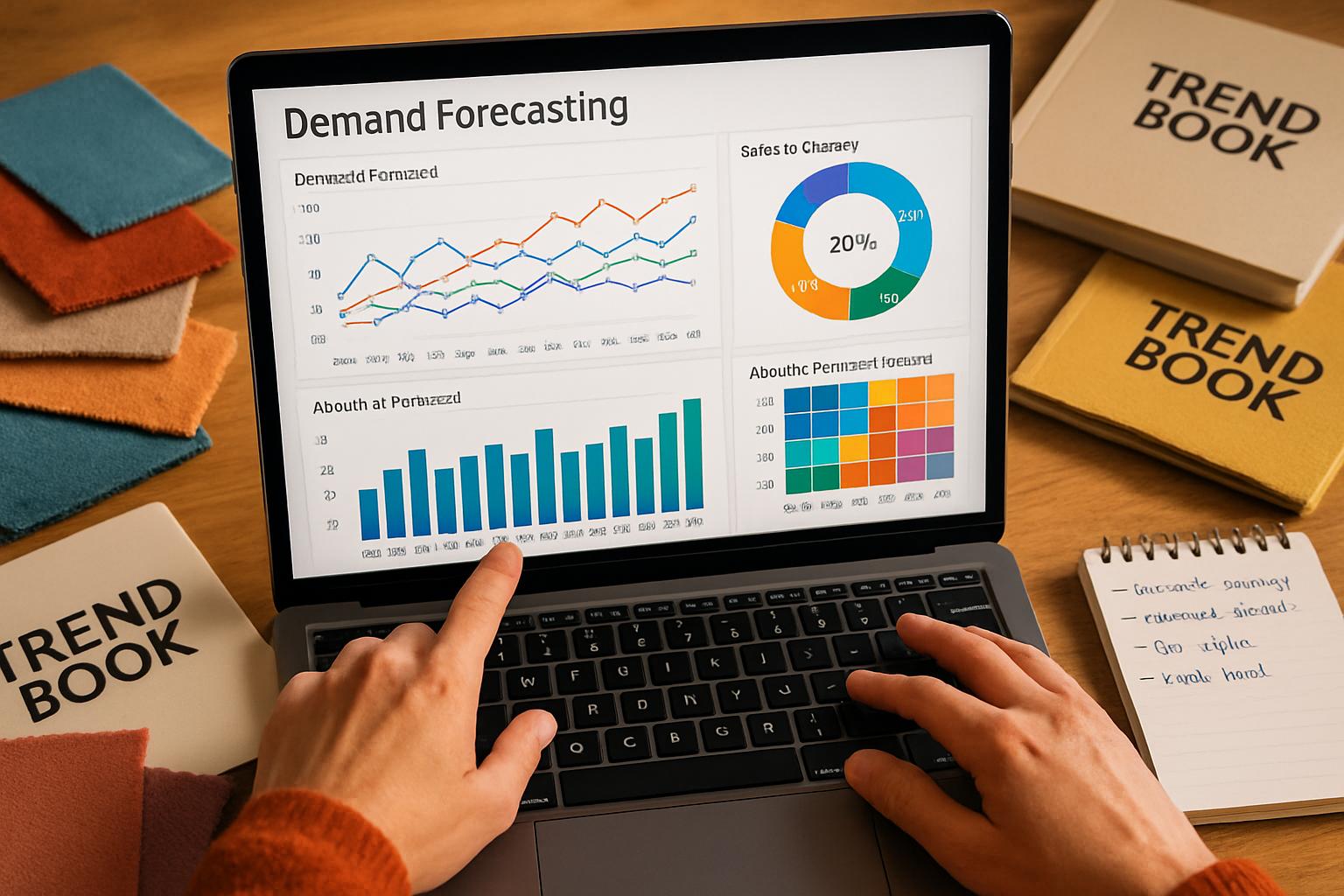
NLP embeddings map semantic links between influencers, hashtags, and product tags. Consequently, teams progress from intuition to quantifiable confidence. These capabilities convert noisy trend chatter into measurable opportunity. However, understanding buyer pain points clarifies why adoption is accelerating.
Why Buyers Need AI
Buyers shoulder markdown risk whenever forecasts miss reality. McKinsey reports 75% of executives prioritize AI for demand accuracy. Moreover, 35% already deploy automation in related functions. Fashion demand AI reduces guesswork by surfacing store-level sizing splits. Trend forecasting intelligence models also compress research cycles from months to weeks. Consequently, teams redirect saved time toward negotiation and creative curation. These pressures make AI support indispensable. Next, we dissect the building blocks powering such support.
Core Model Components Unpacked
Successful stacks integrate diverse data feeds. Firstly, computer vision tags products across social, runway, and competitor catalogs. Secondly, NLP captures consumer signals within captions and reviews. Meanwhile, probabilistic time-series engines sense near-term demand shifts. Fashion demand AI layers on top, producing dynamic safety-stock thresholds. Trend forecasting intelligence models orchestrate these elements into a single dashboard. Additionally, generative models transform trend scores into moodboards or draft designs. These components require solid data governance, which we discuss later. Together, they create an end-to-end forecasting pipeline. But technology choices remain only half the story; vendors matter too.
Leading Vendors And Tools
Several providers dominate the buying intelligence market. WGSN couples heritage expertise with its TrendCurve AI suite. Heuritech analyzes millions of weekly images to predict style growth. EDITED wins awards for competitive pricing dashboards and narrative summaries. Stylumia markets Apollo demand sensing claiming 20-40% forecast uplift. Moreover, Walmart built an internal Trend-to-Product platform cutting timelines to six weeks. Fashion demand AI features appear across each solution. Trend forecasting intelligence models underpin every offer despite branding differences. Buyers must align vendor strengths with their decision horizons. Understanding tangible benefits clarifies that alignment.
Benefits Outweigh Traditional Methods
Quantified gains now justify investment. Stylumia clients cite 60% faster sales velocity and 30% higher inventory turns. Meanwhile, Walmart touts six-week concept-to-shelf cycles. Moreover, reducing excess buys slashes markdown exposure and waste. Trend forecasting intelligence models provide objective assortment depths, increasing full-price sell-through. Fashion demand AI empowers localized replenishment that respects regional nuance. Additionally, real-time consumer signals alert teams when a viral spike fades. These improvements translate directly to revenue and sustainability. Nevertheless, every upside carries associated risks.
Risks And Key Mitigations
Social buzz can mislead models with fleeting micro-fads. Consequently, over-indexing on shallow metrics inflates forecast error. Implementing human checkpoints reduces such pitfalls. Data quality poses another hurdle, especially inconsistent SKU attributes. Furthermore, creative leaders worry about brand dilution from mechanical design loops. Trend forecasting intelligence models should therefore serve as decision aids, not dictators. Regulatory and workforce impacts also demand proactive governance frameworks. Additionally, independent audits validate vendor uplift claims and avoid marketing hype. Monitoring consumer signals helps detect cultural missteps early. Proper oversight converts these hazards into manageable variables. A structured evaluation checklist reinforces that oversight.
Implementation Checklist For Buyers
Buyers can follow this concise roadmap.
- Define decision scope: pre-season planning or in-season demand sensing.
- Audit data hygiene and enrich missing attributes.
- Run pilot against hold-out period and compare accuracy uplift.
- Embed human review gates to safeguard brand identity.
- Link outputs into PLM and ERP for latency under 24 hours.
- Secure expertise via the AI Security Level-2™ certification to manage model risks.
Following these steps maximizes adoption success. Trend forecasting intelligence models deliver strongest ROI when pilots follow this framework. Finally, we examine the strategic horizon shaping next-generation tooling.
Retail momentum now hinges on data-driven agility. Therefore, investing in trend forecasting intelligence models is no longer optional. These systems merge real-time signals, predictive analytics, and human creativity. Consequently, brands cut lead times, protect margins, and reduce waste. Nevertheless, success depends on disciplined pilots, robust governance, and upskilled staff. Professionals should deepen technical literacy via industry credentials and security training. Moreover, the AI Security Level-2™ path offers a timely springboard. Act now, refine your roadmap, and let algorithmic foresight power profitable assortments.


