

AI CERTs
3 months ago
How Threat Intelligence Aggregators Reinforce Enterprise Privacy
Rising attack volumes push enterprises to reassess how they collect, refine, and share cyber threat data. Consequently, many are turning toward Threat Intelligence Aggregators that promise scale without sacrificing sensitive information. Over the last year, these platforms added advanced automation and privacy layers at an unprecedented pace. However, legal turbulence, including the temporary CISA extension, created fresh urgency around safer information sharing. Meanwhile, researchers validated privacy-preserving techniques that keep telemetry local yet still improve cross-organization detection. Moreover, vendors now tout confidential computing, differential privacy, and federated learning as enterprise-ready capabilities. Analysts forecast a market that could almost double by 2030 as adoption widens across sectors. Therefore, decision makers need clear insight into the landscape, benefits, and unresolved gaps. This report unpacks key trends shaping enterprise privacy defenses in 2025 and beyond.
Threat Intelligence Aggregators Boom
Market analysts place 2025 revenues between USD 6.9 and 11.6 billion, depending on scope. MarketsandMarkets projects nearly USD 23 billion by 2030, reflecting compound growth of roughly 14.7%. Furthermore, Recorded Future alone claims 1,900 customers and 200 billion intelligence graph nodes. In contrast, open-source hubs like MISP aggregate hundreds of organizations through sector-specific sharing communities.
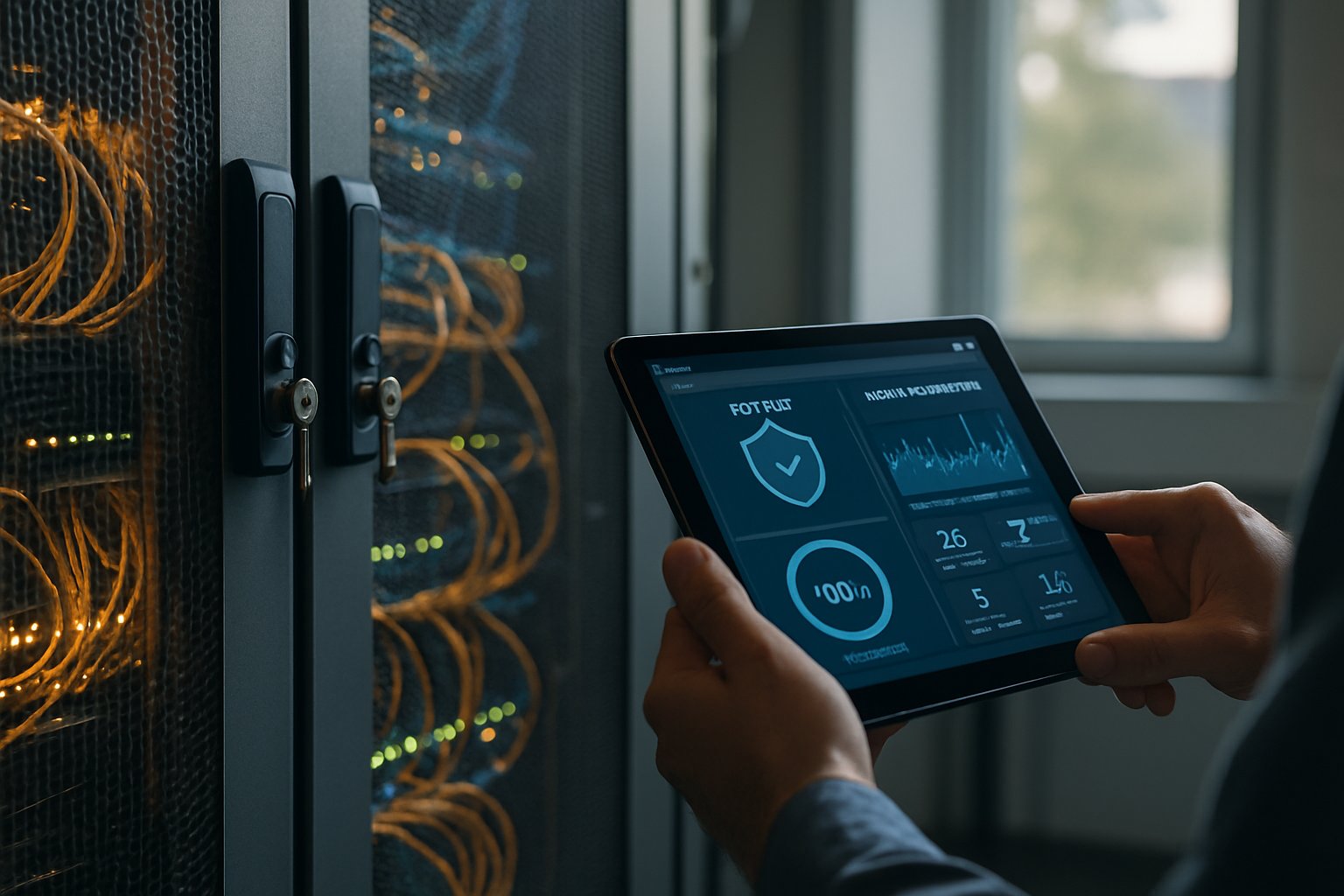
Threat Intelligence Aggregators compete by merging commercial feeds, community indicators, and proprietary telemetry into unified graphs. However, scale alone no longer differentiates vendors once privacy risk enters board discussions. Therefore, platforms increasingly bundle privacy tooling alongside automated correlation to satisfy regulators and buyers. Colin Mahony states that autonomous operations remove manual bottlenecks haunting security teams.
The market is expanding rapidly, yet buyers demand privacy assurances together with volume and speed. Consequently, privacy-preserving innovation now drives competitive advantage, setting the stage for technical breakthroughs ahead.
Privacy Preserving Techniques Advance
Differential privacy, homomorphic encryption, and secure aggregation moved from paper to pilot within 12 months. Moreover, academic projects such as FedPrIDS demonstrate federated intrusion detection with acceptable utility reductions. NIST warns that every deployment must balance noise and usefulness, echoing real-world accuracy drops near 12%. Meanwhile, confidential computing enclaves protect data-in-use without heavy cryptographic overhead.
Threat Intelligence Aggregators integrate these techniques through hybrid architectures that keep raw logs inside customer environments. Subsequently, only model updates or non-invertible fingerprints travel to the central platform, maintaining Privacy Protection goals. Vendors also embed granular distribution flags, letting contributors restrict attributes by sector or geography. Additionally, community projects like MISP already expose delegation and pseudo-anonymity features for sensitive attributes.
Privacy Protection now underpins technical roadmaps rather than remaining an afterthought. Yet automation is equally critical, as the next section explains.
Automation Shrinks Response Gaps
Recorded Future’s Autonomous Threat Operations correlates multi-source indicators continuously, cutting analyst triage time dramatically. Consequently, early adopters report mean-time-to-detect improvements measured in hours rather than days. CrowdStrike and Anomali highlight similar gains when automation feeds SOAR runbooks automatically.
Key Automation Impact Metrics
- Up to 65% reduction in manual indicator enrichment tasks
- 40% faster containment according to Recorded Future pilot studies
- 25% lower false positives after automated confidence scoring
- 15% SOC headcount redeployed to threat hunting projects
Threat Intelligence Aggregators leverage large graphs to cross-validate signals, boosting Security Intelligence accuracy. However, automation without governance can amplify poisoned data, a risk discussed next.
Automated correlation accelerates action yet inherits data quality challenges. Therefore, organizations must evaluate privacy and utility tradeoffs carefully.
Balancing Utility And Privacy
Applying aggressive differential privacy can drop detection accuracy from 98% to 86%, recent studies reveal. In contrast, lighter noise budgets preserve performance while offering measurable disclosure risk reduction. Threat Intelligence Aggregators must provide configurable privacy knobs so teams tune acceptable thresholds. Moreover, Security Intelligence teams must monitor model outputs for drift introduced by noisy data.
Performance costs also matter. Homomorphic encryption can increase query latency by multiple seconds, hurting real-time workflows. Nevertheless, confidential computing enclaves offer faster options for many detection tasks. Consequently, hybrid deployments mix enclaves for streaming data and encryption for batch analytics.
Engineering choices determine whether privacy strengthens or weakens overall defense. Subsequently, governance frameworks become the final guardrail.
Governance Remains Critical Factor
Legal analysts caution that CISA uncertainties demand documented sharing policies and executive oversight. Furthermore, organizations must define contributor reputations and sanctions to deter model poisoning in federated settings. Threat Intelligence Aggregators now expose provenance metadata, confidence scores, and per-indicator retention rules for stronger Governance. Meanwhile, industry groups adopt transparent scoring to build cross-sector trust.
Security Intelligence leaders stress alignment with NIST SP 800-226 when claiming differential privacy compliance. Additionally, third-party audits verify algorithm parameters and cryptographic proofs. Companies can further upskill teams through the AI Network Security certification. Trained personnel understand both mathematics and policy, closing critical knowledge gaps.
Robust governance embeds accountability into every sharing transaction. Consequently, strategic recommendations follow in the final section.
Strategic Takeaways For Enterprises
Decision makers should map internal data flows before selecting any platform or PET. Moreover, evaluating Threat Intelligence Aggregators on documented privacy controls prevents later surprises. Regularly benchmark detection accuracy alongside latency and cost to demonstrate tangible return.
- Track pending CISA reauthorization deadlines closely
- Request differential privacy budgets and proofs from vendors
- Deploy federated models in staged pilots before production rollout
- Integrate provenance metadata into SIEM alerts
- Upskill staff using recognized privacy certifications
These actions align technology, policy, and skill development for resilient defenses. Therefore, final thoughts reinforce key messages.
Threat Intelligence Aggregators now sit at the intersection of scale, Privacy Protection, and operational speed. Vendors have embraced PETs, yet utility and trust remain moving targets. Consequently, leaders should demand transparent metrics, rigorous governance, and audited cryptography. Meanwhile, legislators may reshape incentives again, making adaptable architectures essential. Teams that invest in continuous training and recognised credentials strengthen Privacy Protection culture. Professionals can validate skills via the earlier mentioned AI Network Security certification. Act now to evaluate options, pilot responsibly, and safeguard stakeholder data before the next policy shock.


