

AI CERTs
2 hours ago
How Music Platforms Redefine AI Design To Tackle Synthetic Songs
Music services face a widening flood of synthetic tracks that challenge business models and community trust. In under two years, policy stances have flipped from openness to active policing of generative catalogs. However, each platform now experiments with labels, filters, or outright bans to keep creators protected. The debate extends beyond technology into ethics, economics, and fast evolving regulation. Consequently, understanding design choices behind these controls is vital for leaders shaping product roadmaps. This article unpacks recent enforcement moves, market data, and expert views through an AI Design lens. Moreover, we map possible future scenarios and certification resources for professionals navigating synthetic music. Each section follows strict research, journalistic rigor, and clear guidance on upcoming industry standards. All sentences remain concise to maximize readability for technical executives. Let us examine how streaming giants and indie hubs now respond to the generative wave.
Platforms Shift Policies Quickly
Deezer moved first with visible badges for AI tracks in June 2025, citing sudden upload spikes. Meanwhile, daily submissions hit about 20,000 fully synthetic files, or 18 percent of incoming catalog. Deezer reported that only 0.5 percent of total streams involved these songs. However, up to 70 percent of those plays appeared fraudulent and were excluded from royalties. Spotify followed with a September policy refresh banning unauthorized voice clones and purging 75 million spam tracks. Additionally, the company adopted DDEX metadata to capture AI involvement within track credits. Bandcamp, in contrast, issued a January 2026 prohibition covering any music substantially generated by algorithms. SoundCloud and YouTube opted for partial disclosure frameworks rather than blanket bans. Consequently, policy diversity creates friction for distributors balancing multi-platform releases. AI Design principles influence how each service weighs transparency, user trust, and operational cost. Rules are converging, yet enforcement tactics still vary markedly. Next, we explore forces driving these strategic pivots.
Motivations Behind Crackdown Moves
Platform leaders cite three intertwined threats fueling rapid action. First, automated bots inflate streaming counts, diverting royalties toward low-effort catalogs. Second, unauthorized voice clones generate fake releases that jeopardize artist reputation. Third, uncertain copyright status of machine-made compositions exposes services to litigation from labels. Moreover, industry bodies such as CISAC warn of double-digit revenue erosion by 2030 without safeguards. Koda projected a 28 percent domestic decline if training data remains unlicensed. Consequently, executives frame the crackdown as essential risk management rather than simple moral panic. Deezer’s Alexis Lanternier even said the company must "fight AI with AI" to protect payouts. Nevertheless, creators embracing AI Design argue that punitive rules could stifle legitimate experimentation. Balancing creativity and compliance therefore remains a nuanced equation. Understanding detection technology helps clarify feasibility constraints, so the next section dives into that layer.
Detection Tools Advance Rapidly
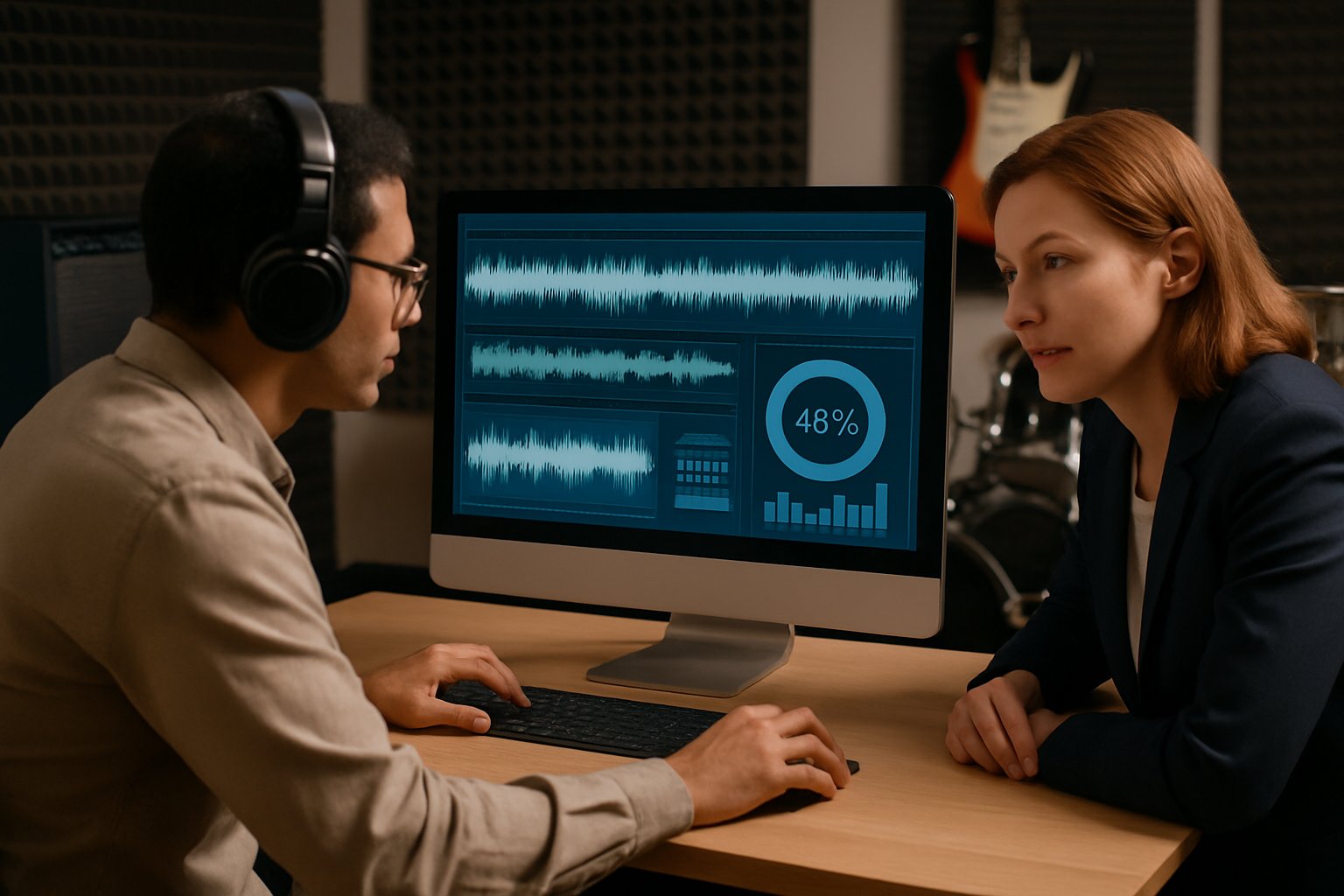
Technical countermeasures have matured alongside generators, forming an ongoing cat-and-mouse cycle. Platforms now embed spectrogram analysis and watermark checks within upload pipelines. Additionally, machine learning classifiers evaluate audio fingerprints against known synthetic signatures. Spotify’s new spam filter screens timing patterns that reveal bot-driven streaming loops. Meanwhile, YouTube deploys likeness detection to flag potential voice impersonations before they go viral. Deezer pairs internal AI with third-party vendors to confirm fraudulent engagement and withhold royalties. Moreover, the DDEX metadata expansion offers a proactive, standards-based disclosure layer. Tracks can indicate if lyrics, instrumentation, or mastering involved generative processes, easing downstream audits. AI Design practitioners champion transparent schemas because they simplify cross-platform policy harmonization. These detection layers reduce risk; however, perfect classification remains elusive as models evolve quickly. Thoughtful AI Design integration within detectors also minimizes false positives. Legal considerations now intersect with technical capability, shaping financial stakes addressed next.
Revenue And Legal Risks
Royalty pools already feel pressure from inflated play counts generated by synthetic catalogs. IFPI warns that unchecked automation could siphon billions from legitimate creators by decade’s end. Consequently, major labels file lawsuits against generator firms such as Suno and Udio. Claims focus on unlicensed training data and derivative audio outputs resembling protected masters. US regulators reiterate that works without human authorship lack copyright eligibility under present doctrine. Meanwhile, European proposals may introduce registration requirements for AI creators, adding compliance overhead. Platforms hedge by reserving rights to withhold payments where streaming fraud is detected. Additionally, contracts now mandate disclosure of any AI Design techniques used during production. Such clauses simplify future litigation because breach of warranty becomes easier to prove. These financial and legal pressures inform how artists negotiate platform relationships, explored in the next section.
Artist And Industry Views
Independent musicians express mixed feelings toward algorithmic collaboration. Some see AI co-production as creative liberation, especially when budgets constrain live audio sessions. Others fear market dilution from endless fake tracks that bury handcrafted releases within playlists. Moreover, established stars worry about voice clones jeopardizing brand equity and tour revenue. Trade groups lobby for compulsory licensing frameworks and watermark standards to protect copyright automatically. Nevertheless, a subset of forward-thinking labels now market AI Design collaborations as premium collectibles. They argue transparent credits and ethical training sets can build consumer trust instead of eroding it. Platforms echo that optimism, highlighting personalization benefits and new interactive formats. Consequently, the debate no longer centers on whether AI belongs but on how deployment is governed. Future policy trajectories therefore merit close analysis, which follows now.
Likely Future Policy Scenarios
Experts outline several plausible regulatory pathways emerging over the next three years. Furthermore, technology roadmaps suggest escalating sophistication in both generation and detection.
- Global disclosure mandate: Services tag AI audio using DDEX fields by default.
- Royalty tiering: Streams with declared AI Design components receive reduced baseline payouts.
- Licensing exchange: Generator firms pay collective fees for copyright training datasets.
- Zero-tolerance option: Platforms like Bandcamp maintain outright bans on fake songs.
Additionally, governments could impose reporting duties similar to environmental impact statements for large models. Compliance teams will therefore require cross-disciplinary competence spanning law, product, and signal processing. Professionals can enhance readiness through the AI Foundation Essentials certification. That curriculum addresses governance, risk, and AI Design best practices for digital media. Nevertheless, uncertainty persists because market incentives shift whenever enforcement costs drop. These future scenarios underscore the importance of adaptive strategy, which we conclude below.
Conclusion And Action Steps
Music platforms are no longer passive conduits; they actively reshape catalogs to preserve trust and revenue. Consequently, labeling, detection, and contractual clauses now form a multilayer defense against fake audio abuses. Copyright litigation pressure amplifies urgency while investor scrutiny heightens operational accountability. However, innovation continues because thoughtful AI Design can unlock personalization and new artistic frontiers. Therefore, executives should monitor policy experiments, adopt transparent metadata, and upskill teams quickly. Interested readers can deepen expertise through industry certifications and regular briefings on evolving standards. Act now to safeguard creativity while steering the next chapter of generative music.


