

AI CERTs
2 months ago
How customer support deflection systems curb SaaS churn
SaaS finance leaders feel churn pressure every quarter. Meanwhile, support queues balloon as user bases grow. Consequently, many operators deploy customer support deflection systems to contain costs and protect revenue. These cognitive platforms blend conversational AI, knowledge orchestration, and retention analytics. Moreover, analyst data now links effective deployments to double-digit churn reduction. This article unpacks the trend, benchmarks real outcomes, and offers an execution checklist.
Market Forces Drive Adoption
Venture funding tightens, yet retention spending rises. Gartner reports 85% of service leaders will pilot conversational AI in 2025. Furthermore, MarketsandMarkets sizes the "AI for customer service" market at USD 12 billion today, compounding 25.8% annually. Vendors respond aggressively. Zendesk, Intercom, and ServiceNow embed large-language models to raise self-service rates. Startup specialists ProsperStack and Paddle target cancellation-flow saves. Consequently, customer support deflection systems now anchor many 2025 retention roadmaps.
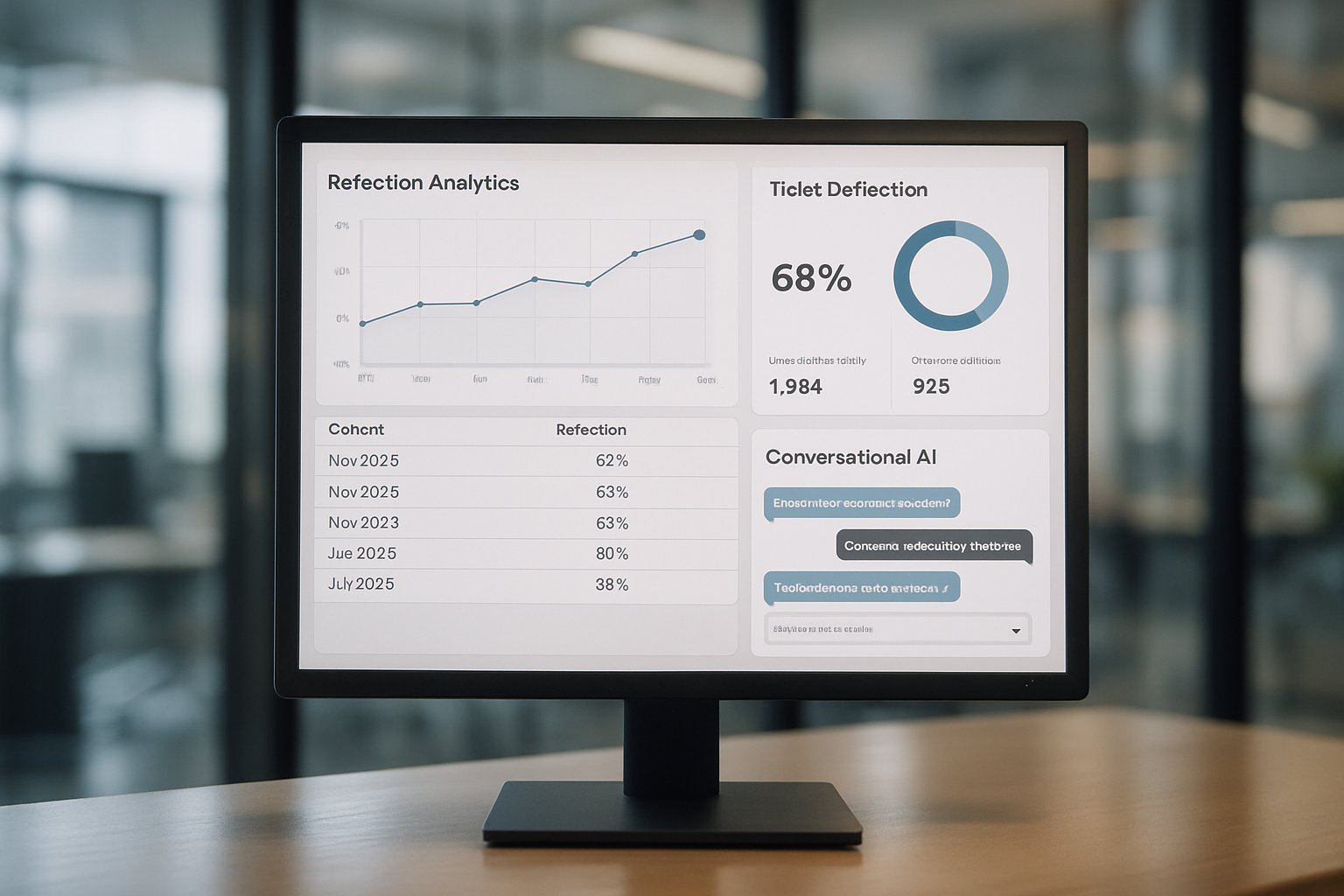
Analysts spotlight realistic outcomes. TSIA places median self-service deflection near 30%. Forrester’s TEI model projects 20–50% deflection improvements and 20–30% churn cuts. In contrast, projects without solid knowledge governance often stall. Nevertheless, leadership urgency keeps momentum.
Benchmarks underline one fact. Customer support deflection systems shift from cost center to growth lever.
These demand drivers set the scene. Next, we examine the churn mechanics at play.
How Systems Reduce Churn
Deflection removes friction faster than tickets. Therefore, users resolve billing or onboarding issues instantly, boosting satisfaction. Research shows low-effort experiences correlate with lower voluntary churn. Additionally, predictive signals guide proactive outreach before frustration peaks. Conversational AI pre-empts confusion by embedding guidance inside the product. Meanwhile, cancellation-flow modules engage users at the final moment, offering tailored fixes or discounts.
Forrester’s composite retailer saved 20% churn using these combined levers. ProsperStack customers report 15–39% cancellation saves after A/B tuning. Cognitive assistants also shorten time-to-value for new cohorts. Consequently, net revenue retention rises.
- Median ticket deflection: ~30% (TSIA).
- Modeled churn reduction: 20–30% (Forrester TEI).
- Cancellation save range: 15–39% (ProsperStack).
Customer support deflection systems attack churn from multiple angles. However, measurement discipline determines credibility. The next section explores metrics.
Measuring Deflection Impact Metrics
Teams must baseline before launch. Track gross churn, ticket volume by topic, CSAT, and time-to-resolution. Subsequently, instrument explicit deflection when users abandon tickets after finding answers. Implicit deflection requires comparing help-center visits against ticket creation trends.
Retention analytics platforms correlate these support signals with revenue cohorts. Moreover, experimentation is vital. Holdout groups in cancellation flows reveal true lift. Similarly, A/B testing bot intents clarifies which journeys actually deflect.
Standard dashboards should include:
- Deflected tickets percentage.
- Self-service CSAT delta.
- Saved cancellations count.
- Churn rate by treated cohort.
Transparent reporting bolsters executive trust. Therefore, investments scale when ROI data lands confidently.
Clear metrics matter, yet execution details make or break results. Implementation best practices follow.
Implementation Best Practice Playbook
Successful rollouts start with knowledge hygiene. Gartner warns many knowledge bases lag behind product reality. Consequently, bots hallucinate or misroute. Appoint article owners, enforce review SLAs, and loop agent feedback into content updates.
Secondly, choose conversational AI models tuned for retrieval-augmented generation. Provide grounded answers, not generic text. Meanwhile, integrate agent-assist for graceful escalation when confidence drops.
Third, embed cancellation flows directly in account settings. Offer self-service plan changes, pause options, or guided troubleshooting. Additionally, retention analytics should trigger human outreach to high-value accounts.
Professionals can deepen strategy skills through the Chief AI Officer™ certification. Graduates learn governance frameworks vital for sustainable customer support deflection systems.
These practices reinforce each other. However, risk management is equally important.
Risks And Limitations Discussed
Overpromising sinks projects quickly. Users abandon chatbots that fail to solve issues. Moreover, measuring implicit deflection remains complex, leading to inflated claims. In contrast, clear A/B designs prevent optimism bias.
Privacy also matters. Retention offers can annoy customers if personalization crosses ethical lines. Consequently, legal teams should review cancellation flows.
Another pitfall is change fatigue among agents. Therefore, involve frontline staff early and show how automation raises work quality rather than threatens jobs.
Managing these risks preserves credibility. Next, we look ahead to evolving capabilities.
Future Outlook And Steps
GenAI maturity will push resolution rates higher. Vendors already test multimodal support that understands screenshots. Additionally, retention analytics will ingest product-usage telemetry in real time, sharpening proactive outreach.
Market consolidation seems likely as platforms merge ticketing, conversational AI, and cancellation tooling. Meanwhile, regulators may issue guidelines on transparent cancelation paths, raising design stakes.
SaaS leaders should plan phased deployments. Start with high-volume FAQs, then expand to complex workflows. Consequently, investment cycles remain manageable while value compounds.
Vision alone is not enough. Executives must translate roadmaps into disciplined action, as the concluding section explains.
Conclusion And Action Plan
Cognitive technology now links support efficiency with revenue defense. Customer support deflection systems deliver measurable gains when paired with conversational AI and rigorous retention analytics. However, knowledge quality, experimental discipline, and ethical design determine success. Gartner, TSIA, and Forrester benchmarks show double-digit churn cuts are achievable, yet not guaranteed.
Leaders should baseline metrics, cleanse knowledge assets, and pilot focused journeys. Furthermore, cultivating certified expertise accelerates momentum. Therefore, consider the Chief AI Officer™ certification to guide enterprise-grade deployments.
Act today to fortify customer loyalty before churn erodes your 2025 targets.


