

AI CERTs
2 hours ago
How Contract Clause Risk Detection Engines Reshape Legal Review
Big deals stall when contract reviews drag. Over the last year, artificial intelligence changed that rhythm. Enterprise legal teams now rely on contract clause risk detection engines to flag hazards in seconds. These tools scan indemnities, privacy language, and liability caps before human eyes reach the page. Consequently, review cycles shrink and negotiations accelerate. However, questions about accuracy, governance, and professional ethics persist. This article examines the market moment, technology, vendors, benefits, and risks driving the shift. Additionally, it outlines concrete steps for responsible implementation. Readers will find independent statistics alongside vendor claims. Moreover, expert quotes from Workday, Ironclad, and the American Bar Association provide balanced context. Finally, we highlight certifications that help leaders build informed AI strategies. By the end, you can decide whether these systems deserve a place in your workflow.
Market Momentum Rapidly Grows
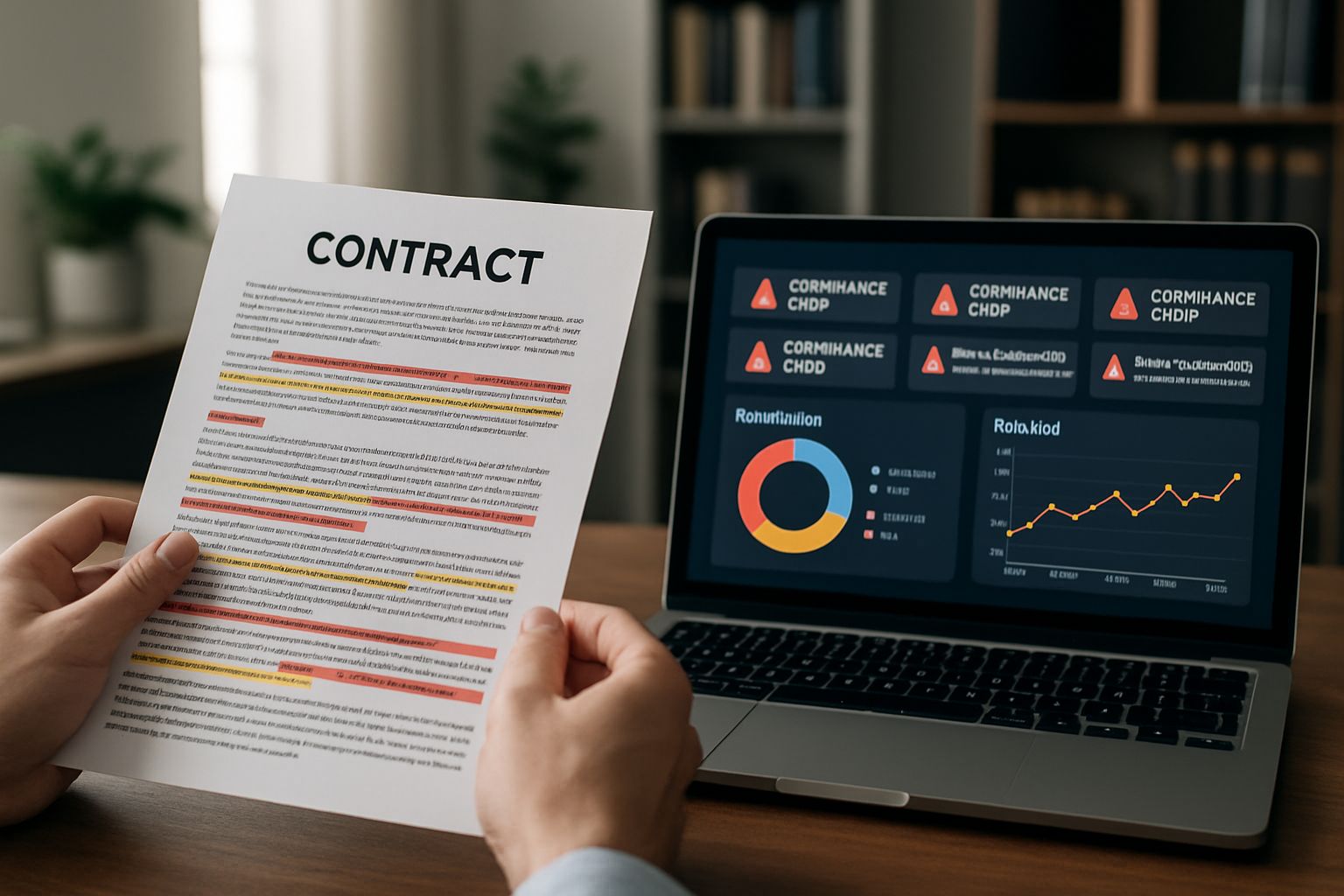
Investors poured fresh capital into contract technology during 2024 and 2025. Workday’s September 2024 agreement to buy Evisort signalled mainstream adoption. Subsequently, the platform released 120 prebuilt models covering finance, HR, and legal clauses. Analysts from Future Market Report now size contract analytics at roughly USD 13 billion. Moreover, they project low double-digit growth through 2030. That trajectory rests on contract clause risk detection engines moving from pilots to enterprise rollouts. In contrast, earlier AI waves stalled when tooling remained isolated from core systems. Today, integrations with CLM suites and procurement platforms remove that hurdle and sustain momentum.
In short, investor activity and integrations signal durable demand. However, understanding the underlying mechanics remains essential. The next section explains how the engines work.
How Engines Actually Work
Clause engines marry machine learning with rules-based playbooks. First, optical character recognition converts scanned PDFs into structured text. Then, named-entity recognition locates parties, dates, and amounts. Meanwhile, classifiers segment language into clause types such as indemnity or termination. Risk scores combine deviation from standards, jurisdiction, and historical dispute outcomes. Furthermore, many systems use Retrieval-Augmented Generation to ground summaries in source text. This architecture reduces hallucinations highlighted in Stanford HAI benchmarks. However, contract clause risk detection engines still require human oversight when suggesting redlines. Vendors increasingly surface explanations that show the triggering phrase and related playbook rule. Consequently, reviewers can validate suggestions without trawling entire documents.
Understanding these mechanics clarifies vendor claims and limitations. The following section surveys the competitive landscape.
Vendor Landscape Snapshot Today
Workday, Ironclad, and Luminance dominate current headlines. Each vendor embeds models within broader CLM workflows rather than selling standalone widgets. Ironclad Playbooks route low-risk contracts for auto-approval after clause analysis. Luminance focuses on predictive dashboards that monitor portfolio exposure across business units. Specialists like Dioptra and ContractAnalyze target midsize departments seeking rapid deployment. Moreover, legal publishers Thomson Reuters and LexisNexis integrate research libraries to bolster NLP legal analysis quality. Newer entrants emphasize real-time compliance alerts pushed into Slack and Teams. Consequently, contract clause risk detection engines compete on speed, governance features, and ecosystem reach.
These provider strategies reveal both consolidation and innovation. Next, we examine the tangible business impact users report.
Tangible Business Benefits Emerge
Hard numbers help separate hype from substance. Vendor case studies report striking efficiency gains. For example, L’Oréal trimmed review times from hours to minutes using Ironclad AI. Additionally, LHV Bank cited 50 percent faster NDA processing after deploying Luminance. Below are representative claims worth vetting.
- 50-90% first-pass review speedups for standard agreements.
- Annual legal-ops savings reaching USD 300,000 in large deployments.
- Portfolio visibility via NLP legal analysis across 100,000 contracts within days.
- Precision scores above 90% in controlled vendor tests.
Moreover, real-time compliance alerts help procurement teams avoid rogue terms before signature. Consequently, risk exposure falls and deal velocity rises. Yet leaders must validate numbers against internal baselines. These benefits illustrate clear upside when metrics hold. However, governance issues demand equal attention, which the next section explores.
Governance And Ethical Concerns
Legal ethics rules have not paused for innovation. The ABA reminds lawyers they remain responsible for supervised work product. Therefore, unchecked automation creates malpractice exposure. Stanford studies reveal hallucination rates that vary across tools and clause categories. In contrast, engines that provide RAG citations show lower error rates and easier explainability. Confidentiality also matters because cloud models may train on uploaded data. Consequently, many buyers demand on-prem deployments or strict SOC-2 controls. Professionals can deepen oversight knowledge with the AI Executive™ certification. Until regulations mature, contract clause risk detection engines must keep humans firmly in the loop.
Governance gaps underscore the need for disciplined rollouts. The next section offers best practice steps.
Implementation Best Practice Steps
Successful rollouts usually begin small. Teams select one contract family, often NDAs, to fine-tune models. Stakeholders define precision, recall, and override metrics before go-live. Furthermore, they compare engine results against historical human decisions. Advanced NLP legal analysis dashboards track false negatives by clause type. Meanwhile, integration teams wire compliance alerts into ticketing systems for rapid triage. Governance checklists should include data residency, encryption, and audit logging requirements. Consequently, contract clause risk detection engines align with existing ISO or SOC frameworks. After early success, leaders expand scope to statements of work and master service agreements. Subsequently, organizations scale without surprising regulators or clients.
Disciplined pilots create trust and momentum. Next, we look ahead to market direction.
Outlook And Next Steps
Market signals suggest continued acceleration. Forrester expects clause analytics to become default features inside every major CLM suite by 2027. Moreover, benchmark consortia plan standardized accuracy tests to calm buyer anxiety. Independent audits will likely separate mature platforms from marketing spin. As transparency grows, contract clause risk detection engines may reshape legal work as profoundly as e-discovery. Meanwhile, AI literacy will remain a differentiator for counsel and operations leaders. Consequently, ongoing education, certifications, and community benchmarks will guide informed adoption. These trends set the stage for our final recommendations.
Contract teams face mounting volume and risk. Consequently, contract clause risk detection engines offer a scalable response when deployed with discipline. They speed reviews, surface compliance alerts, and deliver portfolio insights through NLP legal analysis dashboards. Nevertheless, human oversight and transparent metrics remain non-negotiable safeguards. Pilots should prove accuracy on your own documents before enterprise expansion. Professionals seeking strategic mastery can explore the AI Executive™ credential. With governance in place, contract clause risk detection engines will convert legal departments from cost centers to data hubs. Start trials now; share lessons to shape responsible standards for contract clause risk detection engines.


