

AI CERTs
2 hours ago
How computer vision safety monitoring systems improve safety
Companies face relentless pressure to cut injuries while improving productivity. Consequently, many safety leaders now tap computer vision safety monitoring systems for real-time vigilance. These AI tools transform existing cameras into proactive guardians that flag hazards before harm occurs. Moreover, early adopters report sharp declines in incidents and near misses within weeks. Academic studies echo the promise yet caution about bias, occlusion, and limited field validation. Meanwhile, regulators intensify scrutiny around privacy, labor rights, and biometric data use. Therefore, organizations must balance innovation with transparent governance and worker engagement. This article dissects market momentum, technical progress, documented outcomes, regulatory shifts, and proven deployment strategies. Readers will gain actionable insights for evaluating, implementing, and scaling the technology responsibly. In addition, we highlight certifications that build required AI expertise for safety teams.
Rapid Adoption Trends Rise
Field deployments accelerated during 2025 as logistics, retail, and manufacturing sought faster prevention. Furthermore, Protex AI and Intenseye publicized double-digit reductions in unsafe actions within ten weeks. Investor enthusiasm followed; Protex AI secured a $36M Series B to expand globally. Consequently, market reports forecast video analytics revenues climbing from $12B in 2025 to $34B by 2030. In contrast, some sectors remain cautious, citing union feedback and unresolved privacy concerns. Nevertheless, overall momentum indicates that adoption has moved from pilot tests to enterprise scale. Results indicate that computer vision safety monitoring systems scale across global camera networks without new hardware. These trends reveal growing confidence in AI driven safety. However, durable success demands solid technical foundations and clear business cases.
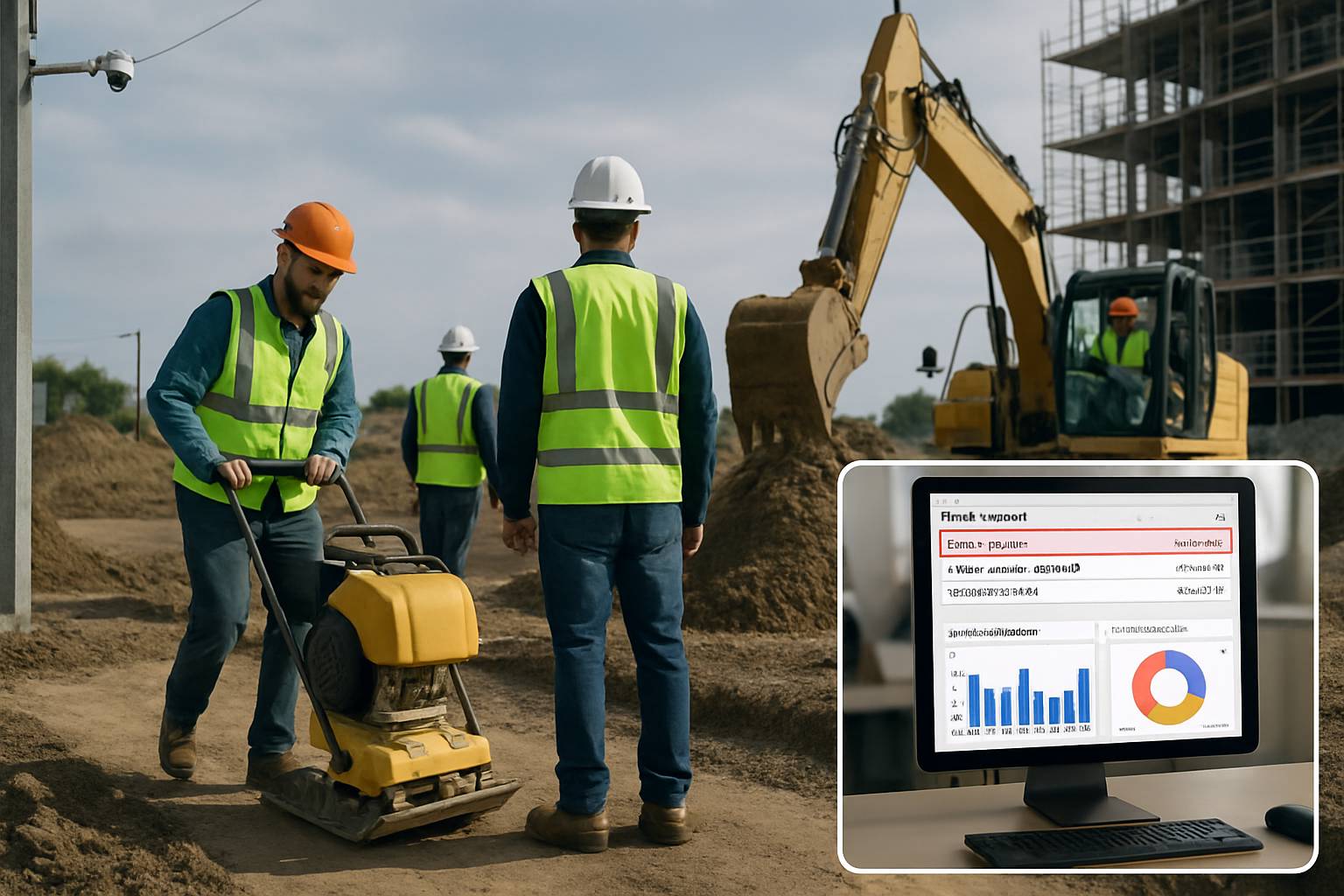
Adoption is rising fast, fueled by tangible ROI and venture funding. Next, we examine how the technology actually works.
Core Technology Mechanics Explained
Computer vision models process live or recorded feeds to detect people, PPE, vehicles, and unsafe interactions. At their core, computer vision safety monitoring systems fuse detection algorithms with cloud analytics. Additionally, detection engines often use YOLOv10 or transformer architectures optimized for edge devices. Latency usually stays below two seconds, allowing supervisors to intervene quickly. Moreover, systems classify leading indicators rather than lagging injury counts, enabling proactive safety cultures. Vendors integrate dashboards that rank sites, generate clips, and drive compliance automation workflows. Privacy by design features include on-edge inference, face blurring, and strict retention windows. Consequently, many solutions claim GDPR alignment and U.S. state privacy compliance.
Key Hazard Detection Capabilities
- Personal protective equipment recognition with 95% mean average precision
- Vehicle-pedestrian proximity alerts under one second
- Ergonomic posture scoring for manual lifts
- Slip, trip, and fall detection across multi-camera views
- Automated report generation supporting compliance automation tasks
These capabilities convert cameras into continuous safety sensors. The next section reviews documented real-world impact.
Documented Safety Impact Results
Intenseye claims 65 million unsafe conditions detected in 2024 across its platform. Furthermore, a Marks & Spencer distribution center recorded an 80% incident drop after deploying Protex AI. Insurer summaries list sites where ergonomic alerts fell by 95% within three months. However, independent audits remain scarce, and peer-reviewed longitudinal studies are limited. U.S. Bureau of Labor Statistics notes an 8.4% national injury reduction in 2023, yet attribution remains complex. Researchers emphasize linking alerts to reduced Total Recordable Incident rates over 12–24 months. Despite gaps, the evidence suggests computer vision safety monitoring systems can drive quick behavior change.
Early data show large hazard reductions but limited independent verification. Regulatory scrutiny therefore plays a pivotal role, as discussed next.
Evolving Regulatory Landscape Pressures
The NLRB General Counsel warns against intrusive electronic surveillance that chills protected activity. Moreover, the EEOC fact sheet on wearables flags biometric discrimination risks. Several states, including New York, propose limits on continuous employee monitoring. Consequently, employers deploying computer vision safety monitoring systems must document purpose, scope, and retention. OSHA focuses on outcomes, yet privacy breaches could trigger labor disputes and reputational damage. In contrast, clear policies and worker engagement often convert skepticism into support. These regulatory dynamics demand thoughtful governance frameworks.
Legal bodies demand transparency, minimal data, and worker voice. The following guidelines outline proven deployment methods.
Effective Deployment Best Practices
Start with a narrow use case such as forklift hazard detection near loading docks. Additionally, run pilot programs to collect baseline metrics before scaling. Pilots should confirm that computer vision safety monitoring systems deliver actionable alerts, not noise. Independent audits should validate model accuracy and false alert rates. Privacy by design measures, including on-edge processing, build trust and satisfy regulators. Furthermore, training sessions that frame alerts as coaching, not punishment, improve morale. Teams can deepen expertise via the AI Prompt Engineer™ certification. Consequently, mature programs link alerts to compliance automation workflows that close issues within hours. Measure improvements using Total Recordable Incident and DART metrics over several quarters. These practices convert technical potential into sustained safety ROI.
Worker Engagement Tactics Overview
Successful programs involve workers early, publish clear policies, and celebrate hazard detection wins. Consequently, trust grows and alert adoption improves.
Best practices align technology, people, and policy for lasting impact. Yet, specific challenges still threaten performance, as the next section explores.
Persistent Challenges And Gaps
Computer vision models struggle with occlusion, poor lighting, and unusual PPE colors. Moreover, false positives can overwhelm EHS teams, eroding confidence. Model drift occurs when workflows, layouts, or uniforms change over time. Meanwhile, workers may fear constant surveillance, reducing reporting of near misses. Independent peer-reviewed studies connecting computer vision safety monitoring systems to lower claim severity remain limited. Consequently, insurers hesitate to offer premium credits without audited evidence. Nevertheless, continuous improvement loops and third-party validation can close these gaps.
Challenges highlight the need for robust evaluation and transparent communication. Future developments may address these concerns, as discussed next.
Strategic Future Outlook Insights
Academic labs advance multi-view 3D models that improve hazard detection in crowded environments. Furthermore, vendors are pairing LLM assistants with dashboards to accelerate compliance automation across sites. Market forecasts predict high-teens CAGR through 2030, reflecting confidence in expanding applications. International standard bodies are drafting guidance that could harmonize privacy and performance benchmarks. Consequently, mature computer vision safety monitoring systems may become foundational EHS infrastructure within five years. However, broad success depends on independent evidence and equitable governance.
The outlook remains positive but conditional on trust, accuracy, and regulation. Decision makers should weigh these factors before large-scale investment.
Conclusion And Action Steps
Computer vision safety monitoring systems have moved from experiments to everyday safety infrastructure. Early adopters report major hazard reductions, faster investigations, and significant ROI. However, sustained success still hinges on privacy safeguards, worker engagement, and independent audits. Regulators continue tightening expectations, so transparent governance remains essential. Moreover, technical advances will boost accuracy, compliance automation, and predictive analytics. Organizations that pilot, validate, and scale responsibly will capture competitive advantage. Therefore, now is the time to evaluate computer vision safety monitoring systems against your safety roadmap. For deeper expertise, explore the linked certification and elevate your AI skills. Act today to create safer, smarter, and more resilient workplaces.


