

AI CERTs
2 months ago
How Autonomous Credit Decision Engines Transform Underwriting
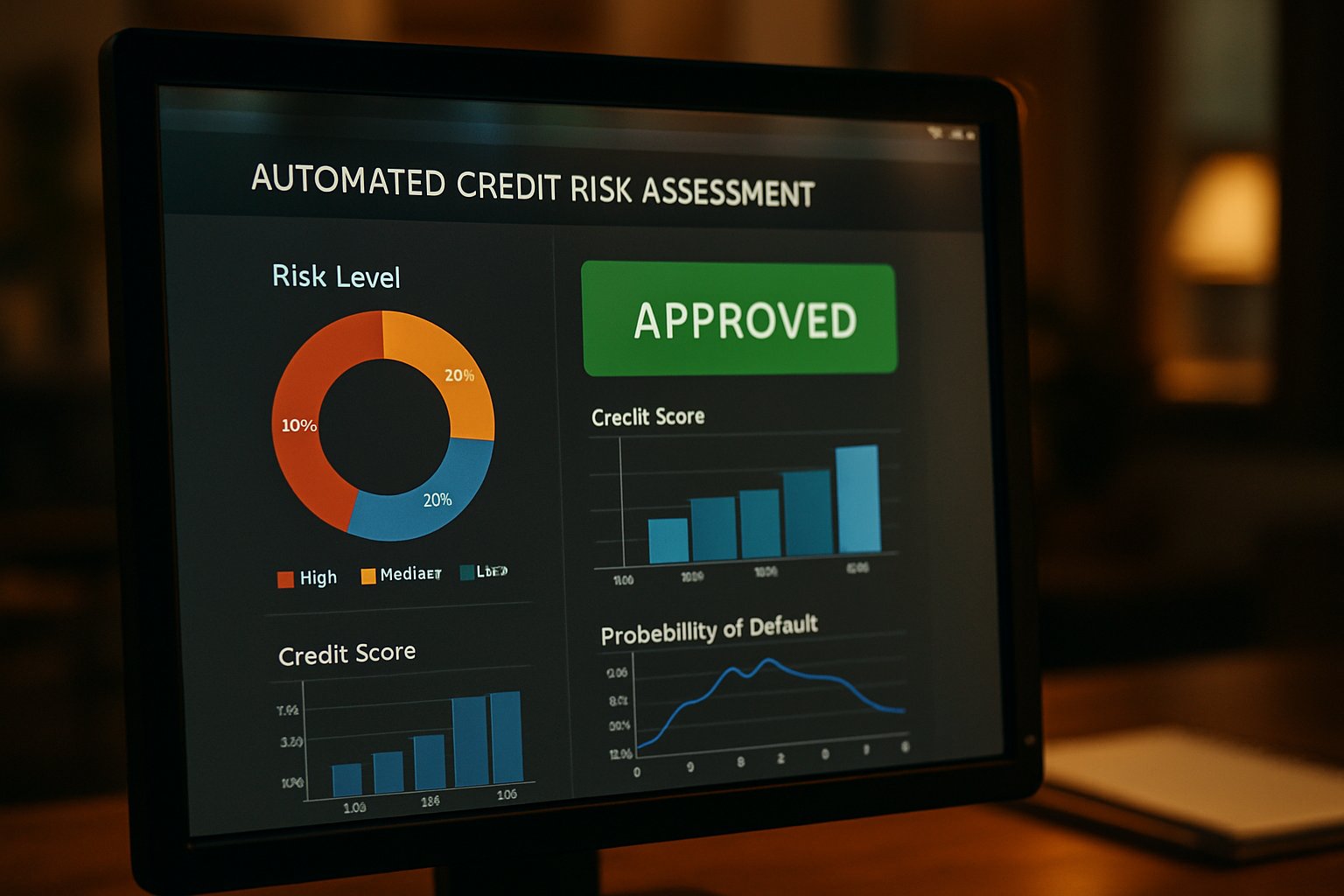
Lenders are racing to modernize underwriting. Meanwhile, manual files and static scorecards slow approvals and inflate operating costs. Consequently, autonomous credit decision engines have moved from pilot projects to production across retail lending. These AI systems analyze structured and alternative data, issue instant decisions, and learn continuously. The shift promises speed, inclusion, and major savings, yet it also raises new governance demands.
Moreover, regulators now scrutinize every algorithmic choice, insisting on transparency and fair-lending safeguards. Banks, fintechs, and secondary mortgage giants have responded with bold automation announcements during 2024 and 2025. Upstart claims over 90% fully automated personal loans, while Freddie Mac forecasts $1,500 savings per mortgage. Therefore, market momentum appears irreversible. This article unpacks the technology, economics, risks, and implementation steps behind the emerging underwriting paradigm.
Market Momentum Accelerates Fast
Firstly, adoption metrics underline the pace. Celent reports 83% of lenders will raise Generative AI budgets during 2026. In contrast, only 32% expressed similar intent two years earlier, highlighting rapid strategic shifts.
Furthermore, Upstart's May 2025 AI Day revealed that more than 90% of platform loans close automatically. Freddie Mac, meanwhile, upgraded Loan Product Advisor with machine learning, projecting $1,500 originator savings per file.
- Credit decisioning platforms: US$8.6B market in 2024, CAGR estimated at 13–18% through 2033.
- AI mortgage underwriting: US$2.1B market in 2024, with double-digit growth expected throughout the decade.
- Generative AI budget increases: 83% of surveyed institutions plan higher 2026 spending.
Momentum across vendors and markets indicates a decisive pivot to AI underwriting. However, understanding the technology stack comes next.
Key Technology Building Blocks
Modern engines blend machine learning models, rule management, and real-time data pipelines. Moreover, large language models now parse paystubs, bank statements, and unstructured explanations without manual tagging. Consequently, credit features feed into risk scoring automation that refines approvals every deployment cycle.
Autonomous credit decision engines then orchestrate these components, issuing decisions and routing funding instructions automatically. In contrast, legacy automated underwriting systems depend on static score thresholds and manual document reviews. Therefore, lenders gain higher approval coverage and consistent decision latency measured in seconds.
Another technology layer manages model monitoring and explainability dashboards. Subsequently, compliance teams trace features to outcomes and craft Regulation B adverse-action letters. The loop completes when feedback data retrains models within secure sandboxes, closing the learning cycle.
These integrated elements create self-improving credit pipelines. Nevertheless, technology alone cannot satisfy growing regulatory scrutiny.
Compliance And Governance Pressures
Regulators increasingly demand transparent, explainable models. However, CFPB Director Rohit Chopra warns that AI offers no exemption from clear denial reasons. Regulation B mandates specific principal factors, even when autonomous algorithms drive the outcome.
Consequently, lenders must audit training data, test disparate impact, and document alternative model comparisons. Fintech compliance programs now adopt NIST's AI Risk Management Framework to align controls with examiner expectations. Meanwhile, third-party concentration rules require detailed vendor due diligence and change-management logs.
Autonomous credit decision engines complicate compliance because models evolve faster than traditional validation cycles. Therefore, many institutions embed human review checkpoints for exceptions until monitoring evidence satisfies board risk appetite. Subsequently, continuous drift controls and fairness dashboards become standard for risk scoring automation oversight.
Regulators are signalling zero tolerance for opaque underwriting. Consequently, robust governance design must accompany any production engine.
Autonomous Credit Decision Engines
Proponents spotlight three headline gains: velocity, cost efficiency, and inclusion. Upstart's internal data suggests approvals arrive in under one minute for most applicants. Moreover, Freddie Mac estimates originators save $1,500 per mortgage when machine learning replaces manual checks.
Additional upside appears in underserved segments. Autonomous credit decision engines mine cash-flow, utility, and rental signals to assess thin-file borrowers. Consequently, approval rates can rise while default performance remains stable, according to several vendor case studies.
Scale leverages fixed compute costs, driving marginal underwriting cost toward zero. In contrast, manual teams grow linearly with origination volume. Therefore, lenders using autonomous credit decision engines forecast sustainable market share expansion without proportionate headcount.
Quantifiable speed, savings, and inclusion fuel accelerating adoption. However, these systems introduce novel operational risks.
Operational Risks And Mitigations
Every black-box prediction engine carries fairness and stability challenges. Nevertheless, rigorous model risk management can constrain potential harm. Stress testing scenarios, including recession simulations, expose latent vulnerabilities before portfolio losses emerge.
Autonomous credit decision engines may drift when macroeconomic conditions shift. Therefore, institutions schedule monthly backtesting against holdout datasets and require independent validator sign-off. Meanwhile, comprehensive fintech compliance checklists cover vendor transparency, prompt updates, and incident reporting.
Hallucinations from language models threaten document parsing accuracy. Consequently, defensive prompting, ensemble validation, and deterministic fallbacks reduce unexpected outputs. Continuous monitoring of risk scoring automation flags anomalies and triggers immediate rollbacks.
Robust controls turn theoretical dangers into manageable engineering tasks. Subsequently, lenders can focus on rollout strategies.
Implementation Roadmap For Lenders
Successful rollouts follow a staged blueprint. Firstly, map the end-to-end data lineage, including raw ingestion, feature stores, and decision outputs. Consequently, document every override rule as part of the governed model boundary.
Secondly, procure interpretable model libraries and adverse-action generators before live traffic. Fintech compliance officers should approve explanation templates and disclosure language in advance. Meanwhile, integrate continuous risk scoring automation metrics into existing telemetry dashboards.
Thirdly, launch a limited pilot with human-in-the-loop oversight. Autonomous credit decision engines can then expand progressively as monitoring evidence builds board confidence. Moreover, professionals can enhance their expertise with the AI Everyone™ certification to support governance programs.
Structured roadmaps accelerate delivery while containing risk. Therefore, attention turns to future trajectories.
Conclusion And Future Outlook
Autonomous credit decision engines now stand at the center of lending transformation. Market momentum, proven savings, and stronger inclusion validate the automation thesis. However, regulators demand transparent logic, documented fairness, and rigorous monitoring. Therefore, risk scoring automation and fintech compliance disciplines must evolve in tandem. Moreover, banks can mitigate drift and bias through continuous validation and human oversight. Professionals equipped with certifications like the AI Everyone™ program can steer responsible deployment. Consequently, autonomous credit decision engines will likely dominate credit origination by decade's end. Lenders should act now, pilot responsibly, and scale once governance guardrails prove effective.


