

AI CERTs
3 months ago
How automated FOIA intelligence tools accelerate disclosure
Few federal processes attract as much scrutiny as Freedom of Information Act response times. However, immense backlogs and shrinking staff undermine timely disclosure. Consequently, agencies now experiment with technology to maintain statutory deadlines. The most ambitious option is a new class of automated FOIA intelligence tools. These platforms pair e-discovery heritage with machine learning, natural language processing, and automated redaction. Moreover, early adopters report double-digit productivity gains that excite the broader civic tech AI community. This article examines market shifts, real productivity data, governance challenges, and future procurement trends. Along the way, we balance efficiency claims with watchdog concerns about public transparency and algorithmic oversight. Professionals seeking deeper technical skills can validate expertise with the AI Ethical Hacker™ certification.
Modern FOIA Backlog Pressures
FOIA offices received 132,527 requests at the Department of Justice in fiscal 2024. Meanwhile, processing volume reached 157,180, yet backlogs exceeded 200,000 across government. Additionally, full-time FOIA staff dropped six percent to 4,944 workers.
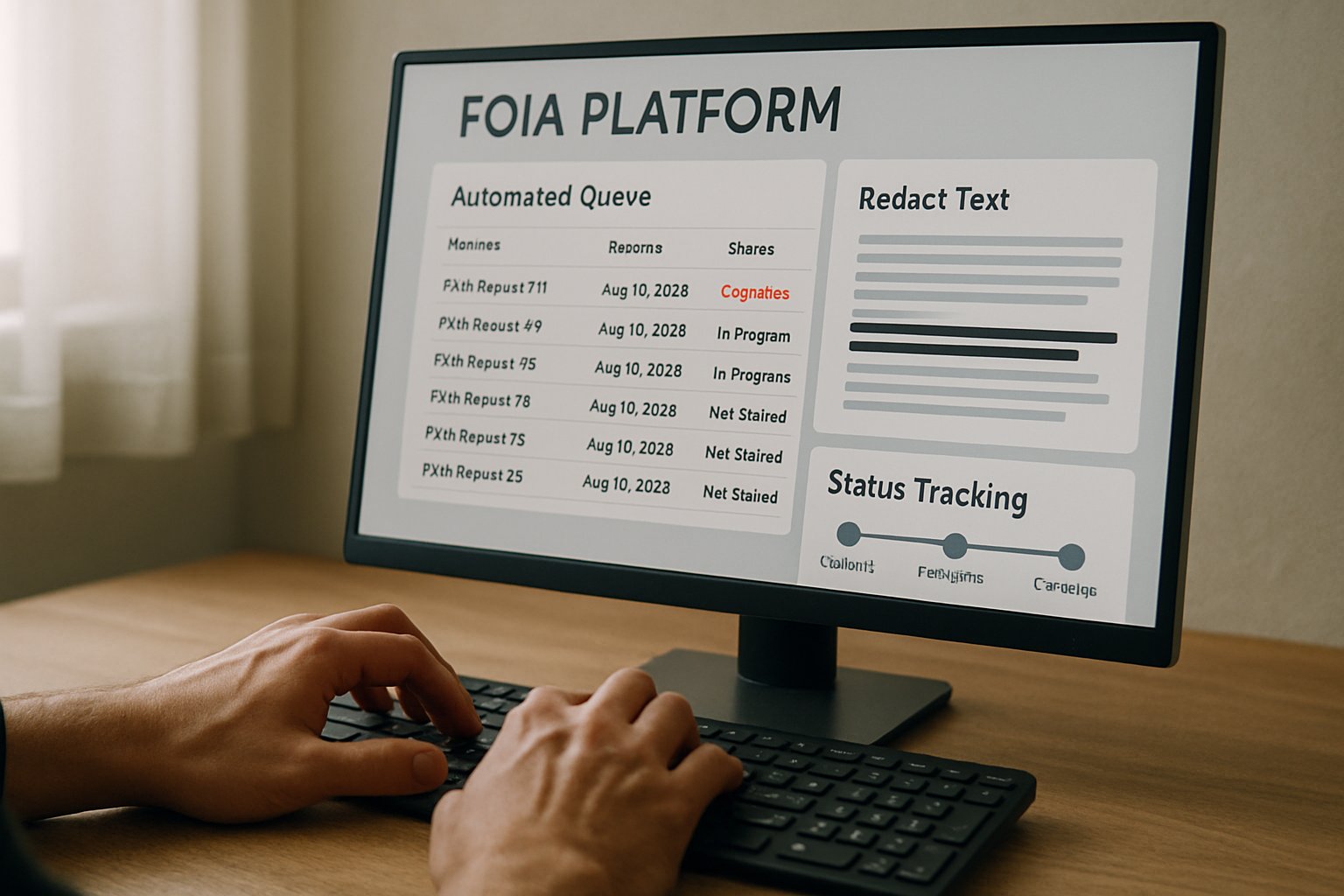
Consequently, officers surveyed by NextGov said 93 percent believe AI triage is essential. In contrast, civil groups argue that speed must not sacrifice thorough public transparency. Both perspectives shape the pressure for automated FOIA intelligence tools adoption.
Backlogs keep growing despite heroic staff efforts. However, automation promises relief if implemented wisely. Therefore, the marketplace is racing to supply new technical solutions.
Tool Market Shifts Accelerate
Vendor consolidation accelerated when OPEXUS merged with Casepoint in January 2025. Moreover, Relativity launched a FedRAMP-ready RelativityOne Government platform with generative aiR review. Veritone partnered with FOIAXpress to target bodycam and audio redaction workloads.
Together, these moves signal maturing supply for automated FOIA intelligence tools tailored to agency needs. Furthermore, smaller players like Milyli and Datagrid compete by offering niche redaction modules. Consequently, procurement officers now evaluate price, FedRAMP status, and integration depth instead of novelty.
Key market indicators illustrate the rapid pace:
- Relativity claims 37,000 redactions completed in 15 minutes for one deployment.
- ATF reports 20-30 percent productivity increases after adopting technology assisted review.
- Surveyed officers predicted AI could deduplicate 80 percent of duplicate submissions.
Nevertheless, many benchmarks originate from vendor marketing rather than independent audits. Therefore, agencies demand transparent accuracy metrics before large scale rollout. These market dynamics broaden agency choice yet complicate due diligence. Subsequently, the conversation shifts from availability to measurable impact.
Meanwhile, investors funnel capital into civic tech AI startups that specialize in disclosure analytics.
Productivity Gains Now Evident
Validated numbers remain scarce, yet early case studies show promise. DOJ components like ATF cite 50 percent faster document review on certain workflows. Moreover, Relativity states customers save 52 staff days yearly through bulk redaction.
Agencies attribute gains to automated FOIA intelligence tools that prioritize documents and mask sensitive data. Additionally, predictive coding ranks likely responsive items, allowing reviewers to focus on edge cases. Consequently, fewer hours are wasted scrolling through low-value material.
Noteworthy improvements also extend to multimedia evidence.
Multimedia Redaction Demand Surge
Bodycam footage, once painful to process, now undergoes speech-to-text and automatic face blurring. Veritone integrations offer these capabilities inside several automated FOIA intelligence tools suites. Furthermore, CMS pilots embed audio redaction within review dashboards for health records.
Early data confirms significant time savings across text and multimedia content. However, efficiency means little without credible accuracy and governance. Therefore, risk management now dominates procurement discussions.
Governance And Risk Concerns
Watchdogs highlight limited transparency around training data, bias testing, and audit logs. MuckRock requests revealed few agencies willing to release vendor contracts or monitoring reports. In contrast, DOJ guidance requires documentation of validation, yet compliance varies widely.
Civil liberties groups fear automated FOIA intelligence tools could entrench over-redaction culture. Moreover, algorithmic misclassification might hide information wrongfully, harming public transparency. Nevertheless, human reviewers remain legally accountable for every exemption decision.
Governance frameworks recommend layered controls to mitigate such pitfalls. Agencies increasingly demand FedRAMP authorization, bias tests, and continuous monitoring dashboards. Professionals can sharpen audit skills through the AI Ethical Hacker™ certification.
Stronger governance will define successful deployments in coming budgets. Subsequently, attention turns to defensive features against malicious request floods.
Bot Flooding Defense Strategies
FOIA officers report scripted bots submitting thousands of identical requests within minutes. Consequently, many automated FOIA intelligence tools integrate pattern detection to throttle duplicates. Additionally, AI classifiers flag suspicious payloads for manual confirmation, preserving staff capacity. These safeguards complement transparency measures detailed earlier.
Integrating defensive analytics protects response timelines. Meanwhile, agencies refine procurement priorities for the next fiscal cycle.
Future Procurement Trends Ahead
Market observers expect spending to rise as pilots mature into enterprise contracts. Furthermore, ARPA-H and CMS plan solicitations focusing on interoperability and open APIs. Vendors therefore bundle civic tech AI dashboards that expose analytics to stakeholders. Additionally, contracts increasingly mandate disclosure APIs to support proactive public transparency portals. These trends indicate sustained growth and stricter oversight ahead. Consequently, technology and policy teams must collaborate closely.
In summary, agencies face urgent pressure to modernize FOIA workflows. Automated FOIA intelligence tools already trim backlogs and accelerate disclosure across multiple media types. Moreover, expanding civic tech AI ecosystems amplify innovation and drive competitive pricing. Nevertheless, governance gaps, audit access, and bias risks demand sustained attention. Therefore, leaders must pair technology with robust oversight, documented testing, and human review. Professionals who master these frameworks will guide agencies toward responsible public transparency. Consequently, pursuing expertise in automated FOIA intelligence tools through accredited programs becomes a strategic career move. Meanwhile, demand for automated FOIA intelligence tools expertise outpaces available talent. Consider validating your skills with the AI Ethical Hacker™ certification and stay ahead of regulatory demand. Take action now and shape transparent governance for the digital era.


