

AI CERTs
2 months ago
How assessment integrity monitors combat remote exam fraud
Remote exams promised flexibility for global learners.
However, a parallel rise in AI-enabled cheating now threatens credential credibility.
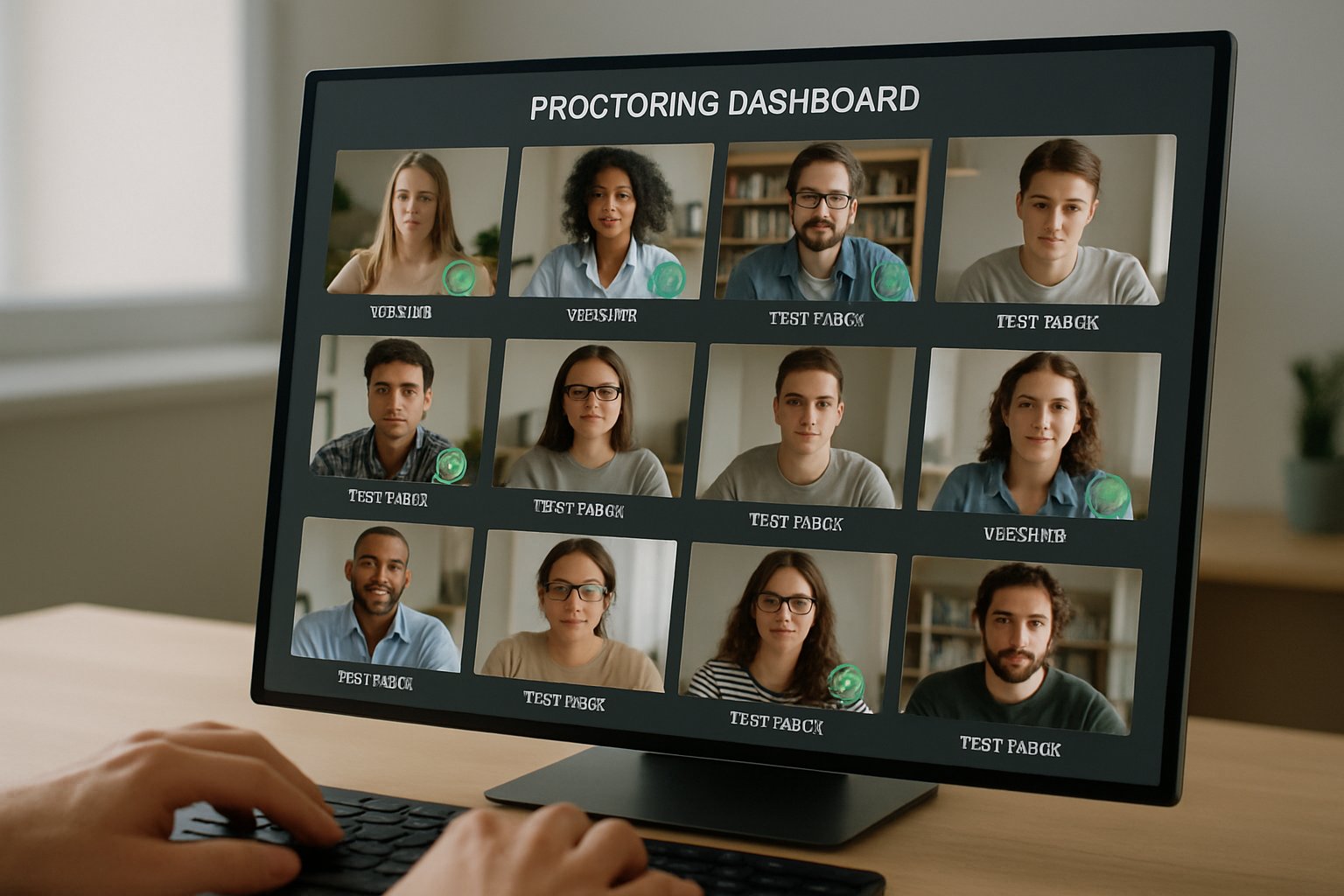
Consequently, universities and professional bodies are deploying assessment integrity monitors to counter sophisticated fraud schemes.
These systems combine proctoring AI, behavioral biometrics, and authorship analysis to flag suspicious activity in real time.
Meanwhile, regulators and litigators are scrutinizing privacy risks, forcing vendors to refine data practices.
This article unpacks the latest trends, technologies, and strategic choices shaping remote testing security.
Readers will grasp benefits, limitations, and actionable steps for sustaining academic compliance in an evolving threat landscape.
Cheating Trends Surge Globally
Data confirm a sharp escalation in misconduct.
In June 2025, The Guardian revealed almost 7,000 UK students used AI to cheat in 2023-24.
Moreover, the figure equaled 5.1 incidents per 1,000 students, over triple the prior year rate.
Phil Newton’s meta-review found 54.7% of surveyed learners admitted cheating during pandemic era online exams.
In contrast, pre-pandemic self-admission stood at 29.9%, underscoring remote vulnerability.
Professional certifications now feel similar pressure.
ACCA will end most remote exams from March 2026 after declaring safeguards lag behind adaptive fraud tactics.
Dr. Peter Scarfe cautions that AI-generated writing is harder to prove than traditional plagiarism, complicating enforcement.
These statistics illustrate a widening gap between threat velocity and conventional monitoring capacity.
Incidents and self-reports show a sustained cheating boom.
However, rising oversight signals imminent policy shifts.
Next, we examine regulatory responses driving privacy debates.
Regulators Intensify Privacy Scrutiny
Legal challenges are reshaping the proctoring AI landscape.
Subsequently, Respondus accepted a $6.25 million settlement under Illinois BIPA claims despite denying wrongdoing.
Moreover, public universities face constitutional questions around compelled biometric submission.
European regulators also warn that excessive data collection breaches GDPR proportionality standards.
ACCA’s policy reversal illustrates how liability fears can outweigh convenience.
Nevertheless, institutions must balance privacy concerns with academic compliance obligations while deploying assessment integrity monitors.
Consequently, procurement teams now demand transparent retention schedules, encryption, and independent audits.
Regulators are rewriting acceptable monitoring boundaries.
Therefore, vendors must harden governance or risk market exclusion.
Emerging technology choices reveal how they plan to comply.
Technology Stack In Practice
Vendors now offer layered toolkits that merge different signals.
Additionally, multimodal designs reduce single-point failure risk.
- Identity proofing: ID scan, face match, keystroke enrollment for continuous verification.
- Secure environment: lockdown browser, screen capture, and device telemetry to disable shortcuts.
- Real-time analytics: proctoring AI flags gaze shifts, multiple voices, or secondary screens.
- Post-exam forensics: stylometry compares submissions with historical writing for authorship anomalies.
Together, these layers form comprehensive assessment integrity monitors that scale across thousands of concurrent sessions.
However, keystroke-dynamics studies report only 75-86% accuracy under ideal conditions, highlighting error margins.
Turnitin claims it processed over 200 million papers through its AI detector, yet peer benchmarks remain scarce.
Consequently, administrators integrate human review at escalation thresholds to protect due process.
Layered design boosts resilience, yet performance uncertainty persists.
Next, we weigh clear benefits against persistent weaknesses.
Pros And Persistent Limitations
Assessment integrity monitors deter misconduct through perceived detection risk.
Moreover, recorded sessions provide evidentiary trails supporting academic compliance investigations.
Field trials show monitored students scoring lower, implying reduced cheating opportunities.
In contrast, false positives can create reputational damage and mental stress for innocent learners.
Proctoring AI also struggles when generative models paraphrase outputs or when humans guide examinees off-camera.
Additionally, bandwidth limitations and cultural privacy norms raise equity concerns.
Benefits remain significant, yet limitations demand careful policy design.
Stakeholders are now shifting budgets and strategies accordingly.
Market Shifts And Strategies
Vendor economics are rapidly evolving.
Consequently, subscriptions now differentiate between raw proctoring AI flags and live human review tiers.
Meanwhile, insurers are recalculating premiums after BIPA litigation signaled sizeable payout risk.
Institutions recalibrate modality mixes, returning high-stakes exams to centers while keeping formative quizzes online.
Moreover, some faculties redesign assessments toward open-book, authentic tasks that lower cheating incentives.
Professionals may deepen expertise via the AI Learning & Development™ certification.
Savvy buyers compare assessment integrity monitors on total cost of ownership, not headline licensing fees.
Financial and pedagogical dynamics favour adaptable solutions.
Selecting the right partner becomes mission critical.
Choosing Assessment Integrity Monitors
Decision makers should evaluate accuracy, privacy, uptime, and cost in parallel.
Additionally, robust service-level agreements must guarantee data deletion timelines and breach notification windows.
In contrast, opaque AI models hinder defensibility when students appeal accusations.
Therefore, request independent audits and bias reports covering non-native English cohorts.
Pilot programs ought to include representative demographics and blended scenarios to test academic compliance resilience.
Subsequently, measure incident reduction, false positives, and student satisfaction before full rollout.
Assessment integrity monitors differ widely in biometric scope and storage duration.
Consequently, select assessment integrity monitors that support modular activation, allowing less intrusive modes when risk is low.
Rigorous vetting reduces future legal costs.
Finally, we synthesize core insights for executives.
Conclusion And Next Moves
Remote testing faces an arms race between cheaters and guardians.
However, layered assessment integrity monitors, supported by accountable governance, can sustain trust at scale.
Regulatory pressure makes strong privacy controls indispensable for academic compliance and public confidence.
Therefore, institutions should pilot solutions, demand audits, and train staff on proctoring AI limitations.
Moreover, continuous assessment redesign will complement technology and reduce cheating incentives.
Act now by reviewing policies and exploring the linked certification to elevate your institutional strategy.
Subsequently, share best practices across campuses to accelerate collective progress.


