

AI CERTS
3 hours ago
How AI Sales Transform Vusion’s Retail Liquidity Shift
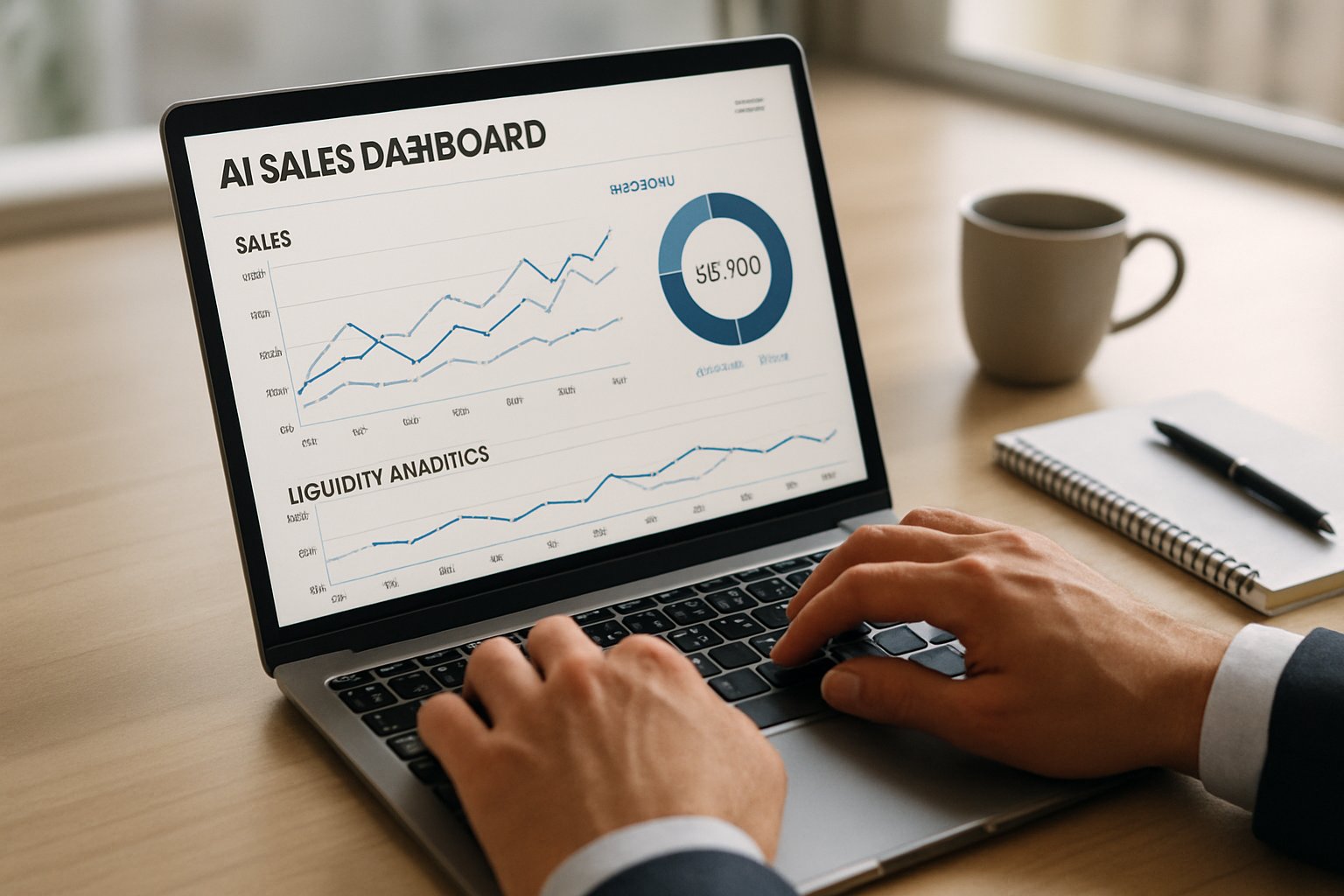
Consequently, real-time signals would move like cash, generating fresh ad revenue and operational savings.
This article dissects the technology, market dynamics, and risks behind that promise.
Furthermore, we examine how brands, investors, and BNP analysts view the momentum.
Readers seeking deeper commercial skills can validate expertise through the AI Sales certification.
Moreover, the discussion will stay practical, focusing on measurable results rather than abstract forecasts.
Subsequently, each section closes with concise takeaways, guiding busy executives through next actions.
Let us begin with the commercial heart of the story: driving AI Sales growth inside stores.
Driving AI Sales Growth
Historically, brick-and-mortar channels struggled to monetize every shopper step.
In contrast, e-commerce platforms tracked clicks, enabling precision offers and faster conversions.
Consequently, physical aisles missed revenue that AI Sales teams crave.
Edge data now shrinks that gap.
Vusion reports 600 million connected devices producing shelf intelligence every second.
Therefore, marketers can trigger promotions when inventory and context align, not days later.
BNP research notes that faster cycles correlate with higher campaign margins for consumer brands.
These drivers underpin a projected €1.4bn revenue target cited by the company for 2025.
Real-time edge insight changes selling physics.
However, infrastructure creates the essential liquidity layer we explore next.
Decoding Retail Liquidity Shift
Liquidity describes how quickly information, capital, and goods circulate inside stores.
Moreover, Vusion splits this into data liquidity and commercial liquidity.
Data liquidity means sensors stream shelf status to clouds and ad servers in seconds.
Commercial payoff appears when that stream triggers budget flows, such as retail media bids or dynamic pricing.
Consequently, store aisles become programmable like web pages.
BNP analysts compare the shift to high-frequency trading, only applied to shelf space.
Nevertheless, actionable fluidity demands dense hardware and robust analytics.
Stores that capture fluid signals can optimize margin and experience together.
Therefore, platform architecture becomes decisive, which brings us to Vusion's EdgeSense network.
Vusion's EdgeSense Advantage
EdgeSense stitches ESLs, cameras, and beacons into a spatial data grid.
Furthermore, generative models tap that grid for context, powering conversational assistants on wearables.
Roy Horgan frames it as giving artificial intelligence reliable coordinates for the physical world.
Consequently, AI Sales associates receive prompts such as restock aisle seven or launch a cheese promotion.
Captured shelf imagery also feeds Memory analytics, flagging gaps and price anomalies.
The Fresh Market adopted the full stack across 166 stores, validating early scale economics.
Moreover, guidance toward €1.5bn revenue suggests hardware margins improve when software recurs.
EdgeSense therefore underpins measurable returns.
Next, we examine how those returns appear through advertising budgets.
Media Revenue Landscape Shift
Global retail media spend may top US$175bn by 2026, according to WARC forecasts.
However, only digital giants currently capture the majority, leaving supermarkets under-monetized.
Vusion's Engage module plans to surface shelf impressions as programmatic inventory.
Once impression data blends with basket results, attribution closes the loop.
Therefore, AI Sales managers can pitch in-store banners with the same confidence as online placements.
BNP models estimate a 4% margin lift when in-store media exceeds one percent of sales.
Key metrics already signal momentum:
- 600 million IoT devices link shelves to clouds.
- 18 million rails feed spatial context to EdgeSense.
- €654m nine-month 2024 sales signaled strong order momentum.
Consequently, advertisers see a credible audience scale.
Shelf media thus converts foot traffic into double-digit margin products.
However, operations must also cut waste, our next focus.
Operational Gains For Stores
Edge data helps staff fix out-of-stocks before shoppers notice.
Additionally, synchronized pricing trims markdown losses and increases gross profit.
A study cited by the vendor shows 30% fewer manual audits once Captana runs live.
Consequently, working capital falls as inventory turns accelerate.
Staff also spend less labor printing paper labels, freeing hours for customer service.
These efficiencies stack with AI Sales uplift, creating a compelling blended return.
Therefore, stores can fund future expansions without heavy external financing.
Efficiency gains strengthen the liquidity narrative.
Nevertheless, risks and competitive choices require frank assessment.
Challenges Risks BNP Perspective
Privacy tops the list because cameras watch customers continuously.
Moreover, regulators may restrict data fusion without explicit consent.
In contrast, e-commerce relies mainly on browser cookies, easier to anonymize.
Integration complexity also emerges, given diverse point-of-sale architectures.
Vendor lock-in remains another concern when one platform owns edge hardware and data rights.
Effective contracts preserve data rights while safeguarding AI Sales flexibility.
Pricer, Hanshow, and other rivals offer modular labels, potentially diffusing bargaining power.
Nevertheless, interviews suggest many grocers accept concentration because deployment speed matters more.
Risks are tangible yet manageable with governance and staged rollouts.
Consequently, future outlook depends on execution discipline, explored below.
Future Outlook And BNP
Analysts expect connected shelf coverage to double within three years.
Furthermore, cloud costs continue falling, improving data economics.
EdgeSense roadmap adds open APIs, letting ad tech buy impressions programmatically.
Consequently, AI Sales could represent the fastest growing revenue line for many grocers.
Equity analysts project compounded annual media revenues above 25% for early adopters.
However, the same models penalize firms that neglect privacy investment, trimming valuations.
Therefore, balanced strategies combining governance, hardware, and marketing automation remain essential.
Physical commerce appears set for data-rich acceleration.
Nevertheless, leadership teams must align objectives, finance, and culture to capture the prize.
In summary, Vusion's platform signals a structural re-pricing of store footprints.
Programmatic aisles, faster turns, and measurable campaigns converge to unlock unprecedented value.
Moreover, disciplined governance can mitigate privacy, lock-in, and rollout hurdles.
Executives aiming to lead this wave should sharpen commercial fluency immediately.
Accordingly, consider validating skills through this specialized program and build momentum today.
Meanwhile, staying ahead of the curve still demands continuous learning and cross-functional collaboration.


