

AI CERTS
2 hours ago
How 800VDC Racks Redefine Data Center Engineering
AI Compute Demands Surge
Model sizes double every few months. Meanwhile, GPU counts per chassis grow in lockstep. NVIDIA positions Vera Rubin architectures to push near-1 MW racks. Therefore, current 48 VDC buses struggle with copper bulk and loss. Industry observers estimate 800 VDC moves 150 percent more power through identical conductors. Consequently, designers can feed dense AI clusters without ballooning cable trays.
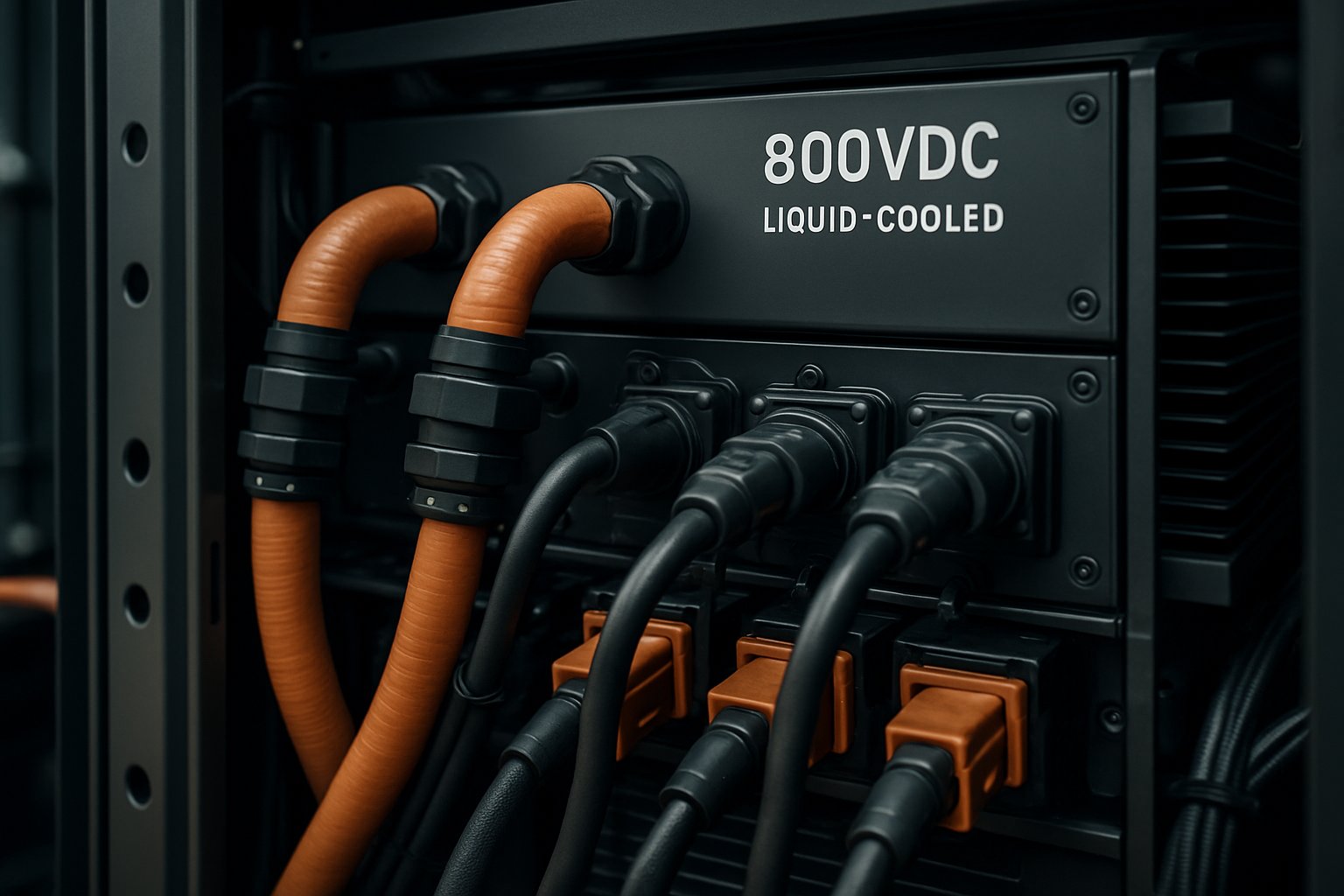
These dynamics reshape budgeting and floor layouts. Furthermore, capital planners must evaluate transformers, breakers, and battery backups against the new voltage tier. The shift influences Data Center Engineering strategy from utility entrance to chip package. Those fundamentals frame the remaining analysis. In contrast, traditional facilities risk obsolescence if they ignore the trend.
The market forces now appear clear. However, productized answers still warrant technical scrutiny. That need leads directly to LITEON’s announcement.
800VDC Power Shift Trend
LITEON combines silicon-carbide and gallium-nitride stages to reach 97.5 percent peak conversion efficiency. Additionally, the rack shelf drops 800 VDC to 50 V or 12 V at the final load. This architecture trims intermediate steps, thereby lowering heat and boosting reliability. Moreover, fewer converters lighten maintenance cycles.
Product datasheets list 72 kW shelves today, with 110 kW variants undergoing validation. Consequently, capacity scales alongside Vera Rubin system envelopes. LITEON also touts three-metric-ton structural ratings and blind-mate power connectors. Those mechanical touches accelerate deployment in modular pods.
The company’s roadmap aligns with NVIDIA COMPUTEX briefs that highlight 25 partners co-developing MGX hardware. Therefore, ecosystem momentum feels tangible, not hypothetical. Data Center Engineering leaders should monitor component availability, because SiC and GaN supply chains remain tight.
These specifications outline the electrical core. However, dissipating up to 60 kW per rack requires equally advanced thermal practice.
Advanced Liquid Cooling Integration
LITEON bundles in-rack CDUs rated at 80 kW and in-row units reaching 600 kW. Moreover, sidecar liquid-to-air modules remove 140 kW while simplifying retrofits. Each design uses quick-disconnect manifolds to curb downtime. Furthermore, optional heat-reuse loops support warm-water operations that improve overall facility energy reuse.
Liquid cooling adoption already accelerated after Hopper GPUs. Nevertheless, 800 VDC racks amplify the need because higher electrical density directly converts to thermal load. Field engineers must specify coolant chemistry, filtration intervals, and leak detection. Consequently, disciplines once separate now converge under the broader Data Center Engineering banner.
The thermal portfolio pairs tightly with the power shelf, creating a repeatable building block. These synergies foster shorter commissioning timelines. However, the integrated approach also means a single vendor relationship governs critical risk areas. Procurement teams should weigh that carefully.
Thermal engineering now complements electrical design. Subsequently, mechanical alignment becomes the next hurdle.
Mechanical Standards Alignment Key
Open Rack V3 dimensions plus NVIDIA MGX mounting points dictate physical compatibility. LITEON follows both specs. Consequently, operators gain tool-less server insertion and blind-mate liquid couplings. Moreover, rails support three-metric-ton static loads, reflecting denser chassis weights.
Standardization eases field service. Additionally, compliance simplifies secondary market component sourcing. Nevertheless, 800 VDC introduces new arc-flash profiles. Therefore, safety labeling, interlocks, and PPE protocols must adapt accordingly. Independent consultants urge early coordination with local electrical inspectors.
Mechanical certainty underpins uptime. These safeguards complete the integrated rack story and set the stage for quantitative analysis.
Market Impact Metrics Outlook
Several data points illustrate potential gains:
- 150 % more power on identical copper, per DataCenterDynamics.
- 97.5 % conversion efficiency for LITEON power shelves.
- 600 kW maximum in-row CDU capacity within the product line.
- >90 MGX systems announced by 25 partners, signaling ecosystem scale.
Furthermore, analysts expect one million servers to ship with liquid cooling by 2027. Consequently, early adopters may capture energy-cost advantages faster. In contrast, laggards may face stranded assets when retrofitting.
These numbers confirm strategic urgency. However, risk management remains essential before greenlighting capital projects.
Operational Risks Addressed Now
Independent reviews call facility readiness the biggest barrier. Moreover, many campuses lack 800 V DC busways or chilled-water returns sized for 600 kW loops. Therefore, greenfield builds enjoy an advantage.
Safety standards also evolve. Nevertheless, organizations such as OCP release interim guidelines covering touch-safe connectors and monitoring. Additionally, LITEON integrates leak sensors that trigger rack-level shutoffs. These features reduce exposure but cannot replace robust procedures.
Component supply poses another variable. Silicon-carbide device shortages could delay large orders. Consequently, procurement teams should lock multi-year contracts early. These mitigations wrap risk into controllable workstreams. Forward-looking Data Center Engineering programs treat them as integral, not peripheral.
Risk mitigation sets a stable base. Subsequently, leaders can craft phased adoption roadmaps.
Strategic Adoption Guidance Steps
Experts recommend five sequential steps:
- Audit upstream substations for 800 V compatibility.
- Pilot a single 80 kW liquid loop with non-critical workloads.
- Gather performance, leak, and efficiency telemetry over 90 days.
- Scale to row-level 600 kW CDUs after successful validation.
- Standardize spares, PPE, and safety drills across operations.
Additionally, staff education remains vital. Professionals can enhance their expertise with the AI Architect™ certification. Moreover, cross-disciplinary programs help mechanical, electrical, and controls teams collaborate.
Successful pilots convert skeptics. Consequently, board approvals for multi-megawatt expansions follow more smoothly. These structured steps drive measured progress toward AI-era infrastructure goals.
The roadmap provides practical traction. However, teams must stay informed as technology pivots continue.
In summary, 800 VDC power and liquid cooling redefine Data Center Engineering boundaries. LITEON, Vera Rubin reference designs, and a growing ecosystem now deliver commercially viable racks. Efficiency, density, and standardization promise compelling benefits. Nevertheless, facility upgrades, safety, and supply chains demand proactive management. Consequently, leaders should launch pilots, refine procedures, and pursue continuous training to stay competitive. Forward-thinking organizations that act today will harvest operational savings and performance advantages tomorrow.


