

AI CERTS
2 hours ago
Honor’s Personal Avatar Plan Reshapes Device Ecosystem
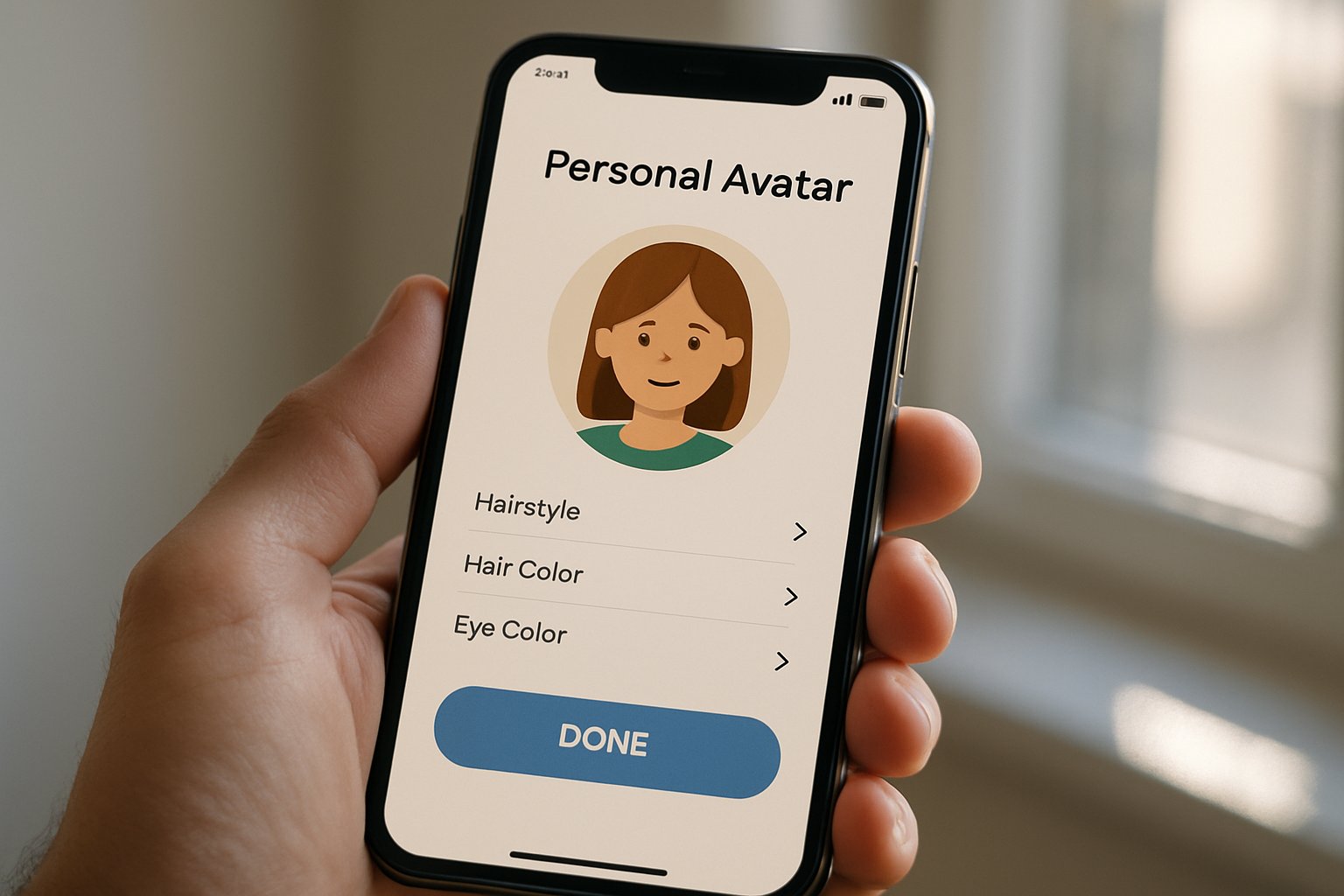
This article dissects the announcement, platform architecture, partnerships, and competitive implications.
It clarifies why the Personal Avatar concept matters for an increasingly fragmented Device Ecosystem.
Additionally, we assess associated risks, compliance challenges, and career opportunities for technical professionals.
Subsequently, you will find concrete statistics from MWC, expert quotes, and independent analyst reactions.
Therefore, decision makers can make evidence-based calls on budgets, integrations, and skill development.
Global Device Market Context
Global hardware demand remains flat, yet AI capabilities drive premium price segments.
Consequently, vendors pivot toward services that lock customers into a sticky Device Ecosystem across phones, wearables, and home hubs.
Canalys forecasts 40% of smart devices shipping with on-device large models by 2027.
Meanwhile, regulatory pressure around data localization forces brands to split models between edge and cloud.
These trends create fertile ground for persistent user agents.
Market conditions favor platforms that coordinate many services swiftly.
However, gap remains between hype and cross-device execution.
Consequently, the next section explores how Honor positions its Personal Avatar to close that gap.
Analysts observe that average handset replacement cycles have lengthened to 44 months in mature markets.
Consequently, manufacturers push differentiated software experiences to drive subscription revenue rather than relying on annual hardware refreshes.
Subscription fatigue, however, threatens uptake unless new services deliver clear daily utility.
Therefore, persistent agents promise higher perceived value through continuous and proactive personalization.
Honor Personal Avatar Vision
During MWC, Honor executives described a unified Personal Avatar that persists across brands and form factors.
Fang Fei labelled the moment a "Cambrian Explosion" for agentic devices, emphasizing openness rather than proprietary lock-in.
Moreover, the company pledged integration of 20,000 AI services within the upgraded platform by late 2026.
Such breadth intends to give each Personal Avatar instant domain reach, from travel booking to eldercare monitoring.
Additionally, demonstrations included a Robot Phone and humanoid prototype, which anchor the vision in tangible embodiment.
The vision merges persistent identity with embodied hardware.
Nevertheless, success depends on solid technical architecture.
Therefore, the following section unpacks the platform layers enabling that architecture.
Architecture And Platform Details
Architecturally, Honor AI Connect acts as the orchestration fabric linking edge models, cloud counterparts, and partner services.
Furthermore, the AiMAGE framework splits computation between a 1.3-billion parameter phone model and a 12.4-billion cloud model.
Consequently, latency drops while privacy improves, because sensitive context never leaves the handset during critical interactions.
Digital Twins synchronize user preferences and environmental states across devices, enabling richer contextual reasoning for the Personal Avatar.
Meanwhile, Google Cloud's Gemini models provide large context windows, and Qualcomm chips deliver on-device acceleration.
- 20,000 AI services target by 2026
- 1.3B on-device parameters, 12.4B cloud parameters
- $10 billion ecosystem investment over five years
Edge caching techniques reduce bandwidth consumption during frequent inference queries.
Furthermore, containerized microservices allow independent versioning, which limits regression risk when swapping specialist engines.
Model updates follow a staged rollout plan, beginning with employee testers before reaching public beta channels.
Consequently, feedback loops shorten, enabling weekly optimization cycles instead of quarterly firmware releases.
The layered approach balances performance, privacy, and vendor flexibility.
However, scale adds governance and partner management complexity.
Subsequently, we examine financial commitments and alliances underpinning that scale.
Partnerships And Investment Scale
Honor allotted over USD 10 billion through 2030 to expand its AI Device Ecosystem.
Moreover, telecom stalwarts Orange, Telefónica, and Vodafone appeared onstage to validate carrier readiness for cross-device avatars.
Google Cloud and Qualcomm echoed similar enthusiasm, highlighting Gemini integration and Snapdragon optimization, respectively.
Additionally, analysts noted that a partner-first stance differentiates the initiative from vertically locked peers.
Digital Twins were cited during discussions on supply-chain monitoring and sustainability, revealing broad industrial interest.
Joint innovation labs will open in Shenzhen, Munich, and Sao Paulo to accelerate use-case localization.
Meanwhile, carriers plan bundled tariffs that include cloud compute credits for advanced agent features.
Third-party developers gain revenue sharing based on invocation frequency and verified customer satisfaction metrics.
Nevertheless, the vendor must clarify dispute resolution processes when service quality impacts broader user experience.
Capital and alliances increase deployment credibility.
Nevertheless, operational transparency will decide real partner commitment.
Therefore, the next section weighs openness claims against looming regulatory hurdles.
Openness Risks And Compliance
Open rhetoric often clashes with proprietary incentives and security constraints.
Consequently, developers demand clear SDK timelines, API guarantees, and service-level agreements.
Meanwhile, EU regulators scrutinize cross-brand identity graphs used by any Personal Avatar implementation.
GDPR and the forthcoming AI Act require explainable models, consent management, and auditable data retention policies.
Digital Twins amplify privacy stakes because mirrored environments may reveal sensitive household patterns beyond individual data.
Moreover, deepfake misuse threatens brand trust until robust biometric safeguards ship in future firmware.
Security researchers urge mandatory penetration testing before any significant feature expansion.
Moreover, industry consortiums lobby for standardized audit formats to speed cross-border certification.
Failing to harmonize audit schemas could create parallel compliance silos, increasing maintenance costs.
Therefore, aligning early with European regulators promises smoother market entry elsewhere.
Legal uncertainty could slow adoption.
However, proactive transparency could turn compliance into competitive advantage.
Consequently, we contrast this strategy with rival roadmaps to gauge differentiation.
Comparisons And Competitive Landscape
In contrast, Xiaomi emphasizes bundled smart-home kits rather than cloud service counts.
Furthermore, Oppo and Vivo pursue closed vertical stacks, limiting third-party innovation despite speed advantages.
The Shenzhen vendor's target of 20,000 services dwarfs peer catalogs, yet execution risks remain.
Digital Twins appear only sporadically in competitor messaging, giving the Personal Avatar ecosystem potential differentiation.
Moreover, embodied demonstrations like the Robot Phone capture media attention that software-only launches miss.
Samsung bets on tight handset-to-TV integration, banking on proprietary operating systems rather than open APIs.
Apple remains silent yet continues hiring former robotics engineers, hinting at future embodied experiences.
Market watchers expect further announcements at CES, where many vendors showcase iterative upgrades before mass production.
Nevertheless, long component lead times could delay ambitious form factors beyond 2027.
Funding dynamics also shift as venture arms of carriers invest directly in edge inference startups.
Meanwhile, governments subsidize semiconductor plants, attempting to secure supply chains for upcoming intelligent devices.
Consequently, ecosystem success intertwines with macroeconomic policy decisions as much as engineering breakthroughs.
Differentiation hinges on openness, embodiment, and large partner catalogs.
Nevertheless, sustained performance will validate the claims.
Subsequently, we outline skills and certifications professionals should pursue to leverage emerging demand.
Skills Pathways For Professionals
Engineers versed in on-device inference, privacy engineering, and multimodal prompt design will find immediate opportunities.
Furthermore, ecosystem architects who understand Digital Twins modeling can bridge physical environments with logical agents.
Professionals can enhance their expertise with the AI+ UX Designer™ certification.
Additionally, product leads should study EU AI regulations to ensure compliant Personal Avatar rollouts.
Consequently, cross-functional fluency in design, security, and monetization will become a hiring prerequisite.
Product managers should master prompt engineering taxonomies to translate user intent into reliable agent actions.
Meanwhile, data scientists can specialize in federated learning to keep personal data decentralized.
Designers must create transparent consent flows that demystify algorithmic outcomes for mainstream audiences.
Subsequently, cross-disciplinary sprints involving ethicists will secure stakeholder trust early in development.
Career paths will reward specialized yet holistic skill sets.
Therefore, early upskilling secures strategic relevance.
MWC 2026 signaled that cross-device intelligence is no longer theoretical.
The Shenzhen vendor's Personal Avatar blueprint couples massive service breadth with an ambitious open governance promise.
Moreover, hybrid model splits address latency and privacy, while contextual reasoning grows richer.
Nevertheless, privacy compliance, API clarity, and safety controls remain decisive hurdles.
Partners expect detailed SDKs, transparent metrics, and verifiable performance benchmarks before large scale adoption.
Therefore, professionals who upskill now, and organizations that pilot early, can capture first-mover rewards.
Explore specialized certifications to align your career with this accelerating wave of AI innovation.
Meanwhile, public scrutiny will intensify, making transparent governance a non-negotiable prerequisite for sustained adoption.
Act now to build expertise that aligns with these evolving standards.


