

AI CERTS
3 months ago
HBM Surge: Navigating Price Inflation and Supply Chain Shock
Moreover, the spike coincides with wider DRAM turbulence, including DDR5 shortages and volatile spot markets. Retail channels now ration kits while hyperscalers pre-buy quarters of supply in advance. Industry leaders warn that unchecked Price Inflation could slow global AI rollouts and strain consumer budgets. This article unpacks the drivers, winners, and risks behind the abrupt shift. It offers data-rich context for executives charting strategy amid extreme Volatility.
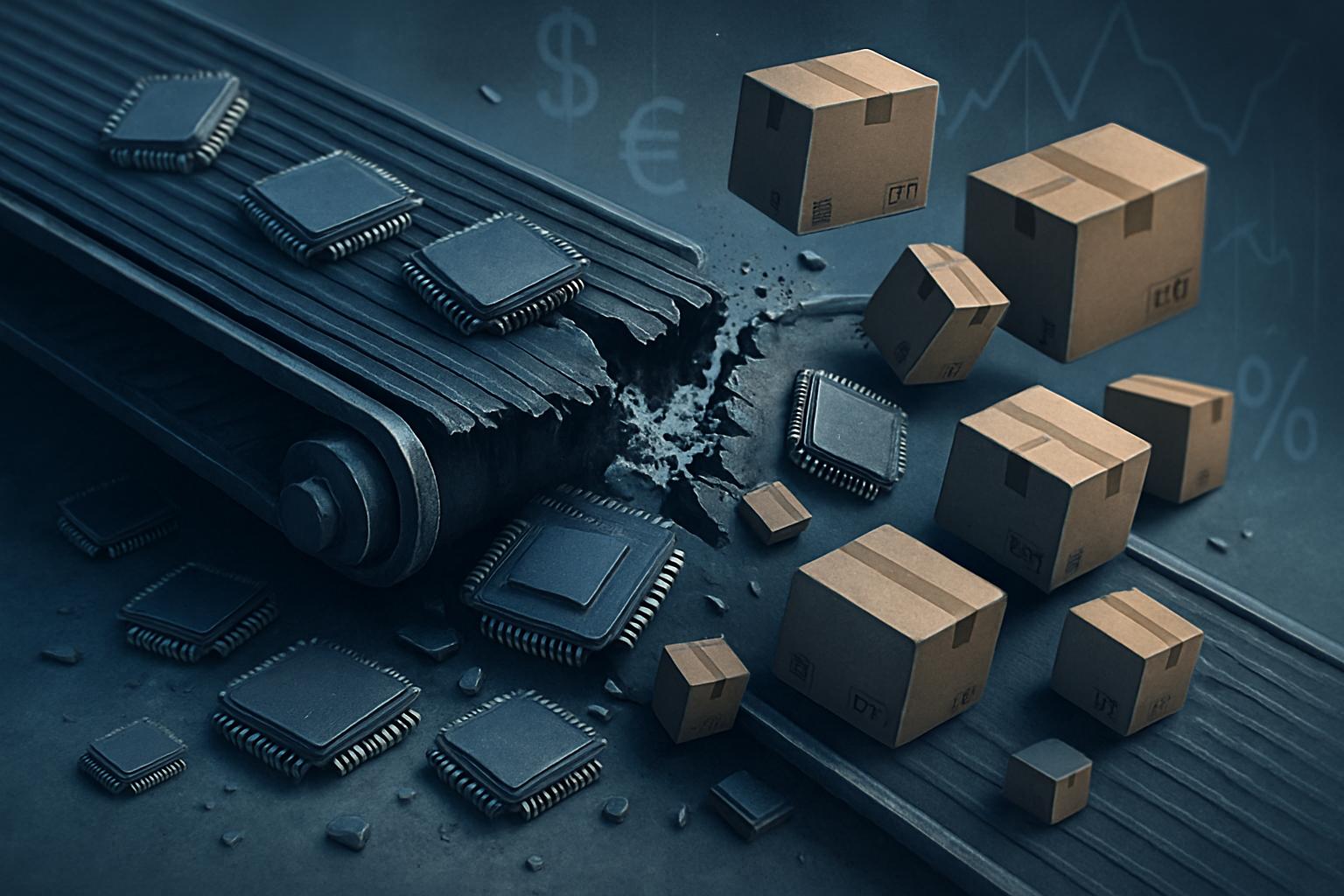
HBM Market Overview Now
HBM stacks differ sharply from commodity DRAM. Each layer connects through through-silicon vias, enabling terabytes per second bandwidth. Therefore, fewer wafers satisfy far fewer buyers, intensifying competition when demand outstrips supply. TrendForce estimates 2025 HBM revenue will reach roughly US$36 billion, up 45% year on year. Meanwhile, SK hynix alone controlled 64% of this segment during the year’s second quarter.
Beyond share, profitability also climbed. SK hynix reported that HBM generated 45% of its total DRAM revenue in Q3 2025. Micron, in contrast, signaled a strategic pivot by breaking ground on a US$7 billion packaging plant. Samsung kept details limited yet hinted at aggressive HBM4 ramps during earnings calls. Such moves underscore how Price Inflation reshapes capital allocation across Memory Chips.
In summary, the market remains supply constrained even after aggressive expansions. However, upcoming capacity will matter only after 2026.
Inflation Drivers Explained Clearly
Several intertwined forces fuel today’s surge. First, Nvidia’s latest accelerators demand up to 192GB of HBM3 per card. Consequently, each GPU shipment now absorbs far more die area than older products. Second, cutting-edge smartphones adopted LPDDR5X, pushing producers to juggle lines between DDR5 and HBM. Third, advanced-package capacity remains a bottleneck, limiting finished stack volume.
Furthermore, geopolitical incentives complicate planning. The United States, Europe, and Japan subsidize local Memory Chips fabs, yet projects take years. In contrast, AI customers want guaranteed supply today, so they pre-pay premiums. That behavior amplifies Price Inflation by removing free market slack. Analysts observe similar patterns during past NAND crunches, but scale now feels larger.
Additionally, commodity DRAM customers face collateral damage. A single 16Gb DDR5 die rose from US$6.84 to US$24.83 between September and November 2025. Those numbers, reported by DRAMeXchange and echoed in Retail channels, highlight contagion effects. Volatility thus spreads beyond data centers into consumer PCs.
Supplier Strategies And Investments
Suppliers respond with record capital expenditure. Micron’s Singapore facility will package tens of millions of HBM stacks annually once fully operational. Samsung reportedly allocates extra EUV capacity for HBM4 dies to hedge against future Volatility. Meanwhile, SK hynix expands interposer lines in Korea and partners with TSMC for advanced packaging. These investments chase sustained Price Inflation yet risk oversupply if demand cools.
Collectively, these Memory Chips initiatives dwarf previous DRAM cycles. TrendForce projects combined HBM CAPEX will top US$20 billion by 2026.
Key corporate moves:
- Micron commits US$7 billion to advanced packaging in Singapore.
- SK hynix targets 50% capacity growth before 2027.
- Samsung accelerates HBM4 tape-outs alongside DDR5 diversification.
- Nvidia locks multi-year supply agreements with leading vendors.
Furthermore, many firms pursue workforce upskilling to manage complex security requirements. Professionals can enhance their expertise with the AI Security Level 2 certification. Such programs prepare engineers for stringent AI supply-chain audits.
In sum, suppliers bet billions on lasting profitability. However, the next section shows how downstream players shoulder rising costs.
Downstream Industry Impact Analysis
Rising component costs ripple through manufacturing schedules. Server OEMs accept allocations weeks late and redesign boards to suit whatever HBM dies arrive. Consequently, launch roadmaps slip and cloud capacity planning becomes uncertain. Greyhound Research labels the shortage a macroeconomic risk, not merely a supply hiccup.
Consumer markets feel similar pain. Retail DDR5 kits now carry triple-digit premiums compared with last winter. PC builders delay upgrades because Price Inflation lifted entire bill of materials. Volatility also deters small system integrators from stocking inventory.
Additionally, smartphone makers confront memory quotas. Some brands cut RAM options to preserve margins, according to industry interviews. That step reinforces the perception of scarce Memory Chips among end users.
Thus, cost pressure migrates downstream quickly. Nevertheless, suppliers argue relief is coming, as the following forecast section explains.
Forecasts And Potential Risks
Analysts debate how long current dynamics last. Goldman Sachs, quoted by TrendForce, flags double-digit HBM ASP declines possible in 2026. Such a reversal would end the latest Price Inflation wave and punish overextended suppliers. However, SK hynix maintains the shortage could persist until late 2027.
Moreover, new HBM4 designs could reset cost structures. Larger dies and thicker interposers might increase manufacturing instability during early yields. Consequently, spot pricing may swing violently before stabilizing. Retail buyers should prepare for persistent uncertainty, especially when DDR5 capacity shifts toward servers.
In aggregate, the forecast range remains unusually wide. Therefore, risk management frameworks must incorporate multiple supply scenarios.
Managing Price Inflation Today
Procurement teams cannot rely on historical averages. Instead, they negotiate multi-year contracts that cap Price Inflation within defined corridors. Furthermore, dual-source strategies reduce exposure to sudden allocation shocks. Suppliers also encourage customers to adopt memory-saver software features to stretch capacity.
Additionally, financial hedging with memory futures gains traction among hyperscalers. Many CFOs hedge against Price Inflation by purchasing options linked to DRAM indices. Such tools mirror previous practices in metals markets, yet uncertainty remains higher. Retail investors should avoid speculative bets despite social-media hype.
Security oversight grows alongside financial risk. Consequently, many firms mandate advanced training. Professionals can validate skills through the earlier linked certification, strengthening supply-chain assurance.
Collectively, these steps offer partial relief. Nevertheless, leadership must monitor market dashboards weekly for new demand signals.
Conclusion And Outlook
HBM’s sudden ascent summarizes the modern semiconductor paradox. Demand grows exponentially, yet physical supply scales gradually. That imbalance doubled contract rates within months. Suppliers invest billions, but capacity arrives slowly. Consequently, buyers face persistent Volatility and strategic complexity. Nevertheless, analyst data indicates potential relief in 2026 if expansion stays on schedule. Executives should blend long-term contracts, technology road-mapping, and certified talent to safeguard operations. Explore the linked certification to elevate your security readiness and navigate the next memory cycle confidently.


