

AI CERTS
3 hours ago
HBM Shortage: Micron Meets Only Half Demand
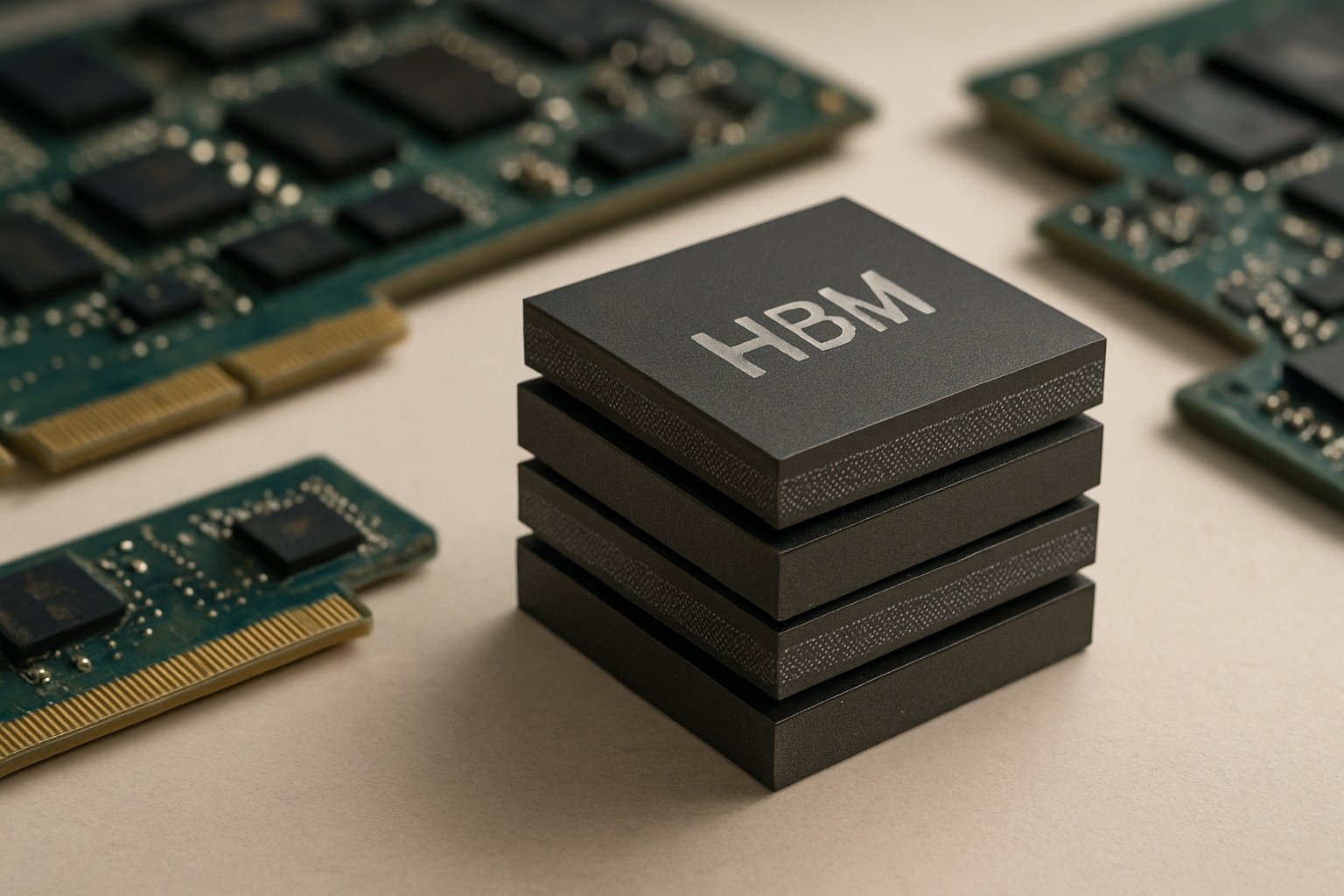
Demand for stacked memory powering accelerator chips continues to explode.
Meanwhile, clean-room capacity cannot expand fast enough.
Therefore, hyperscalers scramble for guaranteed allocations and longer procurement contracts.
Such deals tighten the market further, lifting contract prices sharply.
Additionally, policymakers and investors watch Micron’s ambitious fabrication roadmap closely.
Analysts now debate when any balance might return.
In contrast, customers fear delayed projects and escalating hardware costs.
This article unpacks numbers, competition, and scenarios shaping next-generation memory economics.
Surging AI Demand Strains
AI training clusters now double memory footprints each generation.
Moreover, Nvidia’s latest roadmap requires wider HBM4 channels and denser stacks.
Consequently, every new accelerator batch intensifies the HBM Shortage across global data centers.
Server architects cannot redesign systems quickly enough to curb the surge.
TrendForce projects DRAM bit demand rising more than 20% yearly for 2026 and 2027.
However, wafer additions lag because tooling lead times stretch beyond 18 months.
HBM consumes nearly three times more wafer area than DDR5 memory, deepening scarcity.
Nevertheless, hyperscalers continue committing capital, hoping early orders secure limited supply.
These figures confirm relentless demand pressure.
However, capacity realities demand closer inspection before optimism returns.
Micron Capacity Reality Check
Micron’s fiscal first quarter delivered record $13.64 billion revenue and 56% gross margin.
Yet, management conceded capacity covers only a fraction of backlog.
In contrast, bookings stretch several years for high-bandwidth products.
Therefore, allocation decisions determine which customers keep scaling AI clusters.
Chief Executive Sanjay Mehrotra stated, “Aggregate industry supply will remain substantially short of demand.”
Subsequently, he quantified coverage at roughly 50% to 66% for select hyperscalers.
Such openness underscores how the HBM Shortage redefines negotiation leverage.
Moreover, analysts expect tightness until fresh U.S. fabs reach volume in mid-2027.
Meeting Just Half Demand
Micron now prioritizes margin over uniform deliveries.
Consequently, conventional PC memory receives fewer wafers.
In contrast, AI accelerator chips obtain HBM first, despite higher area cost.
Nevertheless, even marquee customers receive partial fulfillment, sustaining the HBM Shortage.
- Revenue guidance: $18.7 billion for fiscal Q2.
- HBM TAM projection: ~$100 billion by 2028, ~40% CAGR.
- Fiscal 2026 capex raised to about $20 billion.
These metrics highlight profit acceleration despite supply fences.
Therefore, competitors race to secure early HBM4 qualifications.
Competitive HBM Supplier Battle
Samsung announced mass HBM4 shipment in February, challenging Micron’s narrative.
Meanwhile, SK hynix maintains volume leadership with established customers such as Nvidia.
Nevertheless, the company insists its own HBM4 reaches volume earlier than guided.
Industry analysts still debate which vendor wins the critical Nvidia socket.
Moreover, packaging houses report backlogs extending into 2027, limiting everyone equally.
Consequently, the HBM Shortage persists even if one supplier executes flawlessly.
In contrast, diversified sourcing offers hyperscalers little immediate relief.
Competitive claims shift weekly yet capacity math remains unforgiving.
However, rising prices reveal the next dimension of market tension.
Pricing And Margin Boom
Contract DRAM prices jumped over 50% quarter-on-quarter, according to TrendForce surveys.
Furthermore, HBM premium pricing widens as capacity fills months ahead.
Consequently, gross margin guidance hit 68% for the current quarter.
Analysts from JPMorgan, Deutsche Bank, and Mizuho model sustained price strength into 2027.
However, some warn demand destruction emerges if hardware budgets fail to keep pace.
Consequently, the HBM Shortage inflates component lead times for system builders.
These profit levels reveal how the HBM Shortage shifts bargaining power.
Nevertheless, elevated pricing funds faster node shifts like 1-gamma and advanced TSV packaging.
Therefore, long-term investors tolerate volatility expecting secular upside.
Capex And Fab Expansion
Capex for fiscal 2026 rises toward $20 billion, almost doubling prior plans.
Moreover, new Idaho and New York fabs receive CHIPS Act incentives.
However, meaningful wafer output arrives mid-2027 at the earliest, prolonging the HBM Shortage.
Equipment lead times and clean-room qualification schedules remain stubborn bottlenecks.
Professionals can deepen insights through the AI+ Supply-Chain™ certification.
Additionally, this curriculum explores semiconductor material flows and risk mitigation frameworks.
Such knowledge prepares managers for protracted supply volatility.
High spending alone cannot resolve physical constraints quickly.
Consequently, strategic planning must consider at least two more years of imbalance.
Strategic Steps Move Forward
Hyperscalers negotiate multi-year offtake agreements locking baseline volumes and pricing.
Meanwhile, device engineers optimize stacking to extract more bandwidth per watt.
Moreover, some research teams evaluate alternative memory hierarchies to ease reliance on scarce chips.
Nevertheless, analysts agree demand growth will outrun incremental efficiency gains through 2028.
Therefore, the HBM Shortage remains central in forecasts and valuation models.
Policymakers also weigh domestic incentives as national security narratives frame advanced hardware as critical.
Subsequently, faster permitting and subsidized tooling may accelerate second-wave capacity.
Stakeholders thus pursue parallel levers from contracts to policy.
However, none guarantee quick relief without technological breakthroughs.
The numbers show demand still dwarfs near-term capacity.
Consequently, the HBM Shortage will dominate memory economics for several more years.
Higher prices reward suppliers yet force hardware buyers to plan further ahead.
Moreover, new fabs and node transitions remain essential but insufficient alone.
Strategic contracts, diversified chips sourcing, and policy support will shape outcomes.
Professionals who master logistics dynamics gain decisive advantage during volatile cycles.
Therefore, consider advancing skills with the linked certification and stay ahead of structural shifts.
Click now to explore the program and deepen your semiconductor strategy expertise.


