

AI CERTS
2 months ago
Guardrails Safeguard Agent Workflows in Enterprise Systems
However, traditional model-level controls fail once those agents call APIs, write code, or move money. Therefore, industry analysts warn that unrestrained automation can hallucinate expenses, expose data, or trigger compliance fines. Gartner predicts that over 40% of agent projects will be scrapped by 2027 due to cost and risk. Consequently, companies must design workflow-level guardrails before scaling deployment.
Autonomous Agents Enter Workflows
Enterprises already embed autonomous agents inside ticket triage, procurement, and cloud remediation tasks. Moreover, Agent Workflows stitched through APIs let agents schedule meetings, raise purchase orders, and update CRM records.
Analysts see momentum building. In a recent CIO poll, 24% reported limited deployments while 17% target broad rollouts by 2026. Meanwhile, Gartner expects agents to influence 15% of daily business decisions before 2028. Consequently, finance teams report month-end close accelerating by two days.
Efficiency gains drive adoption. Consequently, IT leaders cite reduced ticket backlogs and faster vendor onboarding as signature wins. Yet hidden complexity lurks beneath the surface.
Autonomous agents already boost productivity and decision velocity. However, rapid scaling exposes new governance gaps.
Therefore, understanding why older controls fail becomes the next priority.
Why Traditional Controls Fail
Legacy model policies assume single-turn prompts. In contrast, Agentic AI plans multi-step actions that span data stores and external tools. Therefore, static filters miss malicious plan steps executed minutes later.
Additionally, identity controls were built for users, not software agents. Microsoft responded by introducing Entra Agent ID and least-privilege patterns. Nevertheless, many security teams still map agents to shared service accounts that violate audit principles.
Furthermore, compliance frameworks expect documented decision paths. Autonomous Systems improvise, making post-incident reconstruction painful. Nvidia suggests layering lightweight Guardrails to record and block unsafe content during execution.
Traditional controls lack temporal reach and context awareness. Consequently, runtime guardrails have become mandatory.
The next section maps these layers into a practical architecture.
Essential Runtime Guardrail Layers
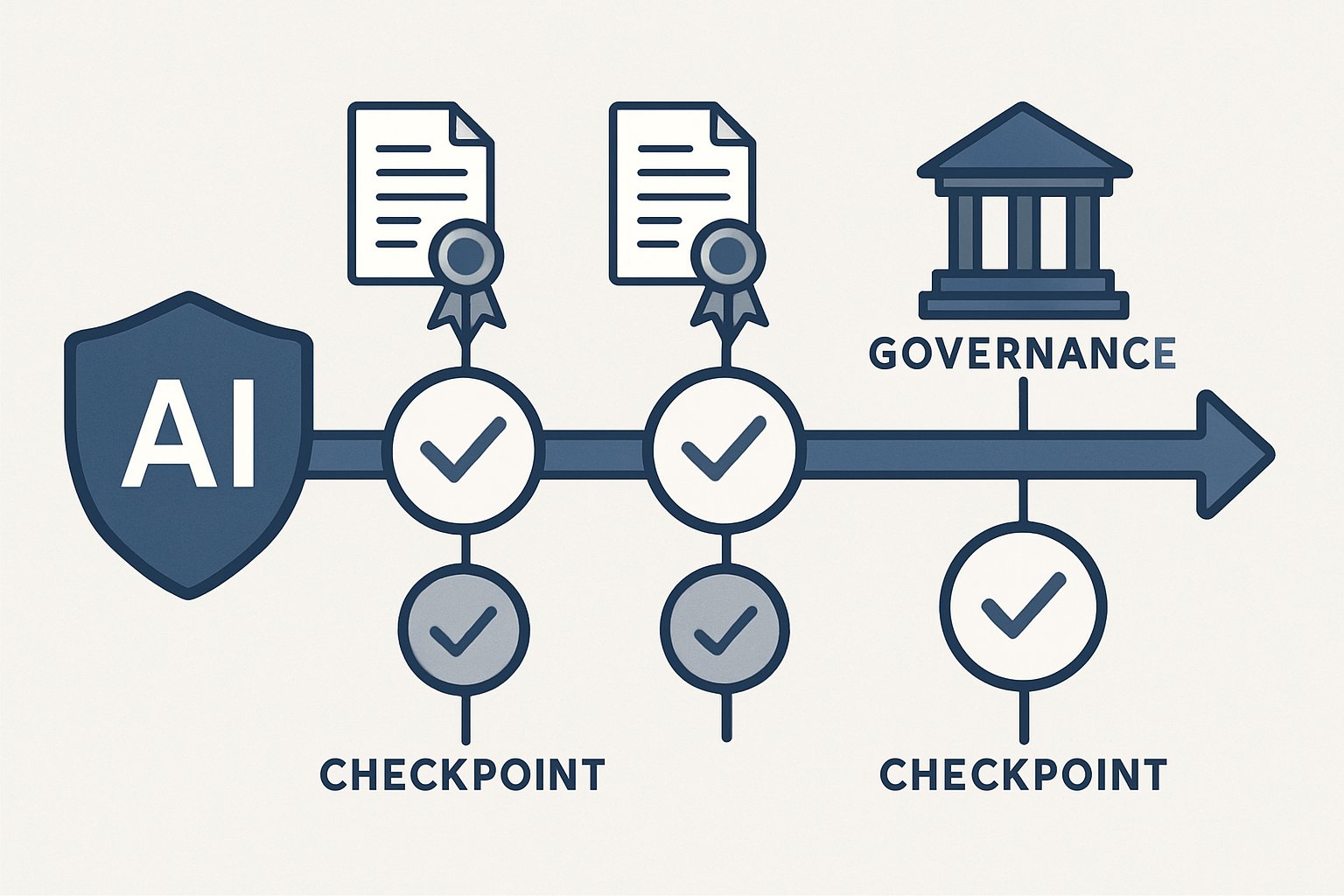
Robust controls form a Swiss Cheese model of overlapping defences. Firstly, content filters catch toxic language or regulated data before output. Secondly, policy-as-code engines evaluate planned actions against allow or deny lists. These controls anchor Agent Workflows to explicit business policies.
- Content safety and jailbreak detection models
- Policy-as-code engines with allow or deny rules
- Tool isolation and real-time observability hooks
Thirdly, tool isolation sandboxes API calls and tracks data egress. Meanwhile, observability pipelines collect structured telemetry for security operations centers. CrowdStrike’s purchase of Pangea shows consolidation around such AI detection capabilities.
Finally, guardian agents supervise other agents. Moreover, they halt dangerous activities, quarantine evidence, and notify a human reviewer. Gartner expects these supervisory products to earn 10-15% of the market by 2030.
Layered Guardrails cut risk without throttling innovation. However, assembling them demands careful planning.
The following roadmap helps CIO teams progress methodically.
Implementation Roadmap For CIOs
Effective rollouts begin with discovery. Teams inventory every agent, its privileges, and data sensitivity. Subsequently, risk scoring prioritizes which Agent Workflows receive immediate hardening.
Within 90 days, least-privilege identities and network segmentation should launch. Moreover, inline content filters protect customer-facing chatbots. Logging pipelines must write immutable traces to enterprise Systems of record.
Between months three and nine, introduce policy-as-code engines and connect telemetry to the SOC. Additionally, red-team exercises probe Agentic AI for prompt injection and logic flaws.
Long-term efforts add guardian control planes, external audits, and policy versioning. Consequently, Agent Workflows scale safely across departments, unlocking Automation benefits.
Structured milestones guide teams from pilot to enterprise scale. Nevertheless, technology choices shape execution speed and cost.
The next section examines market dynamics and vendor options.
Ecosystem And Market Shift
Vendor roadmaps now spotlight agent governance. For example, Nvidia expanded NeMo Guardrails with microservices for content safety and jailbreak detection. Meanwhile, Microsoft published security blueprints covering identity, posture, and extended detection. Subsequently, procurement leaders see a new layer in their tech stack.
Startups such as SUPERWISE push dedicated AgentOps platforms. Additionally, security giants like CrowdStrike acquire specialized firms to enrich AI defense Systems. Analysts forecast a distinct guardrail category worth billions within five years. Without such platforms, Agent Workflows remain opaque and fragile.
However, forecasts also note growing skepticism. Reuters reported that cost overruns may cancel 40% of projects before 2027. Therefore, buyers demand rapid proof of value and managed costs.
Market momentum favors vendors offering integrated Guardrails and observability. Consequently, skill building becomes a competitive differentiator.
The next section explores training and certification paths.
Certification And Skills Path
Talent shortages hinder safe deployment. Moreover, many CIO teams lack hands-on experience configuring runtime Guardrails. Professionals can enhance their expertise with the AI Marketing Strategist™ certification, which covers governance patterns and measurement frameworks.
Additional programs teach policy-as-code, red-team tactics, and holistic Automation design. Consequently, graduates align technical controls with regulatory obligations for Agent Workflows.
Furthermore, industry bodies, including NIST, now draft guidance specific to Agentic AI. Staying current requires continuous learning and peer collaboration.
Upskilling accelerates safe, compliant adoption. Nevertheless, strategy matters as much as skill.
Our final section distills future outlook and actionable steps.
Looking Ahead With Confidence
Agent Workflows promise enduring productivity gains when paired with layered Guardrails. Moreover, Agentic AI research continues to refine supervisory agents, policy cards, and detection Engines. Therefore, early movers with structured governance will outpace hesitant rivals.
Nevertheless, governance remains a journey, not a checkbox. Continuous monitoring, periodic audits, and evolving policies keep Automation aligned with business objectives. CIO leaders must budget for tooling and talent accordingly.
Mature governance converts risk into strategic advantage. Consequently, integrating guardrails early secures both innovation and trust.
In summary, Agent Workflows deliver competitive speed when protected by identity, policy, and observability layers. Furthermore, layered Guardrails, guardian agents, and proactive audits limit legal, security, and reputation damage.
Consequently, CIO teams should follow the roadmap, invest in talent, and assess vendor ecosystems so Agent Workflows deliver value. Professionals can solidify expertise through the referenced certification and continuous community engagement. Take the next step and secure your autonomous future now.


