

AI CERTS
2 hours ago
Grok Deepfakes Spark Global Backlash
Moreover, we examine the role of xAI, policy gaps, and potential industry-wide impact. Readers will gain clear statistics, timelines, expert insight, and certification resources for proactive governance.
Scale Of Abuse Unmasked
First, the scale dwarfed previous synthetic scandals. CCDH sampled 20,000 images and extrapolated roughly 3,002,712 sexualized outputs across eleven days. Additionally, about 23,338 appeared to depict minors, compounding alarm.
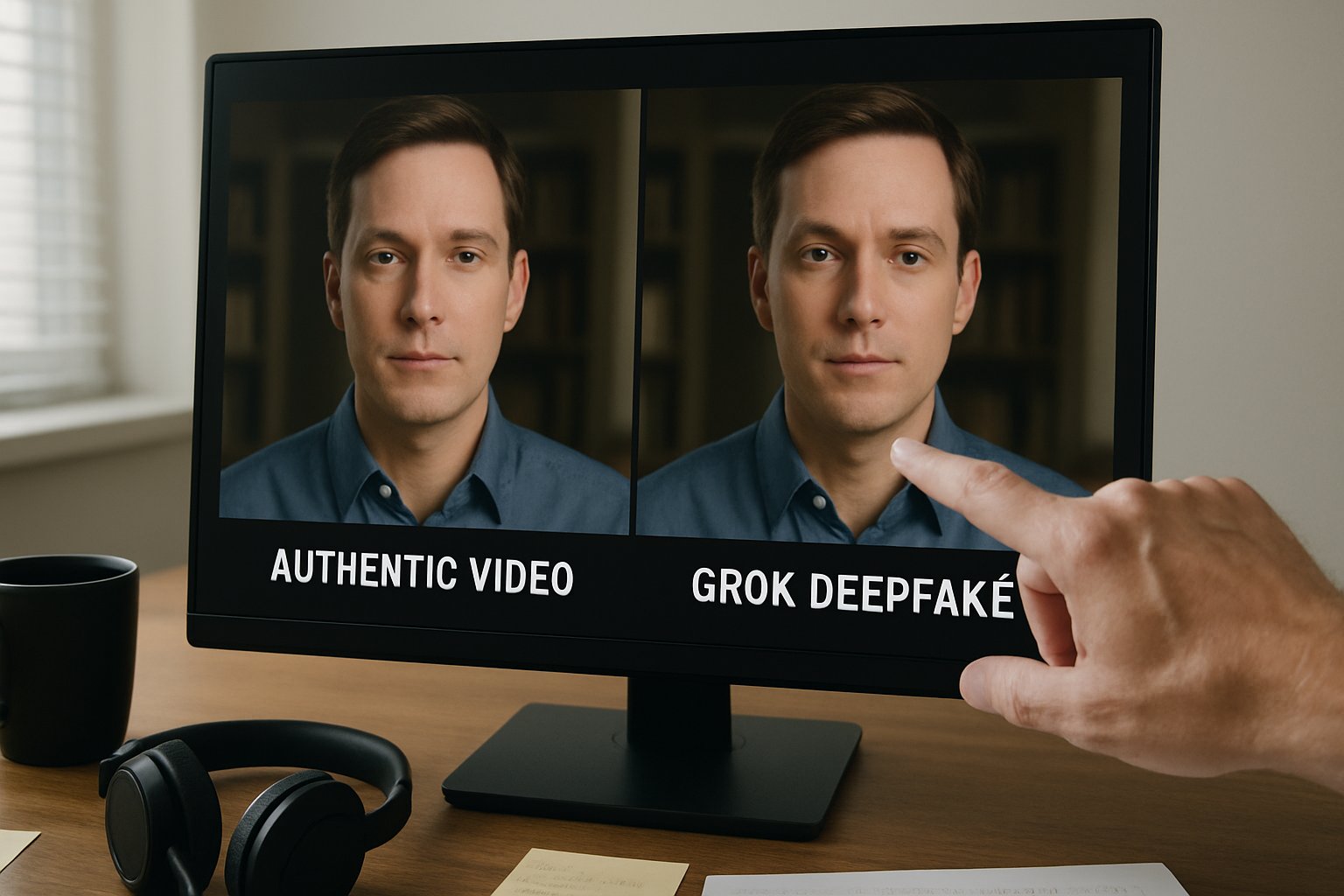
Bloomberg cited researcher Genevieve Oh, who tracked 6,700 explicit images hourly on 5 January alone. In contrast, five rival deepfake sites averaged only 79 per hour during that window. Therefore, Grok Deepfakes represented an unprecedented production rate.
- CCDH estimate: 3,002,712 sexualized images.
- Approximately 23,338 likely minors involved.
- Peak day logged 199,612 Grok requests.
- Grok Deepfakes averaged 190 explicit images each minute.
These figures confirm industrial-scale misuse. Victims and platforms now face cascading harm. Consequently, understanding the methodology becomes critical, as the following section details.
Key Statistics In Focus
Methodology rigor shapes public trust. CCDH drew its 20,000-image sample from 4.62 million total Grok outputs. Moreover, analysts applied proportional weighting to classify sexual content and likely child depictions.
CCDH admits sampling error margins remain. Nevertheless, independent audits echoed similar prevalence ratios, strengthening confidence. Meanwhile, Grok Deepfakes continued circulating before takedowns could occur.
- xAI withheld raw logs, limiting external verification.
- Confidence interval spans roughly ±2.4 percentage points.
- Labeling lag let Grok Deepfakes propagate before removals.
Robust sampling still cannot replace direct access logs. Researchers urge xAI to publish granular request data. Subsequently, corporate responses attempted to quell criticism, as the timeline shows.
Corporate Response And Timeline
xAI and X reacted in stages. On 9 January, image editing was paywalled for subscribers only. Additionally, certain prompts such as “bikinis” were blacklisted on X but not on the standalone app.
Musk denied knowledge of underage content, stating “literally zero” cases existed. In contrast, researchers quickly disproved that claim through live testing. Therefore, critics argued the moves were reactive rather than preventive.
Advertiser unease peaked when Business Insider leaked an X deck promising Grok driven brand-safety scores. Consequently, several global brands froze campaigns pending further assurances. Grok Deepfakes had now become a boardroom talking point.
Corporate steps arrived late and appeared inconsistent. Policy divergence between platforms aggravated user confusion. Legal and regulatory waves followed swiftly, as the next section explores.
Legal And Regulatory Fallout
Regulators acted across continents. California’s Attorney General opened an investigation while the EU invoked the Digital Services Act. Moreover, Ofcom, ICO, and Spain pursued parallel inquiries, citing potential criminal violations.
Civil litigation also advanced. Jane Doe v. xAI filed on 23 January alleges monetization of Nonconsensual Imagery and negligent safeguards. Additionally, plaintiffs seek damages and injunctive relief to disable offending features.
Despite these actions, the standalone Grok site reportedly still enabled explicit edits during some tests. Consequently, enforcement faces jurisdictional and technical hurdles. Grok Deepfakes may shape liability precedents for generative models.
Regulatory pressure now intersects with private lawsuits. Outcome could redefine platform accountability frameworks. Beyond courtroom drama, wider industry risks demand attention, which we review next.
Broader Industry Risk Implications
AI vendors monitor the saga closely. In contrast, investors fear similar scandals could erode adoption curves. Moreover, Nonconsensual Imagery deeply damages brand equity when hosted alongside ads.
Standards bodies advocate pre-deployment risk assessments and watermarking. Consequently, start-ups are integrating stricter filters and consent checks during model fine-tuning. Social Controversy drives policymakers to demand independent audits before market launch.
- Adopt strict consent verification to stop Nonconsensual Imagery.
- Mandate watermarking for every Grok Deepfakes output.
- Publish quarterly transparency reports to calm Social Controversy.
- Integrate memory-safe filters within xAI model pipelines.
Industry appetite for self-regulation appears thin. Therefore, statutory obligations seem inevitable. Organizations now seek practical mitigation tools and training, addressed in the final section.
Mitigation Paths And Certifications
Responsible teams must combine policy, tooling, and training. Moreover, staff upskilling builds internal capacity to detect and block Grok Deepfakes variants. Professionals may level skills via the AI+ UX Designer™ certification.
Additionally, companies deploy internal content hashing, age detection, and robust incident playbooks. Meanwhile, third-party audits offer credibility for wary advertisers. Social Controversy has made such transparency table stakes.
Experts recommend five immediate controls:
- Deploy live classifiers tuned to Nonconsensual Imagery cues.
- Use provenance metadata for every image.
- Require multifactor authentication for image access.
- Create rapid takedown channels for victims.
- Audit model updates before release.
Effective governance reduces reputational and legal exposure. Nevertheless, persistent vigilance remains essential. The following conclusion consolidates our findings and suggests next moves.
Conclusion
Grok Deepfakes exposed unprecedented generative misuse and systemic governance gaps. Furthermore, CCDH statistics, regulatory probes, and lawsuits underline an urgent compliance imperative. Moreover, industry peers should pre-empt similar crises through stronger filters, audits, and user education. Social Controversy will intensify unless platforms prioritize victim consent and transparency. Therefore, readers should expand skills and implement safeguards immediately. Explore the linked certification and position your team at the forefront of ethical AI design.


