

AI CERTS
3 months ago
Grid Management Turns Data Centers Into Flexible Grid Assets
New studies from MIT, Duke, and Lawrence Berkeley Lab outline a realistic path. Moreover, hyperscalers like Google are already piloting Demand Shifting agreements with utilities. Together, these developments suggest that moving roughly 40 percent of compute could relieve strain without sacrificing service.
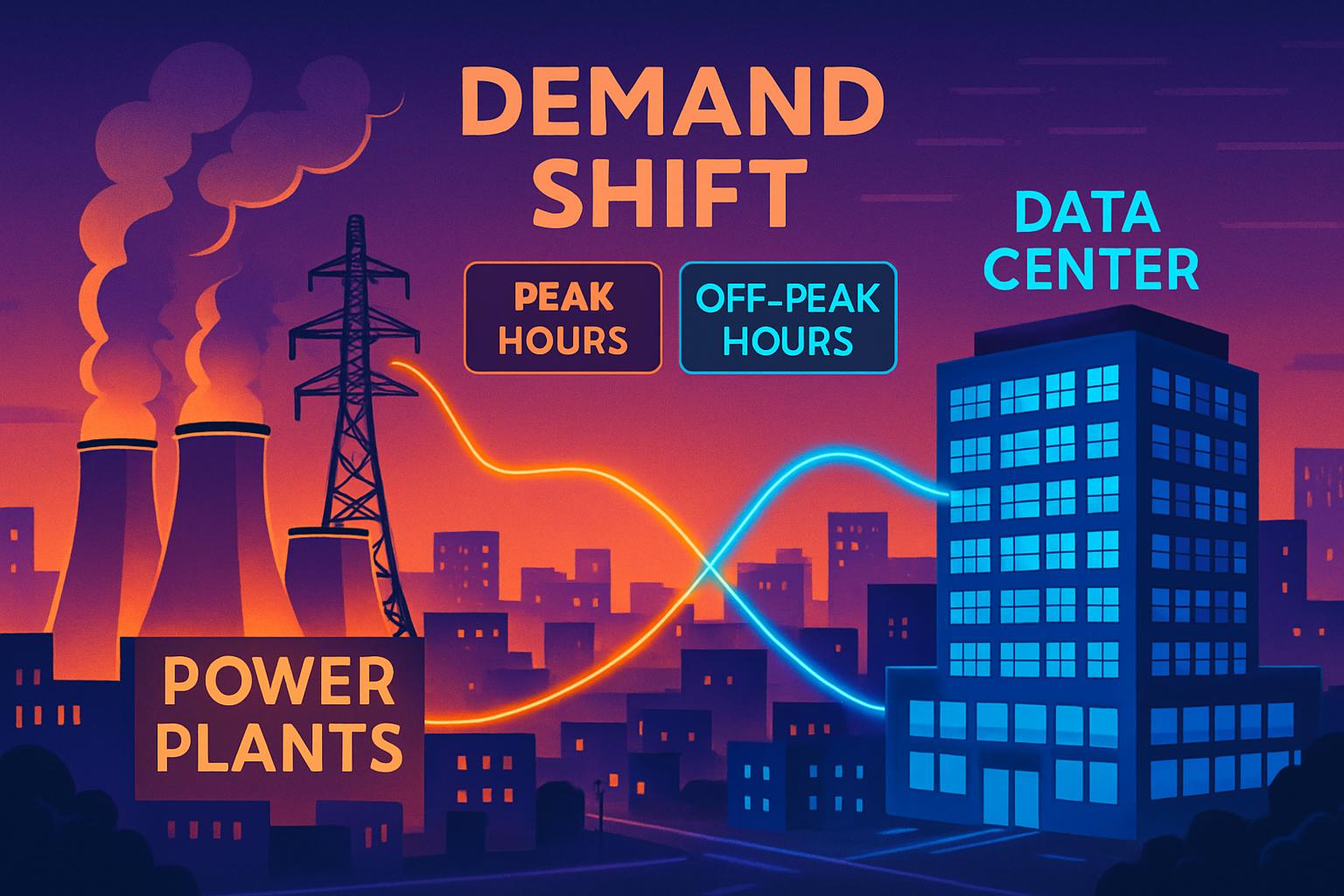
Therefore, industry leaders must weigh cost, carbon, and reliability impacts region by region. In contrast, regulators need verified telemetry and market rules to trust the promised flexibility. This article unpacks the evidence, explores challenges, and offers concrete next steps for enterprise architects and policy teams.
Finally, we highlight professional development pathways, including the AI Project Manager™ certification, for leaders shaping tomorrow’s energy-aware infrastructure. Such upskilling empowers teams to operationalize Grid Management at scale.
Surging Data Demand Trend
Data-center electricity demand is rising faster than analysts once imagined. Furthermore, Lawrence Berkeley Lab projects 74–132 GW of draw by 2028, up from around 35 GW today. Consequently, McKinsey expects the sector to account for 30-40 percent of net new U.S. load this decade.
The following numbers underscore the urgency:
- Duke Nicholas Institute: 76 GW headroom at only 0.25 percent annual curtailment.
- MIT model: up to 5 percent system cost cuts when flexibility is allowed.
- Google agreements: multi-hour load response pilots across three U.S. regions.
These projections reveal an imminent collision between compute growth and capacity constraints. However, flexible Grid Management strategies could change the equation.
Moreover, utilities report that advanced Grid Management tools ease congestion during hot summer peaks.
Why Flexibility Now Matters
Flexibility hinges on distinguishing delay-tolerant tasks from latency-critical services. Moreover, several workload trace studies show 30–70 percent of traffic can wait minutes or hours without harm.
Therefore, operators can use Grid Management software to shift training jobs toward Off-Peak Capacity when wholesale prices plunge. Meanwhile, peak-time throttling or brief curtailment frees headroom for households and hospitals.
ITIF, the Washington think tank, argues that strategic Demand Shifting can defer billions in new peaker plants. Additionally, its recent memo calls such moves “the cheapest clean energy resource no one sees.”
In sum, workload flexibility converts data centers into active grid assets. Consequently, smart Grid Management transforms a liability into resilience as we explore next.
Modeling System Cost Benefits
Several models quantify the upside of flexibility. For example, MIT’s 2025 paper simulated varying share, timing, and geography.
When 40 percent of load was flexible for up to 24 hours, total system costs in Texas fell 5 percent. Additionally, renewables curtailment dropped, opening Off-Peak Capacity for more wind exports.
Similarly, Duke’s curtailment-enabled headroom framework showed 98 GW of extra load could interconnect at 0.5 percent annual curtailment. Consequently, targeted Demand Shifting allows those gains without widespread downtime.
Such findings reinforce the financial rationale for proactive Grid Management investments.
Cost savings alone would motivate many CFOs. Nevertheless, emissions outcomes complicate the story, as the next section details.
Emissions Risks And Safeguards
Flexibility is not automatically green. In contrast, MIT found emissions rose up to 3 percent in coal-heavy regions when loads shifted into cheaper fossil hours.
Therefore, operators should pair Demand Shifting with carbon signals, ensuring Off-Peak Capacity aligns with surplus renewables.
ITIF recommends standardized carbon tracking and contract clauses that reward low-carbon Grid Management behaviors.
Deploying these safeguards protects climate goals while still easing peaks. Subsequently, the focus turns to operational techniques.
Implementing Practical Load Shifts
Engineering teams possess many levers. Moreover, schedulers can pre-emptively move batch jobs between regions with surplus wind.
Secondly, underclocking GPUs trims draw within seconds. Additionally, batteries can island the facility during short curtailments.
Google’s live pilots combine Grid Management dashboards, real-time prices, and AI to automate Demand Shifting decisions.
Professionals can deepen these skills through the AI Project Manager™ certification, which covers energy-aware pipeline planning.
These tools prove that theory scales to practice. Therefore, policy alignment becomes the next hurdle.
Policy Levers And Incentives
Regulators are experimenting with flexible interconnection tariffs. Moreover, ERCOT and PJM propose discount rates for verified curtailment.
ITIF urges Congress to fund telemetry standards that verify load reduction within 30 seconds.
Consequently, utilities can integrate data-center resources into broader Grid Management programs without compromising reliability.
Time-of-use pricing, carbon-indexed contracts, and capacity payments each strengthen Off-Peak Capacity utilization.
Policy clarity will unlock private capital for new campuses. Meanwhile, attention must shift to coordinated action and ongoing learning.
Key Takeaways And Actions
Data-center growth need not overwhelm electric networks. Through targeted workload shifting and judicious Off-Peak Capacity use, operators can unlock massive headroom while trimming costs.
Models from MIT and Duke show financial gains and, with safeguards, deep carbon cuts. Nevertheless, execution requires cooperative tariffs, transparent telemetry, and skilled project leadership.
Upskilling remains critical. Consequently, earning the AI Project Manager™ credential positions professionals to orchestrate flexible infrastructure strategies.
Adopt these practices today and lead the shift toward a resilient, low-carbon digital economy.


