

AI CERTs
2 hours ago
Grassroots Revolt Intensifies AI Energy Crisis For Data Centers
Sirens of community activism are echoing across the American grid.
Residents from California to Virginia are blocking massive server farms.
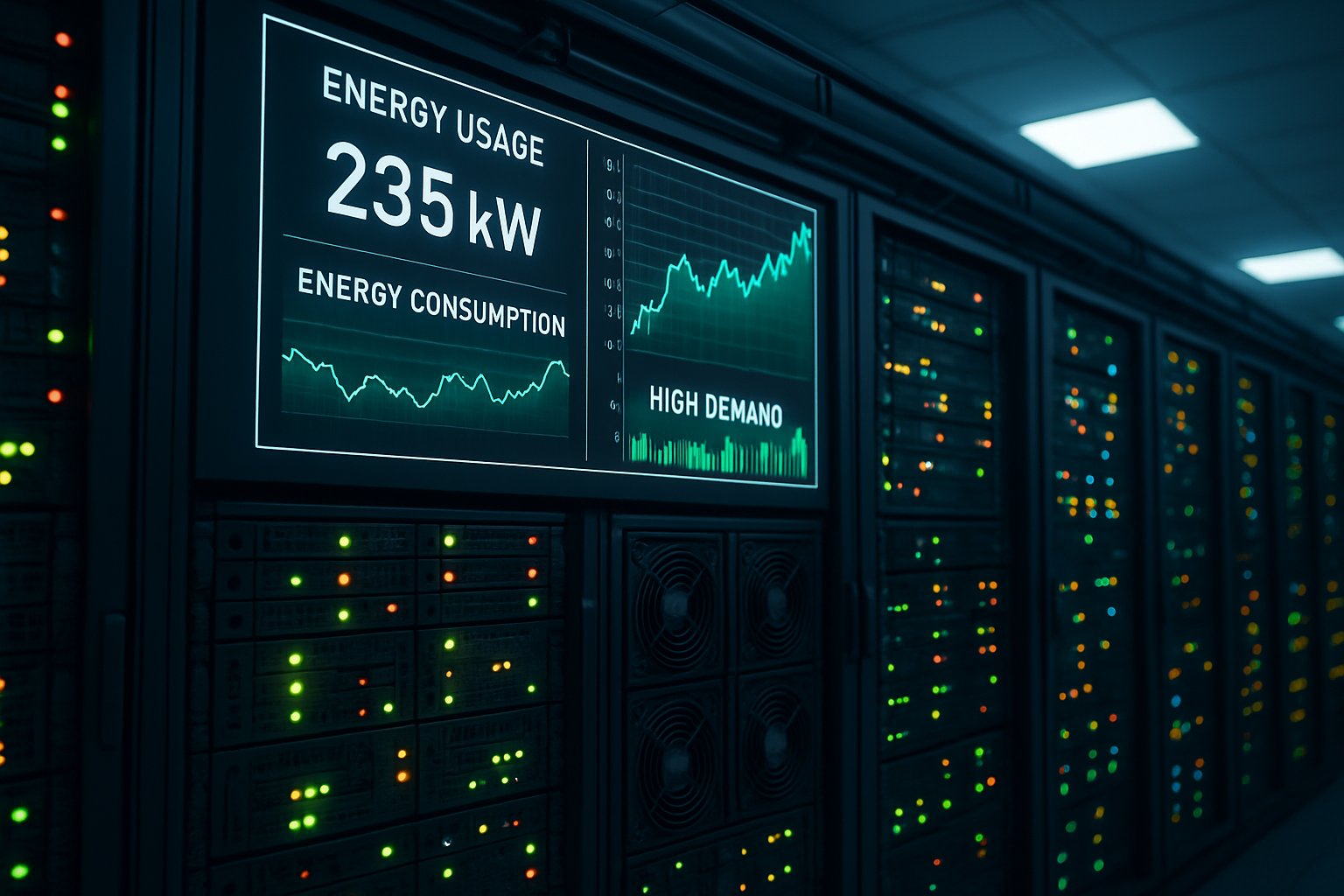
Their revolt arrives as the AI Energy Crisis deepens, linking compute hunger with real infrastructure stress.
Consequently, local councils have issued emergency moratoria that surprise Wall Street and Silicon Valley alike.
Furthermore, analysts now warn that project delays are snowballing into multibillion-dollar liabilities.
This article dissects the uprising, the energy math, and emerging escape routes for builders.
Moreover, we explore how Carbon emissions, cooling water, and Electricity costs sharpen community anger.
Finally, we assess what Sustainability standards and new skills could restore trust between neighbors and clouds.
In contrast, industry leaders cite efficiency gains that once kept power footprints flat despite surging workloads.
Nevertheless, nascent AI models demand denser chips and longer runtimes, eroding those gains fast.
Therefore, rising friction between compute and community feels inevitable without deeper dialogue and smarter siting.
The following sections unpack the conflict and sketch realistic pathways forward.
Grassroots Pushback Rapidly Grows
Local campaigns have blossomed from scattered petitions into coordinated national networks.
Meanwhile, Data Center Watch counts more than 100 active coalitions tracking new builds.
Monterey Park, California paused construction in January after bilingual organizers packed city hearings.
In contrast, Virginia activists linked rural broadband concerns with property values to halt three sites.
Consequently, at least twenty projects valued near $98 billion stalled during Q2 2025.
Emily Wurth notes the bipartisan nature of protests, uniting conservatives and progressives around utility bills.
Moreover, Miquel Vila warns there is "no safe space for datacenters" amid growing scrutiny.
These reactions illustrate the social edge of the AI Energy Crisis for tech giants.
Community pressure is rising quickly and winning tangible delays.
However, power demand remains the core battleground discussed next.
Power Demand Pressures Grids
Hyperscale facilities draw steady megawatt loads that rival small towns.
Furthermore, S&P Global projects 82.3 gigawatts of utility power needed by 2026.
That surge compounds interconnection queues already delaying renewable farms.
Consequently, utilities warn that Electricity rate hikes may follow if upgrades are socialized.
IEA data show global centers used 240–340 TWh of Electricity in 2022.
Moreover, U.S. consumption already approaches 176 TWh according to university analysts.
Experts link these numbers directly to the AI Energy Crisis accelerating hardware demand.
Therefore, communities fear that continuous draws will crowd out residential growth or climate targets.
- IEA: 240–340 TWh global data-center Electricity in 2022
- U.S. consumption near 176 TWh, 2023 estimate
- 82.3 GW utility power demand projected for 2026
Rising loads stretch wires, substations, and political patience.
In contrast, some operators pursue off-grid power, explored below.
Off-Grid Strategies Escalate Now
Developers chase faster timelines by installing behind-the-meter gas turbines and diesel trailers.
Meanwhile, Google energy lead Marsden Hanna calls grid connection the "number one challenge".
xAI’s Memphis site epitomized the trend, running trailer generators until the EPA intervened.
Subsequently, the agency ruled that portable turbines require stationary source permits.
Consequently, compliance costs jumped and local lawsuits gained leverage.
Investors now reassess risk premiums for off-grid fuel supply contracts.
Moreover, energy entrepreneur Jigar Shah warns about reliability gaps if islanded plants trip offline.
These tensions feed the broader AI Energy Crisis narrative around unchecked compute growth.
Off-grid fixes buy speed yet amplify local pollution and Carbon output.
Therefore, regulators and lawmakers are rewriting rules, as the next section details.
Policy And Regulatory Shifts
Statehouses introduced dozens of bills addressing siting, taxation, and environmental disclosure.
Additionally, Monterey Park instituted a 45-day moratorium while drafting longer ordinances.
Congressional committees are seeking testimony from hyperscalers on Electricity planning and Carbon mitigation.
Meanwhile, the EPA guidance on trailer turbines created a de facto national standard overnight.
Consequently, permitting timelines stretch as agencies coordinate air, water, and land reviews.
In contrast, some states promote expedited approvals if renewable power contracts exceed 100 percent load.
Therefore, policy uncertainty represents a hidden cost baked into the AI Energy Crisis.
Rules are evolving faster than engineering playbooks.
Nevertheless, financial markets still chase returns, examined in the next section.
Economic Risks Multiply Fast
Delayed facilities lock billions in stranded capital and contract penalties.
MacroEdge estimates that 20 stalled U.S. projects erased 6.5 GW of planned capacity.
Furthermore, lenders are inserting community-acceptance clauses before funding greenfield Data-centers.
Insurance underwriters have begun modeling drought exposure because evaporative cooling competes with agriculture.
Moreover, rising Carbon prices in Europe foreshadow potential compliance costs for U.S. exports.
Investors therefore worry that the AI Energy Crisis could trigger credit downgrades for some landlords.
Capital now demands certainty on power, permits, and public sentiment.
Subsequently, many strategists champion deeper Sustainability commitments, discussed next.
Pathways Toward Sustainable Growth
Engineers are reviving heat reuse so neighboring buildings capture server waste warmth.
Furthermore, closed-loop water systems cut consumptive losses by recirculating cooling flows.
Microsoft and Google pledge 24/7 clean Electricity matching to shrink Carbon footprints.
In contrast, activists demand absolute caps, not offsets, to solve the AI Energy Crisis authentically.
Moreover, onsite batteries paired with solar arrays can level peaks and avoid diesel backups.
Consequently, some Data-centers negotiate utility tariffs that reward flexible load shaping.
Sustainability certifications now influence lease decisions among Fortune 500 tenants.
Therefore, deeper Sustainability integration may ease the AI Energy Crisis while protecting corporate reputations.
Green design options are technically feasible and increasingly bankable.
Nevertheless, talent shortages could slow adoption, explored in the final section.
Skills For Future Operators
Running low-carbon Data-centers demands cross-disciplinary expertise in power, controls, and finance.
Additionally, grid-aware software engineers can code workloads that shift when renewable Electricity is abundant.
Professionals can enhance skills through the AI Prompt Engineer™ certification.
Moreover, training covers emissions accounting, Sustainability reporting, and real-time telemetry.
These competencies equip staff to navigate the AI Energy Crisis with evidence rather than guesswork.
Consequently, companies that invest in people may outpace rivals facing community roadblocks.
In contrast, talent gaps could stall green retrofits and Carbon tracking dashboards.
Skilled teams translate policy, engineering, and community goals into executable roadmaps.
Therefore, workforce development closes the final loop in resolving the AI Energy Crisis.
Grassroots activism has redrawn the map for hyperscale builds.
Consequently, power engineers, policymakers, and investors must coordinate more tightly than ever.
Meanwhile, off-grid shortcuts face stricter permits and escalating fuel risk.
Sustainable design, flexible loads, and transparent reporting now separate winners from late adopters.
Moreover, robust workforce training can translate green theory into daily operating practice.
Readers seeking an edge should pursue specialized credentials and monitor policy dashboards weekly.
Therefore, deliberate action today will decide whether generative AI empowers communities or divides them.
Explore the linked certification to future-proof your career and accelerate responsible innovation.


