

AI CERTs
2 hours ago
Grantham Warns AI Bubble Could Trigger Nvidia-Led Crash
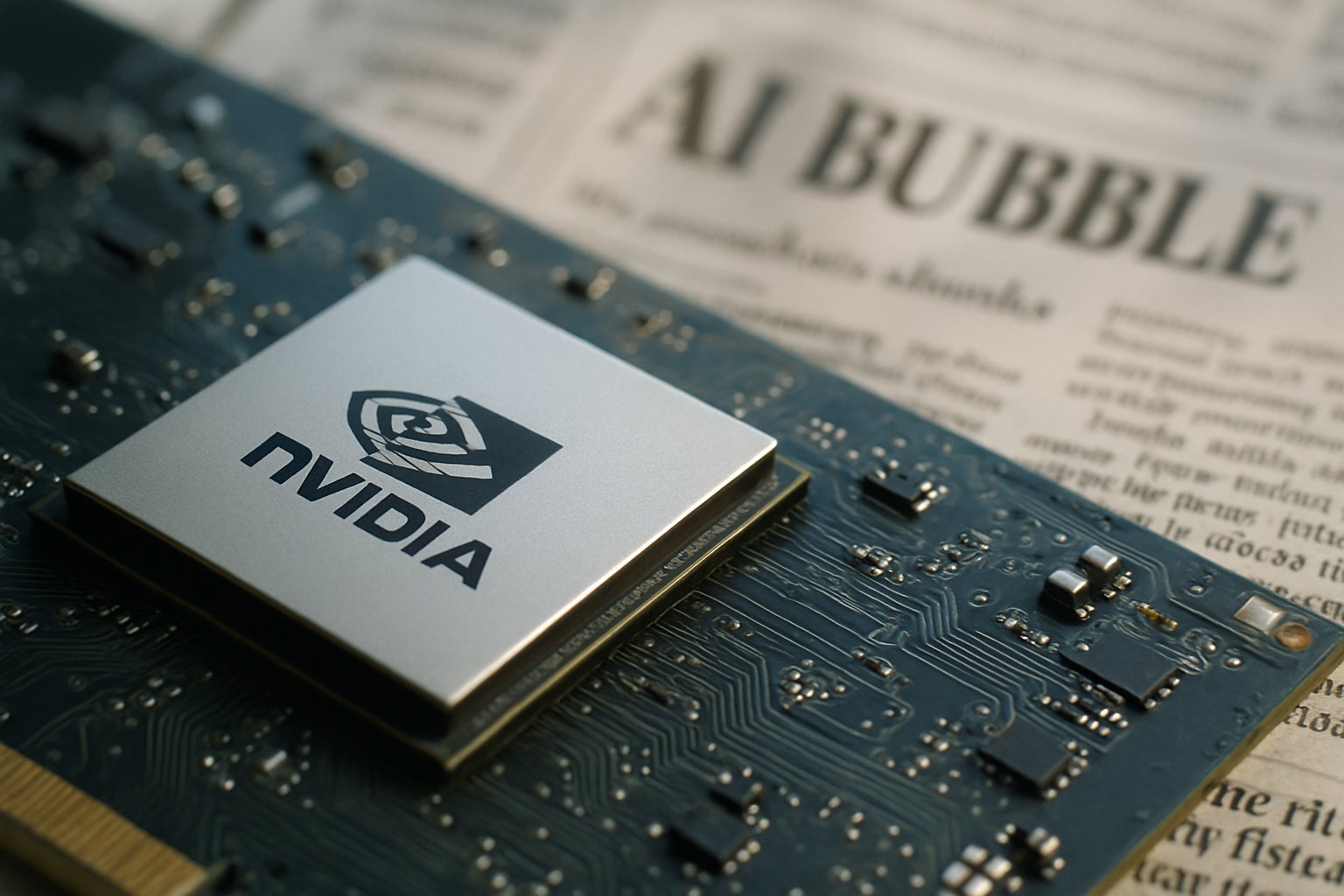
Veteran investor Jeremy Grantham is sounding the alarm again. On a recent podcast, the GMO co-founder declared the current AI Bubble unmistakable. He warned that soaring valuations could unravel quickly and drag broader indices lower. Consequently, analysts are re-examining the bull thesis behind surging chip and cloud stocks. The debate matters because concentrated winners like Nvidia now influence daily market sentiment. Moreover, trillions in planned corporate investment hinge on confidence that artificial intelligence will deliver durable profits. Investors, operators, and regulators therefore need a clear view of upside potential and downside risk. This article unpacks Grantham’s argument, evaluates counterpoints, and outlines practical steps to navigate potential turbulence.
Grantham Raises Bubble Alarm
Grantham told the Merryn Talks Money podcast on 19 January 2026 that valuations remind him of past manias. Specifically, he stated, “The probabilities that AI will not bust are slim to none.” He labeled the frenzy an AI Bubble and predicted that Nvidia would spearhead the reversal. Meanwhile, Business Insider emphasized his view that institutional herding is amplifying extreme price action.
Defining Modern Investment Bubbles
A financial bubble occurs when prices rise far above intrinsic value, driven mainly by momentum and narrative. Historically, bubbles burst after confidence fades, triggering rapid re-pricing and sometimes recession. Grantham argues the current AI Bubble shares patterns with railroads in 1840 and dot-com equities in 2000.
These comparisons underscore his conviction that valuations outran fundamentals. Consequently, the conversation now shifts to why numbers look stretched.
Why Valuations Look Stretched
Firstly, revenue growth trails price appreciation across many high-profile AI suppliers. For example, the S&P 500 gained roughly 80% over five years, yet earnings expanded far less. Supporters claim such divergence is acceptable during platform shifts, while skeptics cite classic AI Bubble symptoms.
- Gartner estimates generative-AI spending hitting $644 billion in 2025.
- McKinsey pegs annual economic value at up to $4.4 trillion.
- Reuters reports GPU revenue heavily tied to a handful of hyperscaler clients.
Nevertheless, inflated multiples create fragility; small guidance misses can spark a swift Market Crash.
Current ratios rely on aggressive growth assumptions. Therefore, attention turns to Nvidia’s outsized influence.
Nvidia Bellwether Status Explained
Nvidia commands the GPU market that trains and runs most modern AI models. During 2025, Nvidia’s market cap soared into multi-trillion territory, lifting the entire semiconductor complex. However, Grantham argues this leadership heightens systemic risk because the AI Bubble centers on a single supplier. Consequently, any earnings disappointment could catalyze a broader Market Crash through index weighting mechanics.
Such concentration leaves portfolios exposed to idiosyncratic chip cycle swings. In contrast, bulls highlight massive demand pipelines.
Bullish Economic Upside Case
Supporters point to tangible productivity gains at banks, manufacturers, and hospitals that deploy GPU-powered acceleration. Moreover, consulting models show cumulative value creation eclipsing earlier cloud and mobile cycles.
- Automated coding cuts delivery times by 40% in pilot studies.
- Customer service bots reduce average handle time by 60 seconds.
- Drug-discovery platforms identify candidates months earlier, accelerating revenue paths.
Bulls therefore contend that labeling every rally an AI Bubble ignores early proof of real cash flows. Nevertheless, even optimistic forecasters concede implementation risk and uneven ROI across industries.
Promises look credible yet still uncertain in timing and scale. Subsequently, risk analysts examine structural weaknesses.
Risks Of Market Concentration
Historically, narrow leadership often precedes a violent Market Crash when sentiment reverses. Meanwhile, Gartner surveys reveal high failure rates in early generative-AI pilots. If budgets tighten after disappointing proof-of-concepts, the AI Bubble could deflate faster than anticipated. Therefore, Nvidia’s revenue concentration among few hyperscalers becomes a double-edged sword for equity holders.
Concentration amplifies both outperformance and downside velocity. Consequently, market watchers map possible contagion channels.
Potential Shock Transmission Paths
Firstly, index funds tracking the S&P 500 hold large Nvidia weights, embedding chip risk into passive portfolios. Secondly, collateralized loan structures increasingly use tech equities, heightening headline sensitivity. Consequently, a sharp drawdown could trigger margin calls and accelerate a Market Crash through forced selling. Nevertheless, policymakers could counteract an unfolding AI Bubble burst with liquidity measures, mitigating severity. Professionals can enhance their expertise with the AI Engineer™ certification, building skills valued across cycles.
Shock channels run through benchmarks, leverage, and sentiment. Finally, investors must craft balanced strategies.
Jeremy Grantham’s warning adds historical context to today’s exuberance. However, counterarguments demonstrate that transformative platforms sometimes justify premium multiples. The truth may sit between an inevitable AI Bubble collapse and endless compounding returns. Consequently, risk managers should diversify, hedge, and monitor liquidity indicators. Meanwhile, long-term operators must keep investing selectively in high-ROI use cases. Continual education, such as the AI Engineer™ certification, helps leaders thrive whether the AI Bubble pops or persists. Explore additional resources and upgrade your skills today to navigate whatever scenario emerges.


