

AI CERTS
3 months ago
Google’s Autonomous Agent Reshapes Deep Research With Gemini 3
Unlike earlier chatbots, the new Autonomous Agent undertakes multi-step planning, searching, and drafting across an hour-long window. Moreover, Google positions the release as a factuality leap, citing new state-of-the-art scores. However, privacy advocates highlight Gmail and Drive access as a double-edged sword. This article dissects the technology, benchmarks, risks, and business ramifications for professional readers.
Release Context And Overview
Industry timing often shapes narrative importance. Therefore, Google strategically revealed Gemini Deep Research on the same day OpenAI teased GPT-5.2. Reporters from TechCrunch, The Verge, and Nasdaq spotlighted the scheduling clash. Meanwhile, benchmark claims dominated the coverage. Google reported 46.4% on Humanity’s Last Exam and 66.1% on DeepSearchQA. In contrast, earlier public agents hovered below 40% on HLE. Observers therefore argued that the company signaled renewed leadership. Notably, the Autonomous Agent also debuted alongside a generous free window for web-search tool calls until 5 January 2026. Collectively, such choices underline Google’s competitive urgency. Consequently, a closer look at the architecture becomes essential.
Core Technical Key Details
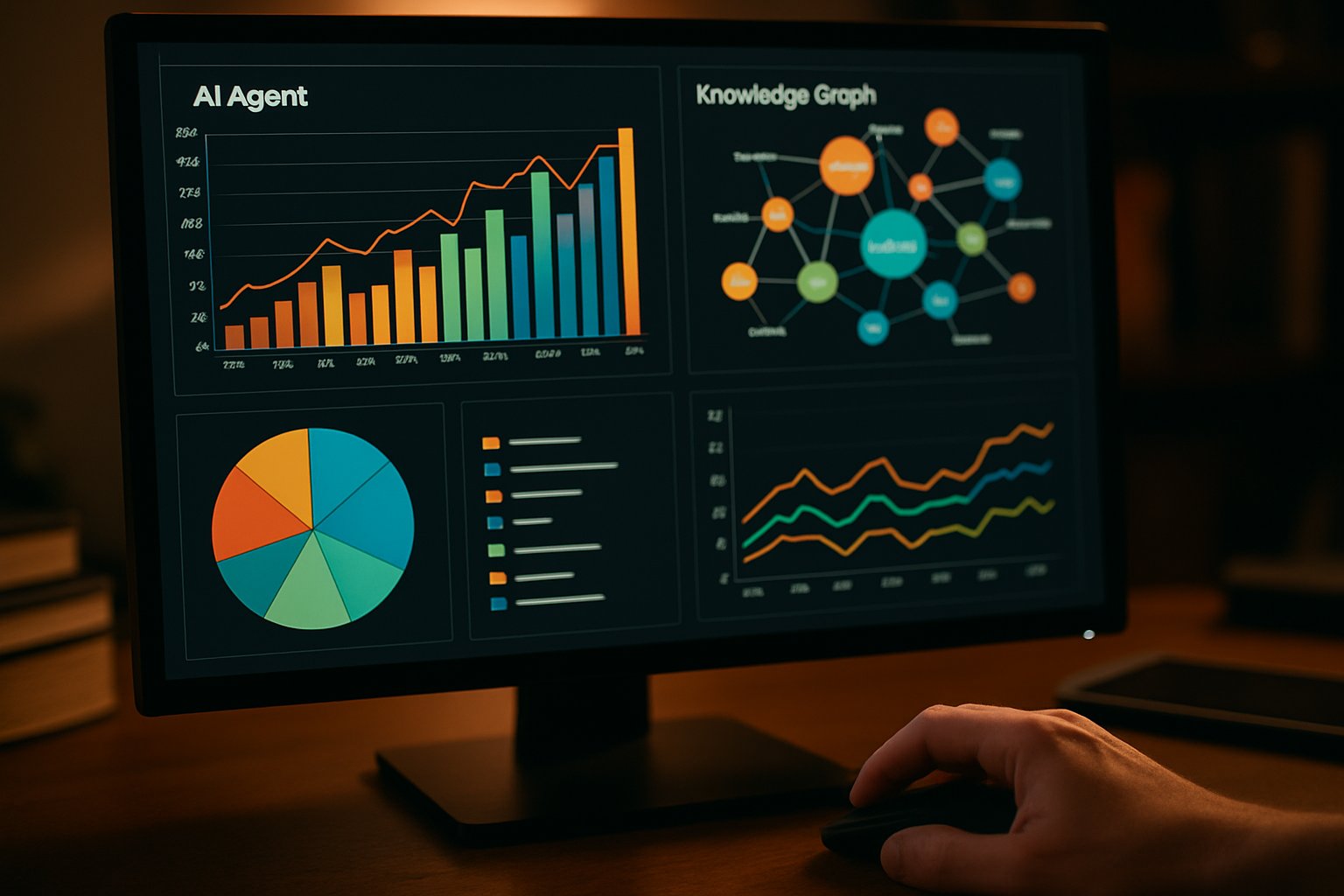
At the heart lies Gemini 3 Pro. Consequently, the model powers planning, retrieval, and code execution inside the Deep Research workflow. Google describes the architecture as a modular Autonomous Agent pipeline. First, a planner decomposes the query into subtasks. Subsequently, a retrieval module issues google_search and url_context calls. A reader then distills excerpts while tracking citations to curb Hallucination risk. Meanwhile, an iterative reasoner decides whether further search or file_search calls are required. This loop continues until a stopping score is met or 60 minutes elapse. Finally, a Synthesis engine assembles a Long-Form report with inline citations and structured summaries. Developers interact through the Interactions API by setting background=true and polling the task id. Moreover, enabling stream=true exposes “thinking summaries” that aid debugging. This design prioritizes transparency and modular extendibility. Next, benchmark numbers reveal whether the design delivers.
Latest Benchmark Performance Scores
Benchmarks often cut through marketing narratives. Google therefore published three headline numbers for the Autonomous Agent. DeepSearchQA reached 66.1%, a figure the company calls record-setting. In contrast, the earlier preview agent scored 49%. Moreover, BrowseComp climbed to 59.2%, demonstrating stronger web navigation. Humanity’s Last Exam showed 46.4%, still shy of full expert level yet exceeding Claude’s reported 38%. Google attributes these gains to the Gemini 3 training run and extended reasoning steps. Independent researchers have begun rerunning DeepSearchQA using the open Colab. Early public attempts reproduce 64-65% using identical prompts.
Nevertheless, critics warn that cherry-picked prompts inflate apparent progress. To aid transparency, Google released the entire benchmark along with evaluation scripts. The Autonomous Agent exposes intermediate chain-of-thought summaries when stream=true, supporting audit efforts. Furthermore, the paper details how a Hallucination penalty loss function improved factual grounding. A final insight emerges from cost data: searches remain free until 5 January 2026, after which metered billing begins. Collectively, the metrics suggest meaningful yet unverified advances. Consequently, privacy questions now take center stage.
Critical Privacy Tradeoff Concerns
Workspace integration delivers personalized power yet invites scrutiny. When users opt in, Deep Research may read Gmail, Drive, and Chat. Consequently, Google prompts a granular permission screen that lists each corpus. Forbes cybersecurity writer Davey Winder nevertheless advises administrators to verify default scopes carefully.
Moreover, enterprise customers must confirm contractual guarantees that prevent human review. Google asserts no training occurs on private data, but language in consumer terms remains less explicit. Analysts also question retention policies for intermediate Synthesis artifacts generated during Long-Form drafting. Meanwhile, the Autonomous Agent holds context for up to 60 minutes, increasing surface area if a session token leaks. In contrast, short-form chatbots expire context within seconds.
Therefore, developers embedding the agent should implement Vault logging and token rotation. Two practical steps can reduce exposure: 1) Minimize requested data sources; 2) Monitor API usage with automated alerts. Collectively, these precautions mitigate foreseeable risks. Subsequently, attention shifts toward hands-on adoption guidance.
Practical Developer Adoption Steps
Early adopters report a short learning curve. First, developers enable the Interactions API within their Google Cloud project. Subsequently, they pass agent_id=deep-research-pro-preview-12-2025 and set background=true. Furthermore, stream=true unlocks progress events that aid troubleshooting. The Autonomous Agent then begins planning and web search calls. To accelerate onboarding, Google published client snippets in Python, Node, and REST. However, three configuration flags demand attention:
- runtime: “60m” sets the maximum job length.
- enable_search: true ensures quota-free google_search until 5 January 2026.
- citations: “markdown” formats Long-Form output for reports.
Moreover, the software supports Notebook colabs for quick experiments with Gemini 3 inference endpoints. When deeper customization is required, users can attach experimental file_search for Drive PDFs. Nevertheless, Google warns that feature stability is not guaranteed during beta. Professionals can enhance their expertise with the AI for Government™ certification. This credential validates knowledge of policy-centric Synthesis workflows using agentic tooling. Collectively, these steps streamline pilot deployments. Consequently, competitive implications demand evaluation.
Current Competitive Market Impact
Competitive positioning evolves weekly. OpenAI announced GPT-5.2 research tooling within hours of Google’s reveal. Microsoft likewise showcased Copilot integrations for multi-document research. Nevertheless, Google now offers the only fully managed Autonomous Agent with built-in Search access. Analysts note that Gemini 3 enjoys native integration with the broader Google ecosystem, lowering friction. In contrast, OpenAI relies on external browsing plugins that sometimes throttle. Moreover, Google subsidizes web calls during preview, a tactic reminiscent of Firebase’s launch. Independent venture reports predict a surge in agentic startup pitches through Q2 2026. Investors seek Long-Form output capabilities paired with reliable citations.
Yet, user communities remain vigilant about Hallucination rates across platforms. Consequently, benchmark leadership may shift rapidly as patches roll out. Overall, enterprise buyers will likely run parallel pilots before committing budgets. These trends underscore the importance of transparent Synthesis metrics. Subsequently, attention turns to Google’s longer roadmap.
Predictive Future Roadmap Outlook
Roadmap clues appear in public documentation. Google states that custom tool calling will arrive after the beta period. Furthermore, plans include multi-agent orchestration where one Autonomous Agent supervises several specialized workers. Such design could decouple Synthesis, retrieval, and visualization into isolated modules.
Meanwhile, Google engineers experiment with retrieval augmentation using Chrome history and third-party SaaS connectors. Privacy controls will therefore evolve in parallel. Analysts also expect a Gemini 3 Turbo variant optimized for lower latency. This upgrade may shrink average job time from 20 minutes to under 10. Additionally, Google hints at Long-Form video report generation, turning citation graphs into narrated slides. Nevertheless, stubborn Hallucination edge cases will demand continuous adversarial evaluation.
The company has invited academic partners to stress-test Deep Research across medical and legal domains. Google pledges to publish updated leaderboards each quarter. Collectively, these signals depict an aggressive iteration cadence. Consequently, professionals should monitor release notes and policy changes.
Google’s reimagined Gemini Deep Research package signals a pivotal shift toward production-grade agentic workflows. Benchmarks illustrate genuine momentum, yet independent replication remains vital. Privacy and Hallucination concerns demand equal attention alongside shiny scores. Consequently, teams should pilot the Autonomous Agent in controlled sandboxes, log outputs, and refine prompts before scaling. Moreover, developers can future-proof skills through the previously mentioned certification pathway. Transparent evaluation, disciplined privacy practices, and continual fidelity work will separate winners from watchers. Ultimately, those who act now will shape how long-running AI research transforms enterprise decision-making.


