

AI CERTS
3 months ago
Google Willow Hardware Technical Detail Deep Dive
Engineers will find practical metrics for planning roadmaps. Policymakers will grasp security timelines without hype. Meanwhile, students can benchmark their understanding against real data. Each section ends with concise takeaways and transitions. Overall word count targets 1200 to balance depth and clarity. Let’s unpack Willow’s story with numbers, skepticism, and cautious optimism.
Willow Chip Overview
Google unveiled Willow in late 2024 after five fabrication iterations. Therefore, the chip integrates 105 superconducting qubits on a square lattice. Typical T1 relaxation times approach 100 microseconds, roughly five times Sycamore’s best records. In contrast, average lattice connectivity sits at 3.47, embracing a surface-code friendly layout. Google’s engineers emphasized reproducibility and published open-access mask files. Consequently, competitors can inspect Willow’s Hardware Technical Detail without visiting Mountain View.
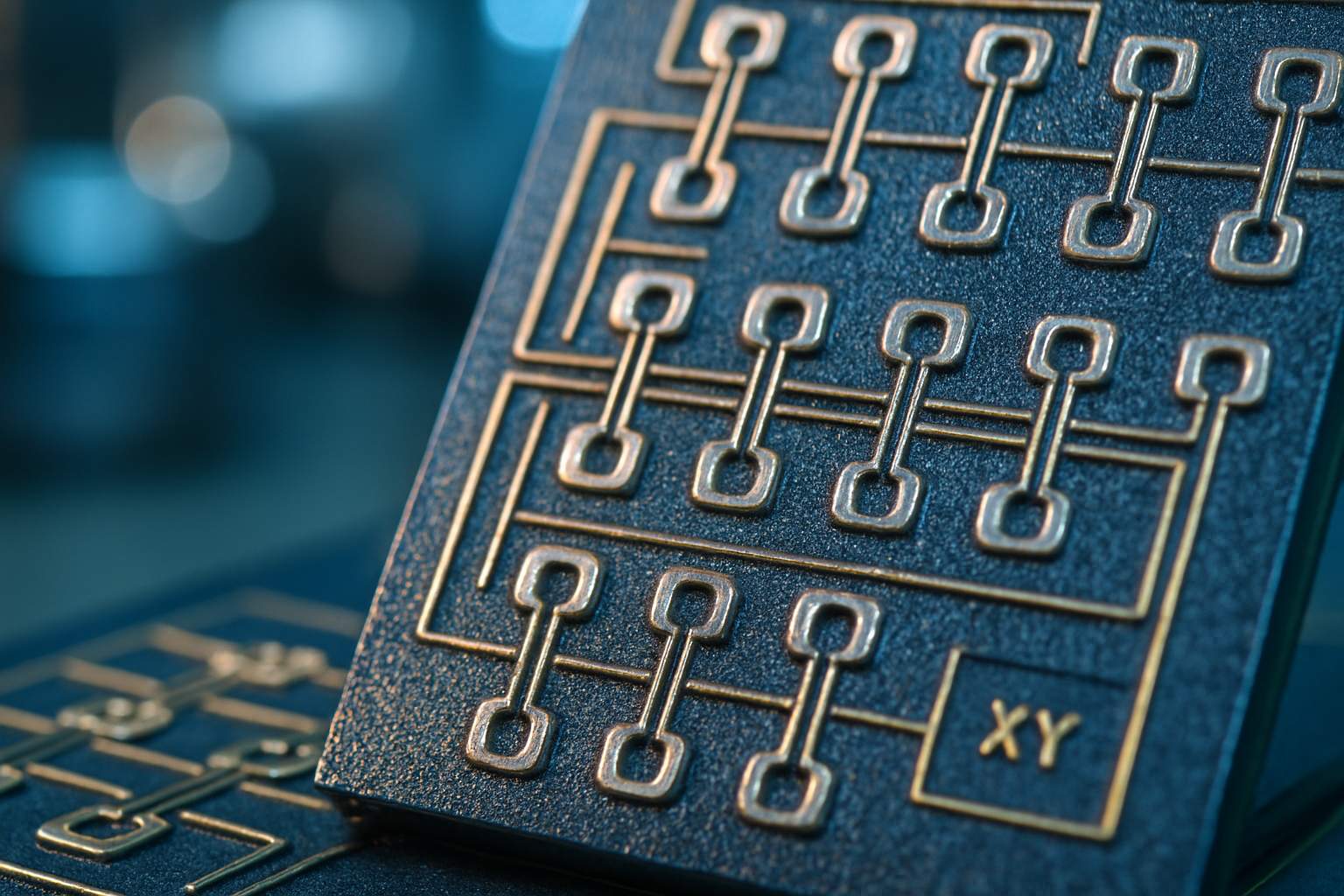
Hartmut Neven called Willow “state-of-the-art” during the announcement. Moreover, he stressed that below-threshold error correction underpins every roadmap milestone. Logical qubits remain absent, yet encoded grids already show exponential suppression. Reuters echoed Neven’s tone but added cautious notes from academic experts. Scientific American reviewers praised engineering rigor while warning against premature industrial forecasts.
Willow’s architecture blends scale and coherence in a compact footprint. These fundamentals set the stage for performance metrics discussed below.
Key Performance Numbers
Raw benchmarks often reveal more than glossy headlines. Therefore, we present Willow’s standout figures before interpretation.
- RCS benchmark: under five minutes versus 10^25 classical years, per Google.
- Single-qubit gate fidelity averages 99.97%, according to October 2025 data.
- Two-qubit gate fidelity averages 99.88%, supporting deep circuits.
- Readout fidelity reaches 99.5%, enabling trillions of measurements.
Moreover, Willow executed the Quantum Echoes algorithm 13,000× faster than Frontier supercomputer simulations. Google captured trillions of readouts to verify outputs statistically. Such throughput hinges on minimized error rates across the array. Additionally, sustained cryogenic uptime boosted daily sample counts. Gate timing remained in tens of nanoseconds, limiting decoherence accumulation. Academic research groups plan independent timing studies. Every statistic originates from transparent Hardware Technical Detail tables released by Google.
These numbers suggest an agile processor with balanced speed and accuracy. However, true significance emerges only within algorithmic context, explored next.
Quantum Echoes Milestone
Quantum Echoes implements an out-of-time-order correlator to study information scrambling. Furthermore, the protocol is verifiable, unlike many synthetic supremacy demonstrations. Willow ran 20-qubit Echoes circuits deeply, then unwound them to recover signals. Google reports a 13,000× speedup relative to optimized classical codes. Nature reviewers called the result impressive yet not definitive for all workloads. Notably, only 70 physical qubits participated, leaving operational headroom.
IEEE Spectrum highlighted the crucial statistical cross-checks performed during experimentation. Consequently, independent teams can replicate the measurement on similar hardware. Nevertheless, replication will demand comparable gate fidelity and measurement volume. Google released raw circuits and methodology to accelerate external research. The published Nature paper includes exhaustive Hardware Technical Detail for circuit parameters.
Echoes offers both performance bragging rights and scientific utility. Next, we examine Willow’s error correction claims underpinning sustained accuracy.
Error Correction Breakthrough
Surface-code tests on Willow covered 3×3, 5×5, and 7×7 logical lattices. Moreover, logical error rates dropped exponentially as encoded size grew. This below-threshold behavior marks a first for a superconducting platform. Therefore, Google argues a path toward large logical qubits with incremental scaling.
Scientists outside Google remain cautiously optimistic. Scott Aaronson noted that classical decoding overheads still challenge near-term practicality. In contrast, Shenglong Xu stressed the importance of additional material advances to lift gate fidelity further. Nevertheless, the experiment establishes a quantitative target for competitors like IBM and Quantinuum. Supplementary figures expose Hardware Technical Detail of encoded grid layouts and decoding thresholds.
Sub-threshold scaling validates Google’s design choices. Yet industry voices urge continuous proof through diverse workloads, considered next.
Industry Reactions Mixed
Market analysts welcomed Willow’s numbers but tempered adoption expectations. Forbes framed the achievement as a morale boost amid broad quantum investment uncertainty. Meanwhile, IBM researchers congratulated Google but highlighted their own 127-qubit Eagle roadmap. IonQ executives pointed to trapped-ion advantages in native connectivity. Consequently, a healthy competition persists, accelerating overall research.
Security experts also weighed in. The Verge emphasized that Willow cannot threaten RSA today. Therefore, enterprises still have time to deploy post-quantum cryptography migrations. Nevertheless, regulators monitor progress to time standards updates responsibly. Analysts scrutinized each Hardware Technical Detail before issuing investment notes.
Ecosystem feedback supports steady, not explosive, adoption. Security implications deserve dedicated attention, discussed in the following section.
Security And Roadmap
Cryptographers estimate millions of high-fidelity logical qubits are required to break RSA-2048. Willow’s 105 physical units remain several orders below that threshold. Additionally, Willow’s demonstrated algorithms focus on physics, not cryptanalysis. Consequently, Google publicly discourages sensational headlines about immediate encryption collapse.
Google’s published roadmap targets one logical qubit by 2027 through continual gate fidelity improvements. Moreover, planned dilution refrigerators and microwave control stacks aim to halve error rates yearly. Such iterative steps mirror classical transistor scaling in the 1960s. Therefore, executives advise clients to watch yearly benchmarks instead of isolated press releases. Government agencies request Hardware Technical Detail to model cryptographic risk timelines.
Security horizons remain distant yet visible. Roadmap execution will decide whether these horizons truly approach, leading to skills planning.
Upskilling For Engineers
Corporate teams already assess workforce gaps around quantum programming and control electronics. Furthermore, engineers can upskill through the AI+ UX Designer™ certification. Course modules cover control systems, cryogenics, and Hardware Technical Detail analysis. Moreover, employers gain staff capable of auditing supplier claims.
Universities now integrate quantum labs into electrical engineering curricula. Consequently, early-career graduates enter industry with baseline familiarity. Mentorship programs inside Google, IBM, and startups reinforce practical skills. In contrast, smaller firms rely on external bootcamps and certifications for acceleration. Hands-on labs teach reading Hardware Technical Detail from quantum data sheets.
Talent pipelines are forming yet remain thin. Organizations must track both roadmaps and education options to stay competitive.
Google Willow stands as a pivotal waypoint, not the finish line. Its benchmark wins, verified algorithms, and emerging error correction shape confident yet cautious roadmaps. Moreover, every Hardware Technical Detail published so far withstands preliminary peer scrutiny. Nevertheless, classical simulation advances and independent research will keep pressure on bold claims. Enterprises should monitor yearly fidelity metrics while training staff through accredited programs. Consequently, decision makers can time investments without succumbing to speculative hype. Ready to deepen expertise? Explore certifications and stay ready for the quantum decade ahead.


