

AI CERTS
2 hours ago
Google Photos Coming To Samsung Smart TV Screens
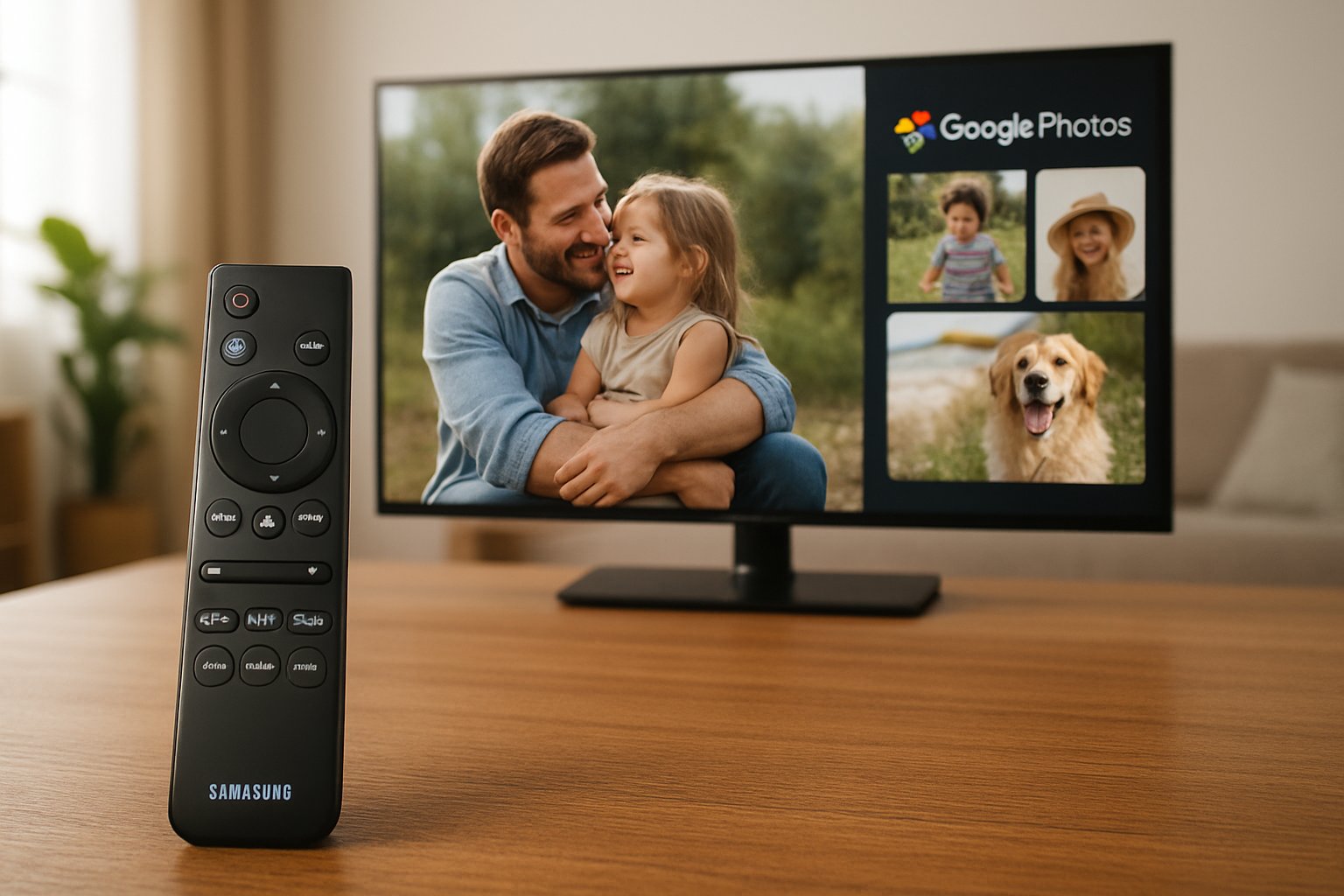
Industry analysts view the move as a landmark for cloud-to-screen convergence. Consequently, professionals tracking the connected-home segment should examine the details now. Prepare for a closer look at how your next Smart TV may handle treasured memories.
Smart TV Announcement Signals
Samsung’s December 29 press release outlines three staged feature sets. Memories reaches 2026 Smart TV models in March, with a six-month exclusivity window. Create with AI and Personalized Results follow during the second half of 2026. Kevin Lee said the partnership makes big-screen storytelling deeply personal.
Shimrit Ben-Yair highlighted Google Photos’ mission to bring memories alive. Therefore, integrating the service into living rooms extends that goal at immense scale. The company added that eligible in-market sets will receive the service through OS updates.
The announcement sets clear timelines and signals continued software investment beyond hardware cycles. These contours shape expectations for buyers; meanwhile, the next section explains technical flow.
How Integration Will Work
Users will log into a Google Account directly on the television. However, only one account can stay active per set, according to regional support pages. Google requires that photos and videos already live in cloud backups.
Vision AI Companion surfaces Memories in the ambient Daily+ and Daily Board screens. Additionally, users can launch a full cloud gallery viewer from the app tray. Search supports people, places, or topics, leveraging on-device caching for faster browsing.
Importantly, the Smart TV hides Memories if users disable that feature in mobile settings.
Consequently, account setup appears straightforward, yet privacy nuances demand closer inspection. Those questions take center stage next.
Market Context And Scale
Samsung holds roughly 28.3% of the global TV market, Omdia reports. Moreover, the firm commands nearly half of premium segment sales. Therefore, any software shift on Samsung panels reaches millions of households.
Google Photos counts over 1.5 billion monthly users and stores more than nine trillion assets. Furthermore, monthly activity includes 370 million searches and 440 million shared memories. Connecting those libraries to living-room displays creates a content pipeline of unprecedented volume.
- Google Photos: 1.5 billion monthly users
- Stored assets: more than nine trillion items
- Monthly searches: 370 million queries
- Samsung TV market share: 28.3% worldwide
Analysts say the Smart TV now becomes a natural endpoint for cloud imaging ecosystems. Vision AI capabilities will help personalize those experiences further. In contrast, earlier casting flows demanded smartphones, dampening casual family engagement.
The scale numbers underscore why Google and Samsung aligned. However, scale also amplifies data exposure, leading to privacy concerns discussed below.
Privacy And Security Questions
Consumer Reports repeatedly warns that smart displays collect extensive telemetry. Consequently, adding personal photos raises sharper household risks.
Shared screens complicate account boundaries. The company notes only one Google login, yet families often need multiple views. Privacy advocates want guest modes, quick locks, and clearer cache controls.
Meanwhile, researchers seek details about local thumbnail storage and metadata retention. Google’s SynthID watermarking for AI edits must carry over to televisions, they argue.
Regulators have fined makers for opaque ACR tracking before. Therefore, transparent opt-outs and explicit UI disclosures should launch alongside the new Smart TV features.
Balancing convenience with privacy will influence adoption. The following section explores creative incentives that could sway hesitant buyers.
Creative AI Possibilities Expanded
Create with AI leverages Google’s Nano Banana image model for on-screen remixing. Users can auto-generate collages, stylized slideshows, or animation templates.
Moreover, Vision AI Companion suggests edits contextually during idle moments. Subsequently, families can approve or dismiss suggestions using the remote’s voice mic.
The provider pledges provenance safeguards, while Samsung promises clear labeling for generated content. Nevertheless, experts await confirmation that edits remain reversible within Google Photos.
Creative features may differentiate these sets from rivals that still rely on basic galleries. Therefore, the Smart TV doubles as a low-effort creative studio in the living room.
Enhanced creativity provides tangible value. Yet strategic stakes extend beyond consumer delight, as the next analysis explains.
Competitive And Strategic Impacts
Apple, Amazon, and Roku compete aggressively for living-room mindshare. However, none offer native Google Photos ties on large screens.
The alliance shields the hardware leader from commoditization by pairing hardware leadership with unique cloud services. Meanwhile, the search leader secures another high-visibility surface for its AI ecosystem.
Microsoft once powered Samsung photo sync through OneDrive. In contrast, that pathway now fades, illustrating shifting platform allegiances.
Professionals can enhance expertise with the AI Executive Essentials™ certification. Such credentials help business leaders evaluate emerging Smart TV opportunities objectively.
Competitive dynamics highlight why timely execution matters. The timeline section clarifies when each milestone arrives.
What Comes Next Timeline
Memories launches in March 2026 on 2026 Crystal UHD U8000 and higher. The vendor promises OS updates for select 2024 and 2025 models, although regions may vary.
Second-half 2026 brings Create with AI and Personalized Results. Consequently, the full vision unfolds over roughly nine months.
The vendor will disclose eligible SKUs closer to ship dates. Meanwhile, journalists will test privacy controls once firmware debuts.
Clear communication will shape consumer trust. Therefore, brands must sustain transparency throughout the staged Smart TV rollout.
Samsung and Google are steering cloud media toward the biggest screen in the home. Consequently, the upcoming Smart TV integration promises effortless sharing, powerful AI search, and creative remixing. Market reach, at both companies’ scales, suggests swift mainstream visibility. Nevertheless, privacy, provenance, and household account complexity warrant proactive safeguards. Professionals should monitor firmware details, regulatory guidance, and consumer sentiment as the rollout proceeds. Explore the linked certification to deepen strategic insight and position your organization for the forthcoming living-room transformation.


