

AI CERTS
2 hours ago
Google Image Nano Banana 2 Accelerates Enterprise Editing
Moreover, we examine provenance safeguards, early user feedback, and practical steps for creative teams. Finally, professionals will find certification guidance for sharpening AI design credentials. In contrast to earlier paywalled tiers, Nano Banana 2 reaches 141 new regions and eight languages. Therefore, marketing teams from Lagos to Lima can pilot high-resolution concept visuals in seconds.
Meanwhile, SynthID and upcoming C2PA credentials promise traceability for more than 20 million verified assets. Nevertheless, critics warn that improved text rendering could fuel sophisticated misinformation campaigns unless detection scales equally. The following sections dissect these opportunities and challenges in detail.
Nano Banana Model Overview
Nano Banana 2 sits within the Gemini family as Gemini 3.1 Flash Image. It merges Pro fidelity with the latency savings of Gemini Flash. Moreover, Google states the model handles up to five distinct characters without losing identity. Consistency control extends further, supporting fourteen objects while respecting relative placement.
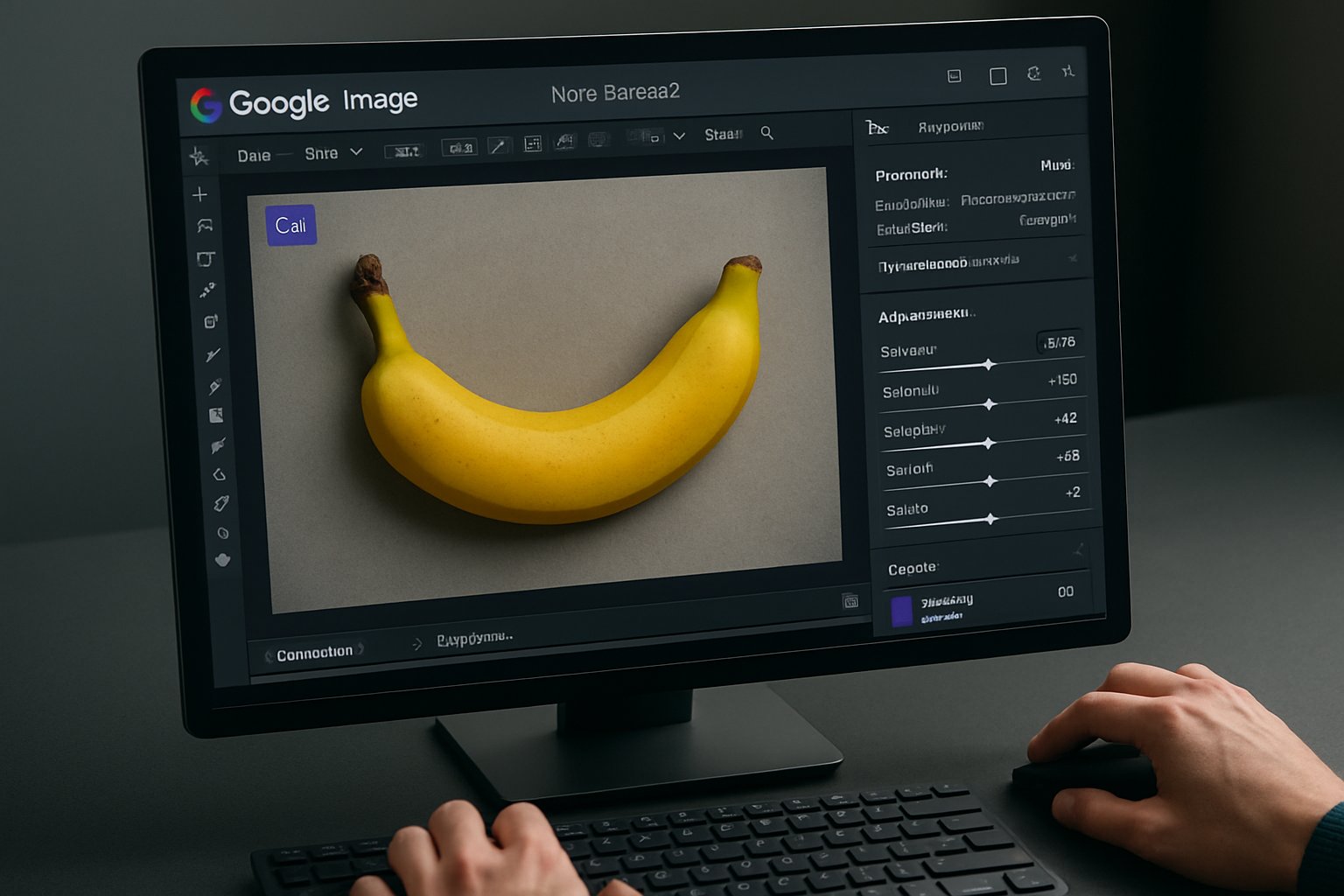
Output resolutions range from 512 pixels to full 4K across multiple aspect ratios. Consequently, designers can prototype billboard visuals and mobile banners inside the same conversational thread. Google Image queries integrate seamlessly, letting users feed search snapshots directly into the prompt. Additionally, the model supports iterative inpainting, making minor layout tweaks without re-rendering full scenes.
These core specifications illustrate a balanced push toward speed, scale, and visual discipline. However, raw capability matters little without real performance, which the next section measures.
Gemini Flash Fidelity Gains
Independent reviewers rushed prototypes through benchmark tasks minutes after launch. TechRadar’s tests logged one-second average render time for 512-pixel drafts over fiber connections. Meanwhile, Pro-level lighting, shading, and text clarity matched results previously gated behind paid tiers. In contrast, earlier Google Image generations often produced fuzzy captions or garbled fonts.
Moreover, benchmark observers highlighted four quantifiable improvements:
- Median latency dropped 43% versus Nano Banana Pro.
- Legible multilingual text rendered with 92% accuracy.
- Color drift fell below 2 ΔE across identical prompts.
- Prompt adherence improved 18% on public evaluation sets.
Consequently, creative teams experience near-real-time loop cycles, essential for client reviews. However, performance varies when heavy editing tools stacks or slow networks enter the mix.
Speed and clarity undeniably raise the production ceiling. Nevertheless, business value requires robust enterprise features, explored next.
Enterprise Features In Focus
Google expanded access to formerly gated enterprise features without additional cost. Therefore, API clients on Vertex AI inherit high-resolution output and subject tracking by default. Moreover, Google Ads creative tools now embed the same engine, offering automated A/B variant generation. Large agencies can script campaigns, push assets to Search and YouTube, and measure engagement inside one dashboard.
Crucially, consistency control supports multi-market personalization. Marketing managers lock product SKUs while swapping localized text across eight new languages. Subsequently, regulatory compliance improves because locked elements never drift during later prompt iterations. Enterprise features also integrate permission layers that respect corporate brand libraries.
These workflow conveniences lower the barrier for non-designers. In contrast, provenance remains vital for legal sign-off, which the next section addresses.
Provenance And Safety Measures
Google embeds SynthID watermarks invisibly into every Google Image output. Additionally, the company plans C2PA Content Credentials for interoperable provenance manifesting. Over 20 million verifications already occurred inside the Gemini app since November. However, metadata can be stripped when assets traverse unsecured platforms.
Therefore, policy teams must pair provenance with governance processes and public disclosure. Consistency control helps here by ensuring locked brand elements remain recognizable even if tags vanish. Meanwhile, Google applies guardrails that block violent or hateful prompts, yet false benign requests may slip through. Independent researchers urge continuous red-team testing and cross-vendor coordination.
SynthID and C2PA offer promising audit trails. Nevertheless, workflows still depend on careful human oversight, which our next section explores.
Optimizing Creative Team Workflows
Teams achieve best results by combining native editing tools with external design suites. For example, art directors rough out layouts in Figma, then request targeted Google Image edits within Gemini. Moreover, Gemini Flash latency keeps iteration loops under five seconds, sustaining creative momentum during reviews. Consistency control prevents character drift between concept stages, ensuring actors’ likeness stays intact across storyboard frames.
Consider this quick checklist for agency adoption:
- Define locked subjects before opening any editing tools.
- Set output resolution early to avoid upscale artifacts.
- Use SynthID verification before sharing external drafts.
Consequently, projects stay organized, and version history remains transparent. Furthermore, professionals can enhance expertise with the AI+ UX Designer™ certification.
Effective processes translate technology into measurable business impact. Therefore, decision makers should assess strategic returns, covered in the final section.
Strategic Business Key Takeaways
Early traction signals another competitive leap for Google Image services. Moreover, free Pro capabilities could lure enterprise budgets away from rival platforms. Subsequently, Google positions Gemini Flash as an infrastructure advantage, reducing compute costs for partners. Enterprise features deliver brand-safe creative scale, while consistency control lowers manual revision hours.
Nevertheless, governance investments remain essential because provenance metadata is not yet universal. In contrast, organizations that ignore safety could face regulatory fines and reputation loss. Consequently, executives should pair Google Image adoption with policy training and risk audits.
The business case balances speed, cost, and accountability. Finally, leaders must decide how quickly to integrate these advances into core product pipelines.
Google Image Nano Banana 2 blends Flash speed with Pro fidelity, opening new creative horizons. Moreover, enterprise features and consistency control streamline production while protecting brand integrity. SynthID and forthcoming C2PA credentials add a measurable, though incomplete, defense layer. Nevertheless, real value emerges only when teams align editing tools, governance, and business goals.
Consequently, companies that adopt Google Image thoughtfully can accelerate design cycles and reduce costs. Meanwhile, professionals should consider upskilling through the AI+ UX Designer™ certification to stay competitive. Explore Google Image capabilities today and lead your market before rivals catch up.


