

AI CERTs
2 hours ago
Google Faces Gemini Health Fallout After Summary Errors
Google's abrupt removal of several Gemini Health summaries has shaken trust in generative search. However, the episode also exposes broader industry questions about model safety and oversight. The Guardian's January investigation showed how a dominant search engine can amplify AI Errors in sensitive medical contexts. Consequently, stakeholders now ask whether incremental fixes can protect billions of users. Moreover, regulators may view the controversy as a catalyst for stricter rules. Developers, clinicians, and product leaders must therefore examine the incident's root causes and future implications.
Gemini Health Market Dominance
StatCounter places Google’s search share near 91 percent worldwide. Consequently, even optional features like summaries influence global health decisions. Overviews, powered by the Gemini model family, reportedly serve more than one billion users. Furthermore, visibility studies show the feature appearing on millions of medical queries each day. Industry analysts note that a single flawed line can misguide enormous audiences. In contrast, traditional blue links demand active source selection by users.
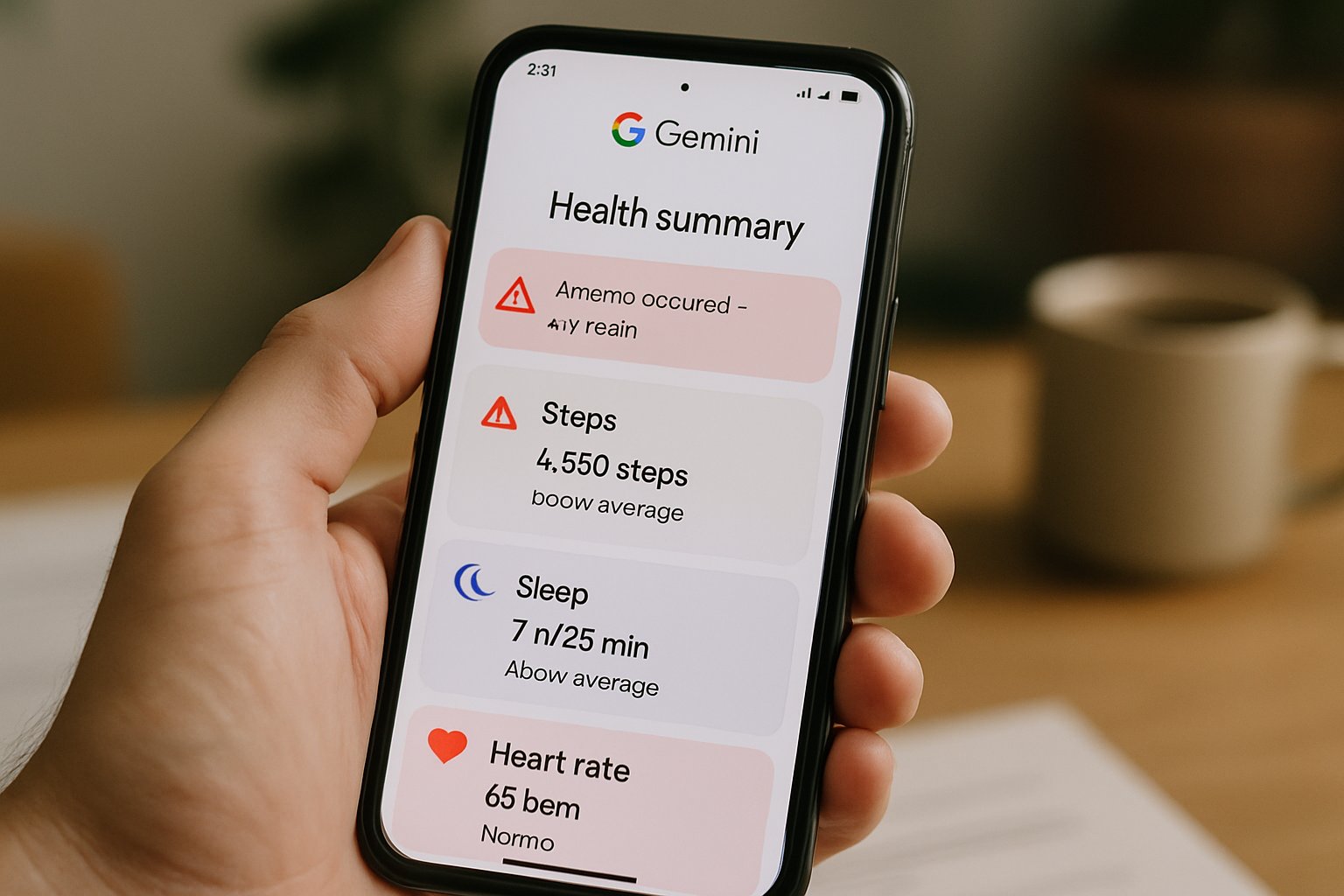
These statistics underscore why missteps matter. However, the same reach offers potential for public-health benefits if accuracy improves.
Reach magnifies risk, yet it also motivates robust safeguards.
Those motives frame the next discussion about investigative findings.
Key Guardian Investigation Findings
The Guardian reviewed dozens of health search results in early 2026. Investigators documented AI Errors ranging from numerical lab ranges to nutritional guidance. One overview listed liver-test values without demographic context, potentially hiding disease. Another advised pancreatic cancer patients to avoid fats, contradicting clinical guidelines that encourage high-calorie intake. Moreover, slight query rewrites still surfaced problematic answers even after removals.
Investigators interviewed charities such as the British Liver Trust and Mind. Representatives warned that authoritative placement can delay professional care. Vanessa Hebditch stated the removals were welcome but inadequate because wording tweaks bypass filters. Additionally, the Patient Information Forum cautioned that inconsistent summaries erode public confidence.
Bullet-point snapshot of reported issues:
- Liver function ranges lacked age, sex, and lab specificity.
- Pancreatic cancer diet advice contradicted oncologist recommendations.
- Mental-health queries produced oversimplified, misleading coping steps.
- Women's screening timelines omitted critical risk factors.
Guardian coverage highlighted dangerous gaps. Nevertheless, the report also spurred immediate corporate action, which we explore next.
Official Google Response Strategy
Google disabled overviews for two liver-test queries within hours of publication. A spokesperson said internal clinicians found many cited examples “not inaccurate.” Nevertheless, the company promised “broad improvements” where policy demands. Moreover, product leads referenced continuous Gemini fine-tuning and additional source linking. Earlier iterations already integrated ads, user feedback buttons, and guardrails against explicit content.
However, critics argue that query-specific switches represent whack-a-mole remediation. Because rephrased questions escape blocks, systemic measures appear necessary. Subsequently, observers have suggested external auditing, transparent error metrics, and clearer disclaimers. Google has yet to reveal clinician review methodologies or false-positive rates for health queries.
The responsive posture signals attention, yet sustained trust requires deeper transparency.
Attention now shifts to patient outcomes and clinical stakes.
Critical Clinical Impact Concerns
Health professionals warn that concise summaries omit nuance crucial for diagnosis. Furthermore, Gemini Health outputs sometimes aggregate conflicting sources without weighting by evidence quality. Consequently, patients may misinterpret normal ranges or feel falsely reassured. Researchers describe three primary harm vectors.
- Incorrect numerical data leading to mis-self-diagnosis.
- Contradictory treatment advice causing harmful behavior changes.
- Overconfidence discouraging timely professional consultation.
Moreover, language models can hallucinate citations, compounding confusion. In contrast, physicians emphasize personalized evaluation considering age, comorbidities, and lab standards. Sue Farrington from the Patient Information Forum stressed that even low error percentages threaten public health when scaled by billions of impressions.
Consequently, industry leaders advocate clinician-in-the-loop pipelines, rigorous cross-checking, and explicit uncertainty statements. Professionals can also strengthen expertise through the AI in Healthcare Specialization™, which covers safe deployment practices.
Clinical stakes remain high. However, regulatory and audit mechanisms may bolster accountability.
Regulatory And Audit Outlook
Policy momentum is intensifying worldwide. The EU AI Act already classifies medical decision aids as high risk. Meanwhile, US lawmakers debate expanding FDA oversight to consumer health chatbots. Consequently, Google could soon face mandatory reporting of adverse outcomes. Moreover, public bodies may demand third-party audits verifying training data provenance and error rates.
Independent researchers have proposed benchmark suites focusing on factual recall, demographic fairness, and temporal relevance. Additionally, transparency advocates want real-time dashboards showing disabled queries and remediation timelines. In contrast, industry groups caution that premature regulation might slow beneficial innovation.
Nevertheless, market history suggests that voluntary self-regulation rarely satisfies patient-safety expectations. Therefore, a hybrid approach combining external audits and internal controls appears likely.
Regulatory clarity will influence product roadmaps. Subsequently, organizations must prepare proactive risk-management plans.
Moving Forward Safely Together
Several practical steps can mitigate future AI Errors while preserving innovation. First, product teams should implement layered validation combining retrieval, reasoning, and expert review. Second, user interfaces must surface uncertainty and encourage consultation with professionals. Third, public datasets documenting past failures can guide model retraining.
Furthermore, Google could publish monthly safety reports detailing query coverage, false-positive counts, and corrective deployments. Community partnerships with charities like the British Liver Trust may enable rapid flagging of emerging issues. Consequently, shared accountability increases resilience across the ecosystem.
Practitioners seeking deeper skills can enrol in the AI in Healthcare Specialization™. The program teaches end-to-end governance frameworks that align with Gemini Health integration patterns.
These measures point toward a safer future. However, consistent diligence remains essential.
Essential Takeaways And Actions
The Gemini Health controversy illustrates how AI Errors quickly scale within dominant platforms. Guardian reporting revealed real clinical risks. Google responded with selective removals and promised wider fixes. Yet, critics demand transparent metrics, rigorous audits, and inclusive governance. Meanwhile, regulators move closer to enforcing safety standards. Professionals must stay informed, adopt robust validation workflows, and pursue certifications that deepen responsible-AI expertise.
Consequently, collaborative oversight will determine whether generative search matures into a reliable medical ally or remains a cautionary tale.


