

AI CERTS
4 months ago
Google CC boosts Everyone Productivity with proactive inbox agent
Early adopters join a waitlist across the United States and Canada. Meanwhile, privacy advocates watch closely because CC scans sensitive Context to craft advice. Nevertheless, the low-friction email interface may accelerate adoption faster than chatbots. This report dissects features, data trade-offs, and strategic implications for teams assessing the new tool.
Therefore, leaders must weigh time savings against governance gaps before allowing organization-wide deployment. In contrast, individual users can experiment with minimal configuration because CC only emails them directly. Subsequently, executives evaluating Everyone Productivity solutions require a clear view of benefits, limitations, and compliance posture.
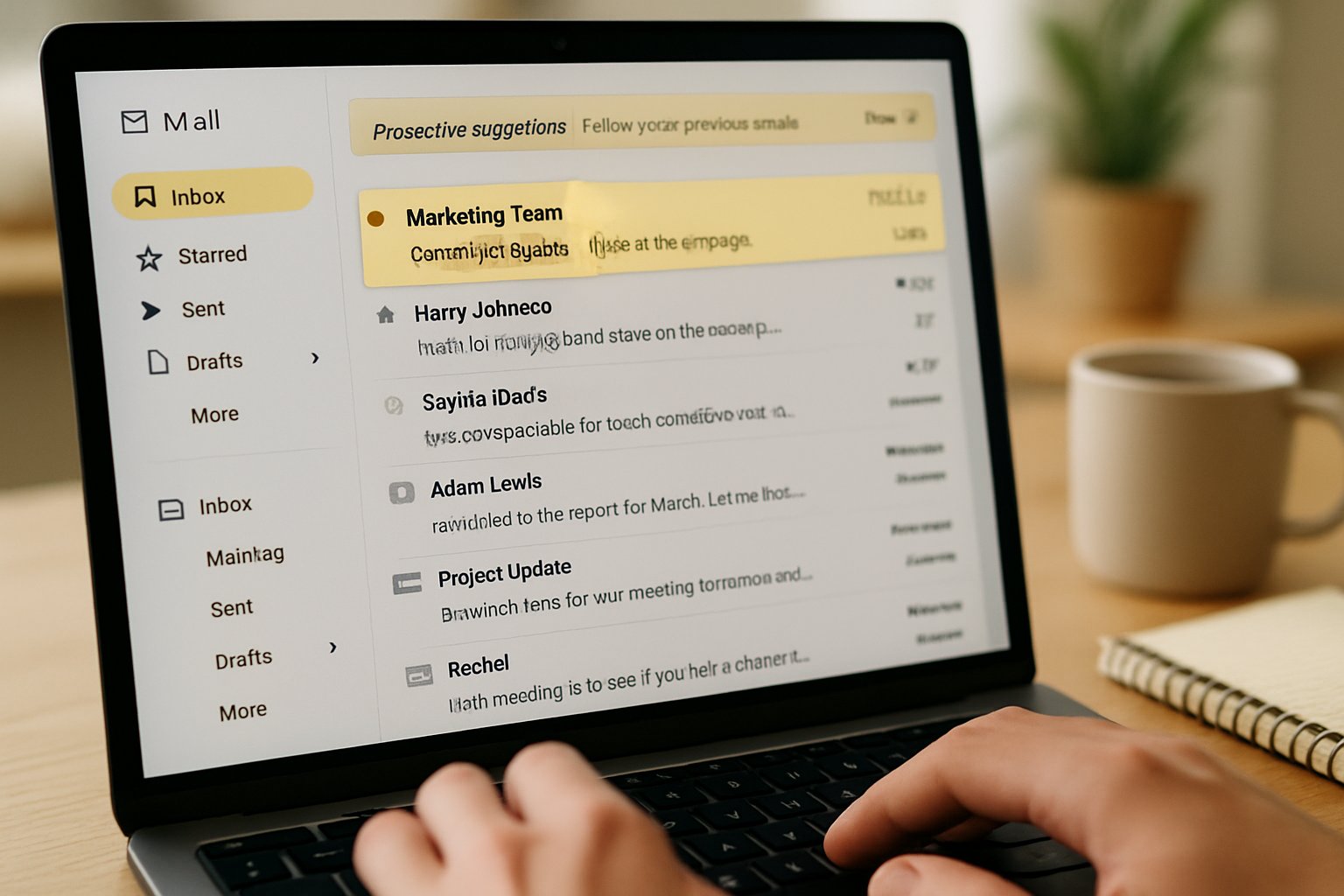
Inside Google CC Overview
Google describes CC as a lightweight, email-first Experimental Agent built on the Gemini model family. It assembles a “Your Day Ahead” briefing each morning by parsing Calendar entries, Emails, and Drive documents. Additionally, the message highlights urgent threads, suggests priorities, and attaches draft replies or meeting links. Consequently, users start their day with consolidated Context rather than juggling multiple tabs. Therefore, the agent aims to minimise mental switching costs common during the morning scramble. Furthermore, Google plans to refine briefing structure based on aggregate feedback from testers. Google intentionally limits autonomy; CC never messages colleagues without explicit confirmation. Support staff expect Everyone Productivity gains from simpler morning routines. These fundamentals illustrate CC’s focused scope. However, deeper feature analysis reveals mixed implications.
Key Agentic Features Explained
The core agentic behaviours emerge through proactive and reactive workflows. Below are four standout capabilities:
- Daily briefing summarizing schedule, top Emails, Drive attachments.
- One-click draft generation for common replies and follow-ups.
- Automatic calendar link creation tailored to preferred time slots.
- Inbox commands via replies to adjust tone, length, or add tasks.
Moreover, CC maintains internal Context, learning preferences when users mark items important or discard suggestions. Nevertheless, Google restricts the service from autonomously sending outbound Emails, citing trust and safety considerations. CC uses a Gemini Ultra token quota, which may constrain extremely long attachments. Nevertheless, Google hints at future multimodal support, including voice summaries. These features illustrate practical Productivity gains without full automation. Subsequently, attention shifts to privacy trade-offs. Google markets these capabilities as stepping stones toward universal Everyone Productivity.
Privacy And Data Concerns
Privacy surfaces as the dominant question in every Everyone Productivity discussion. Google stresses that CC data never trains foundational models, yet the Labs policy differs from Workspace protections. In contrast, deleting a document from Drive does not erase its summary inside CC unless users disconnect the Experiment. Furthermore, Forbes analysts warn that unresolved retention timelines could trigger regulatory scrutiny.
Key privacy considerations include:
- Scope: CC accesses Gmail, Calendar, Drive across personal accounts.
- Retention: Summaries persist until manual disconnection.
- Isolation: Data sits outside Workspace contractual controls.
- Errors: Google admits CC may misinterpret sensitive Context.
Consequently, compliance officers must review CC’s disclaimer before enabling pilots. In addition, enterprise customers might demand contractual Service Level Objectives before granting mailbox access. Meanwhile, Google has not disclosed independent audits for CC retention pipelines. These concerns temper enthusiasm for effortless Productivity. Nevertheless, competitive dynamics push vendors toward agentic offerings. Without transparency, the promise of Everyone Productivity could crumble.
Competitive Landscape And Context
OpenAI’s ChatGPT Pulse set expectations for proactive morning digests earlier this year. Therefore, analysts frame CC as Google’s tactical response within a broader ambient assistant agenda. Early Pulse users also chase Everyone Productivity targets. Meanwhile, Microsoft experiments with Outlook Copilot summaries, indicating a market race toward inbox agents. Google differentiates by leveraging unique native access to Gmail metadata and Drive Context. Moreover, CC’s email interface lowers friction compared with separate chat portals used by rivals. Analysts argue that deep platform integration could give Google a durable moat. However, that advantage depends on sustained user trust. Competition will accelerate feature velocity over coming quarters. Consequently, early insights from CC adoption will inform enterprise strategies.
Early Access Availability Details
The pilot enrolment opened on sixteen December two thousand twenty-five via Google Labs. Applicants need a personal Google account, age eighteen or older, and residence in the United States or Canada. Furthermore, Google AI Ultra subscribers move to the front of the waitlist. Early testers receive welcome messages explaining permission scopes and daily rundown timing. Subsequently, users can disengage anytime through the Labs dashboard, which also purges stored summaries. Moreover, the waitlist flow requests consent for Labs experiments separate from core services. Google promises to expand geography once feedback confirms value. These gated criteria reinforce the Experimental label. Therefore, enterprises must plan phased evaluations before broad rollouts. Beta testers will share whether Everyone Productivity benefits offset privacy friction.
Implications For Enterprise Teams
Product leaders pursuing Everyone Productivity initiatives should view CC as an innovation sandbox rather than a finished platform. Deploying the agent to small volunteer cohorts allows evaluation of summary accuracy, tone consistency, and data leakage risk. Moreover, security teams must map CC traffic flows to existing monitoring tools. In contrast, customer-facing departments should disable drive-by draft sending until legal review finishes. Such pilots reveal measurable Productivity effects without large investments.
Recommended enterprise checklist:
- Run a data protection impact assessment covering CC scopes.
- Create opt-in policy language for pilot participants.
- Enable logging of CC generated Emails for auditing.
- Schedule quarterly reviews as Google updates the Experimental service.
Professionals can enhance their expertise with the AI for Everyone™ certification, preparing teams for responsible agent adoption. Teams should track incident reports in case CC mislabels confidential content. Consequently, ongoing vigilance remains essential even during limited pilots. These measures align exploratory use with governance guardrails. Finally, we revisit CC’s role in Google’s long-term roadmap.
Final Thoughts And Guidance
Google CC signals a clear shift from reactive chat toward proactive assistance. Moreover, its email channel lowers friction while preserving familiar workflows. Nevertheless, privacy uncertainties remain, and governance diligence cannot relax. Everyone Productivity ambitions hinge on earning sustainable user trust. Therefore, leaders must pilot, measure, and verify outcomes before scaling. By aligning policies, security controls, and staff training, organizations can capture real Productivity gains. Professionals seeking deeper insight should pursue the AI for Everyone™ credential. Subsequently, those skills will help translate agent experiments into repeatable enterprise value, bringing Everyone Productivity from promise to practice.


