

AI CERTS
3 months ago
Google Assistant Evolves: Gemini Redefines Smart TV Strategy
However, fragmentation threatens consistency as Samsung and LG pivot toward Microsoft Copilot and proprietary services. This article dissects the landscape for product strategists, content partners, and procurement leaders. Moreover, it highlights key statistics, regulatory pressures, and certification opportunities for responsible deployment. We will examine Gemini’s promises, competing approaches, and the road ahead. Meanwhile, manufacturers seek differentiation through Voice Control, Smart Features, and cloud integrations. Understanding these forces ensures better investment, partnership, and compliance decisions.
Smart TV Landscape Shift
Global smart TV shipments surpassed 200 million units in 2024, according to Mordor Intelligence. Additionally, Android TV and Google TV commanded roughly one-third of the 4K segment, though estimates vary. In contrast, Samsung’s Tizen held near 13 percent, while Roku and Fire TV kept regional strongholds. Google Assistant formerly provided the common interaction layer across many of these devices. Consequently, platform choice significantly influences app roadmaps, advertising models, and customer retention.
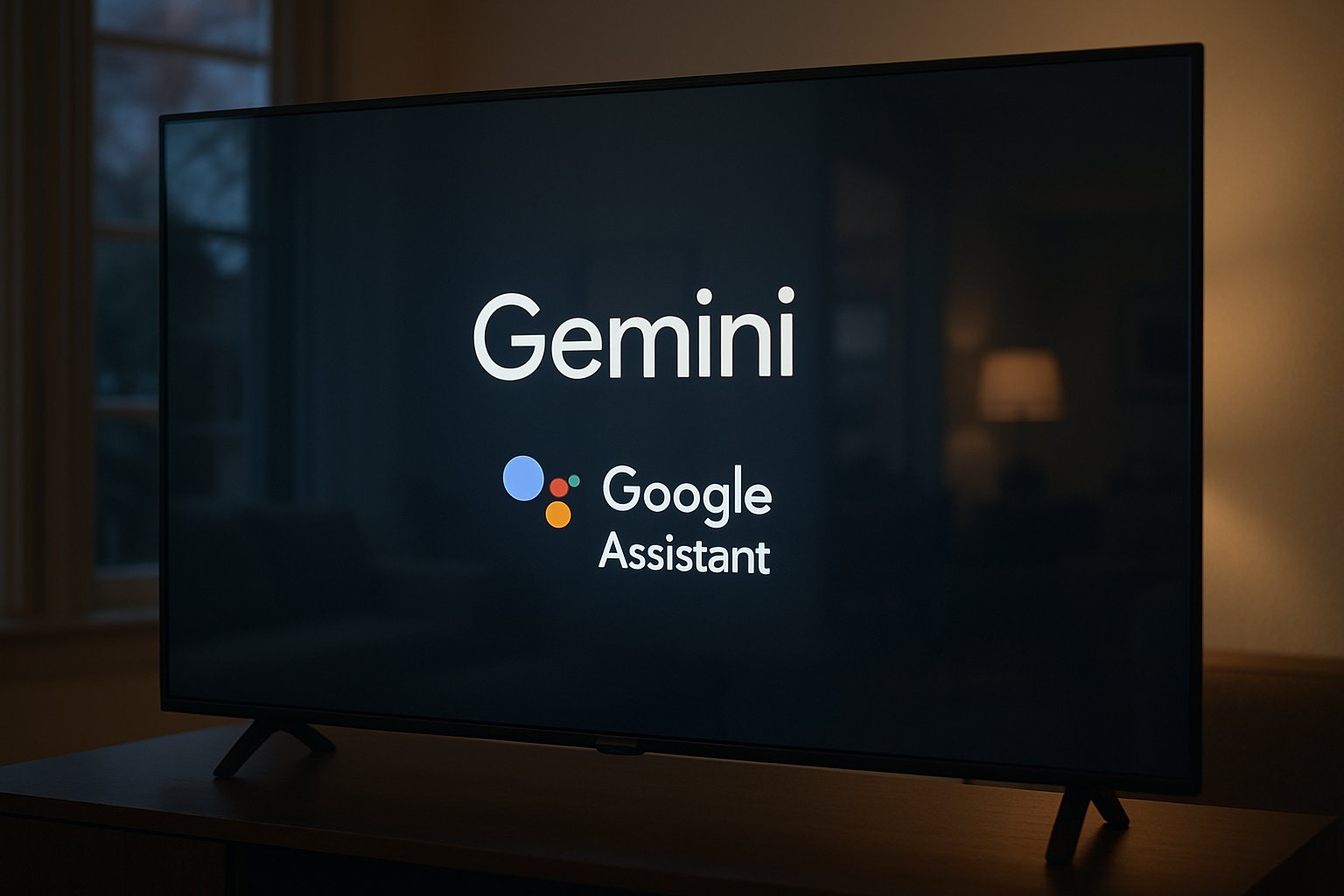
India Tech analysts note surging demand for affordable, Wi-Fi capable panels across tier-two cities. Therefore, manufacturers bundle Smart Features, cloud gaming, and intuitive remotes to capture those price-sensitive buyers. However, tighter margins push brands toward software revenue, making assistant partnerships strategically vital.
- Android / Google TV: ~33 % 4K share
- Samsung Tizen: ~13 % global share
- Hundreds of millions active Google screens
These numbers underscore television’s software pivot. Subsequently, Gemini’s upgrade shows how quickly capabilities can expand.
Google Assistant Legacy Lives
Until 2025, Google Assistant handled linear commands like launching apps, adjusting volume, or querying the weather. Moreover, the assistant powered Routines that tied televisions to lights, thermostats, and cameras via the Home graph. Many households built morning briefings, security alerts, and even India Tech entertainment shortcuts on that foundation.
LG’s surprise pop-up on May 1, 2025 removed the service from existing sets, angering early adopters. Meanwhile, Samsung readied Microsoft Copilot integration, signaling a competitive turn among ecosystem giants. Nevertheless, Google assured users that legacy commands will continue, even after Gemini layers generative smarts. Historically, that backward compatibility has limited churn and protected developer investments.
Legacy trust remains valuable currency. Consequently, Gemini must exceed expectations without breaking established habits.
Gemini Upgrade Deep Dive
Gemini debuted on Sep 22, 2025, promising conversational searches, multimodal answers, and contextual follow-ups. For example, a user can request, “Show comedies my partner enjoys,” then ask for trailers and watchlists. Furthermore, Gemini offers episode recaps, actor biographies, and recipe walkthroughs, all without leaving the home screen.
- Conversational content discovery
- Episode and movie recaps
- Smart-home query handling
- Hands-free Voice Control via mics
Built-In Assist hardware, including far-field mics and presence sensors, enables hands-free triggers and personalized content. In contrast, older dongles lacking that silicon default to basic Voice Control handled in the cloud. Google says Gemini coexists with Google Assistant under the hood, sharing account links and routine databases.
Professionals can deepen governance knowledge with the AI Ethics for Business™ certification. Such training helps teams audit data flows and design trustworthy Smart Features. Gemini thus elevates expectations for living-room AI. Subsequently, rivals are scrambling to keep pace.
Competing Assistants Fragment Market
Microsoft Copilot appeared on Samsung’s 2025 flagships during CES announcements, offering document summarization and cloud productivity. Additionally, LG integrates Copilot alongside its ThinQ engine, replacing earlier Google hooks. Roku, Amazon, and Apple remain committed to proprietary layers, widening developer fragmentation.
For content providers, duplicating Voice Control intents across APIs inflates QA budgets and delivery timelines. Moreover, India Tech streaming startups must juggle distinct certification requirements for payment and advertising modules. Built-In Assist silicon is also proprietary, complicating component sourcing across multinational supply chains. Nevertheless, the largest opportunity still lies inside Google’s hundreds of millions of active screens. Google Assistant remains the reference voice lexicon many users instinctively try, even on rival platforms.
Assistant fragmentation inflates costs and user confusion. Therefore, privacy regulations loom as the next competitive battleground.
Privacy And Regulation Concerns
Ars Technica warned that Smart Features coupled with always-on microphones expose fresh data-collection vectors. Furthermore, EU authorities are investigating whether generative transcripts violate consent provisions under GDPR. Google states that audio snippets remain on-device until wake words trigger cloud calls.
However, Gemini Live lets users save conversations for contextual follow-ups, raising retention questions. Google Assistant activity controls already exist, yet toggles differ across OEM skins. Consequently, compliance officers must review default settings during procurement evaluations. Status LEDs and hardware switches partially address visibility demands. In contrast, some entry models lack physical microphone disable options.
Regulatory scrutiny will intensify as assistants mature. Meanwhile, manufacturers search for benefits that outweigh these liabilities.
Benefits For Manufacturers Users
Gemini boosts engagement by surfacing personalized watchlists, contextual ads, and commerce links inside the main UI. Moreover, Smart Features like fitness coaching or recipe displays increase session length and perceived value. Google Assistant still provides universal home commands, preserving previous investments in lighting and security scenes.
TCL executives claim their Built-In Assist microphones increase remote-free interactions by 40 percent. Additionally, accessibility advocates praise Voice Control enhancements for visually impaired audiences. For OEMs, richer data enables targeted upsells, while content partners gain refined recommendation slots. These commercial incentives underpin rapid adoption across premium and budget tiers.
Benefits appear compelling for most stakeholders. Nevertheless, execution challenges could slow scale-out.
Future Outlook And Strategy
Analysts expect Gemini to reach additional Sony and Hisense models once Android TV 14 firmware stabilizes. Subsequently, Google may push on-device language models for low-bandwidth markets, including fast-growing India Tech regions. In contrast, Microsoft will expand Copilot video search and ad insertion to maintain parity.
Investors should watch semiconductor partners that supply Built-In Assist chips with improved local processing. Google Assistant brand equity will remain crucial until Gemini becomes equally recognizable. Therefore, product roadmaps must budget for dual support through at least 2027. Voice Control testing across assistants will also demand fresh automation suites and multilingual datasets.
Consequently, teams that combine technical proficiency with ethical oversight will secure competitive advantage. Strategic flexibility and robust governance will define winners. Finally, executives should initiate quarterly audits to align technology, privacy, and monetization goals. Google Assistant metrics can help benchmark migration success.
Conclusion
Gemini’s arrival marks a pivotal moment for the television ecosystem. Moreover, Google Assistant continuity eases transition pain while maintaining familiar commands. Manufacturers gain differentiation, yet privacy and fragmentation challenges persist. Therefore, leaders must balance innovation, compliance, and user trust. Industry professionals should embrace governance training and rigorous testing to maximize returns. Explore the linked certification to strengthen ethical frameworks and drive confident, data-driven strategies.


