

AI CERTs
2 months ago
Google AI Acquisition boosts spatial 3D strategy
Investors expected more AI consolidation in 2026. Nevertheless, the latest Google AI Acquisition surprised many by targeting a niche 2D-to-3D player. The company quietly bought Cambridge-based Common Sense Machines (CSM) on January 24. A Google spokesperson confirmed the deal to The Information; terms remain undisclosed. Consequently, roughly a dozen CSM employees will join DeepMind. Analysts see the move as a fast track toward immersive world models. Moreover, creators hope the purchase lowers asset-production costs. However, skeptics question integration speed and intellectual-property safeguards.
CSM built generative models that turn sketches, images, or short videos into game-ready meshes. Therefore, the startup addressed an escalating bottleneck in 3D pipelines. Meanwhile, DeepMind has flagged “world models” as core to embodied intelligence. By merging, the teams can align research and real-world deployment quickly. Professionals seeking foundational skills can explore the AI Foundation™ certification.
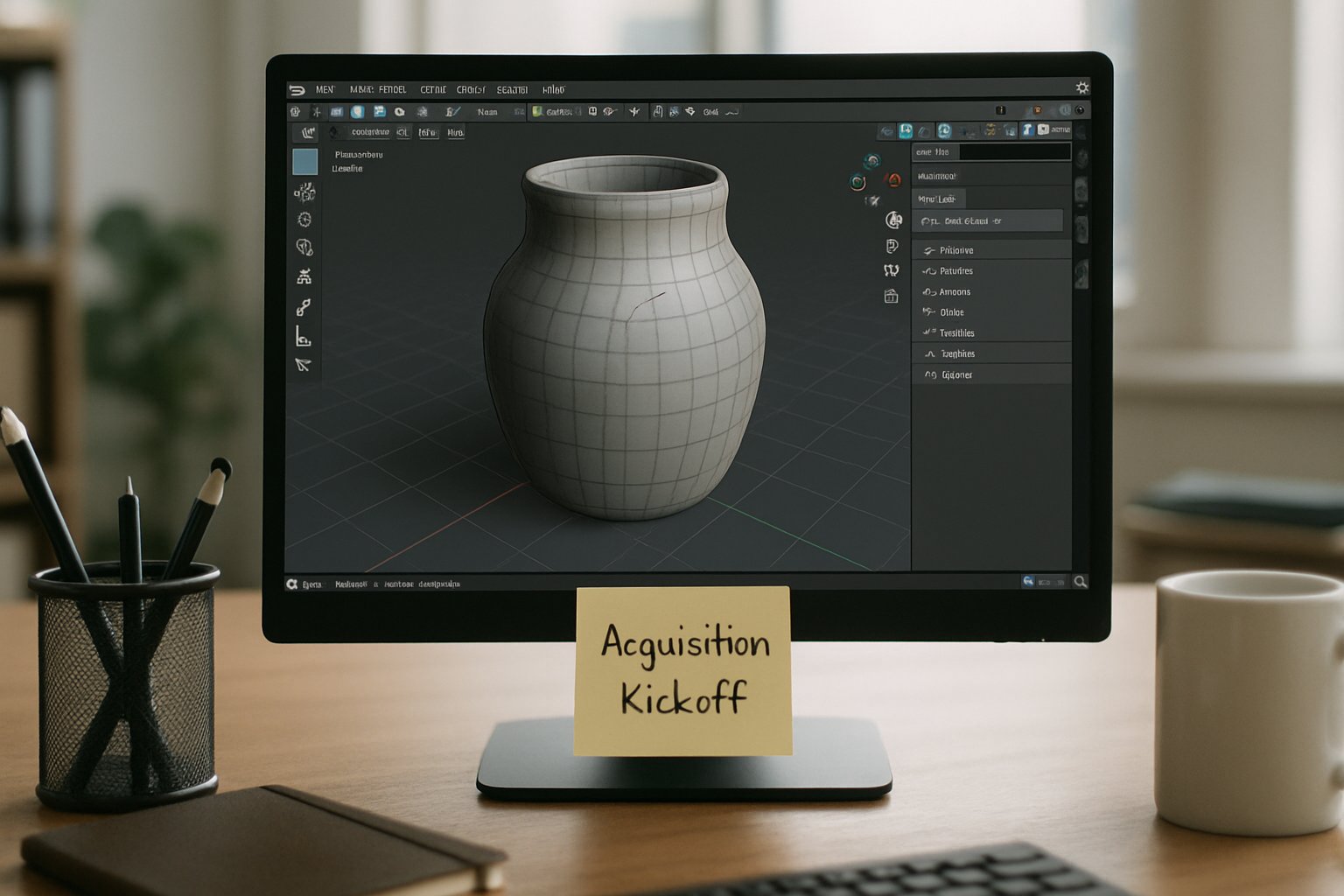
Key Deal Highlights Unpacked
CSM raised about $10 million and held a $15 million valuation before the sale. Moreover, the startup claimed top scores on the 3D Arena benchmark. DeepMind gains both intellectual property and scarce 3D talent. In contrast, rivals like OpenAI still license external geometry tools. Industry trackers counted fewer than twenty CSM employees on LinkedIn. Consequently, the transaction resembles an acqui-hire with valuable code.
• Purchase price: not disclosed
• Headcount moving: estimated 12-17 people
• Products absorbed: CommonSim engine and Cube toolkit
These numbers underscore a lean, focused acquisition. However, the lack of public pricing leaves valuation debates open. Therefore, observers await regulatory filings.
The lean profile sets context for strategic motives. Subsequently, we examine why Google chose this path.
Strategic Fit For Google
DeepMind’s Genie, Veo, and SIMA projects require rich spatial data. Furthermore, Android XR teams need fast asset generation for upcoming headsets. The Google AI Acquisition adds turnkey 3D pipelines that shorten production loops. Consequently, DeepMind can test embodied agents within photoreal worlds sooner. Demis Hassabis has reiterated that robust world models unlock safer robot deployment. Additionally, Google Cloud gains potential SaaS offerings that monetize creator workflows.
Competitors, including Meta and Apple, still license geometry solutions externally. In contrast, Google now controls talent, code, and datasets. Therefore, the company reduces dependency risks and marginal costs.
Strategic synergies appear compelling. Nevertheless, technical integration will dictate actual value. Next, we dissect CSM’s underlying technology.
Technology Behind 2D Conversion
CSM combines implicit and explicit representations to accelerate reconstruction. Moreover, its pipeline blends NeRF training with fast Gaussian splatting for preview. The result is a textured mesh suitable for standard engines within minutes. Consequently, artists skip tedious block-out phases.
NeRF And Splatting Basics
NeRF encodes volumetric density and color in a neural network. However, raw NeRF outputs resist editing and real-time rendering. Gaussian splatting overcomes these limits by fitting lightweight primitives. Therefore, the hybrid stack balances fidelity, speed, and editability.
Pipeline To Game Assets
The workflow layers automatic retopology, UV-unwrapping, and texture baking. Additionally, CSM trains material classifiers that label metal, wood, or fabric. Consequently, studios receive engine-ready FBX files without external plugins.
This technical recipe illustrates why creators applaud the Google AI Acquisition. Nevertheless, scalability challenges remain, as explored next.
Market Impact And Forecast
Analysts estimate that automated 3D content unlocks billions across ecommerce, gaming, and digital twins. Moreover, firms like Kaedim and Nextech already report double-digit revenue growth. Subsequently, venture capital has poured more than $300 million into related startups since 2024.
Key Sectors Most Affected
• Retail visualization: try-before-you-buy AR catalogs
• Game development: indie studios needing rapid asset libraries
• Robotics simulation: physics-based training environments
• Construction twins: monitoring built-world progress
Google’s cloud positioning could capture service fees on asset generation. Consequently, the Google AI Acquisition pressures smaller vendors to differentiate. Furthermore, Nvidia benefits as all players demand GPU compute.
Market dynamics now favor integrated giants. However, creators also gain new opportunities, as detailed in the next section.
Opportunities For 3D Creators
Lower entry barriers let freelancers monetize niche asset packs. Additionally, agencies may pivot toward style direction rather than manual modeling. Professionals can deepen credentials through the linked AI Foundation™ program.
Moreover, creative directors expect faster iteration cycles, enabling richer storytelling. Consequently, turnaround times shrink from weeks to hours. The Google AI Acquisition therefore democratizes sophisticated pipelines once limited to AAA studios.
Creator gains appear substantial. Nevertheless, ethical and technical hurdles persist, which we now assess.
Ongoing Challenges And Concerns
IP provenance remains unsolved. Furthermore, generative geometry sometimes hallucinates impossible structures. Studios must still perform quality checks; therefore, cleanup costs linger. Additionally, compute requirements inflate cloud bills unless models are distilled.
IP And Ethics Risks
Data-set licensing uncertainty exposes companies to litigation. In contrast, open datasets like Objaverse carry permissive terms but limited diversity. Moreover, regulators study deepfake avatars for potential misuse.
These constraints temper short-term enthusiasm. However, continued research promises mitigation strategies. Consequently, attention shifts toward future roadmaps.
What Comes Next Now
DeepMind engineers will merge CSM code with Gemini’s multimodal stack. Additionally, Android XR previews may surface at I/O 2026. Industry insiders anticipate a cloud API for bulk asset generation. Consequently, competitors might accelerate their own purchase searches, driving further consolidation.
The Google AI Acquisition also influences academic agendas. Moreover, conferences like CVPR may showcase benchmarks validating commercial claims. Meanwhile, creators plan hybrid workflows mixing AI output and artisan polish.
Near-term milestones will clarify integration success. Nevertheless, the long-term trajectory seems set toward pervasive spatial computing.
These forward steps conclude our analysis. However, continuous monitoring will reveal the acquisition’s ultimate impact.
Conclusion And Takeaways
The Google AI Acquisition of CSM signals a decisive bet on immersive world models. Moreover, it tightens Google’s grip on automated 3D pipelines, potentially reshaping content economics. Creators stand to benefit from faster workflows, while challenges around IP, accuracy, and compute persist. Consequently, professionals should track product rollouts and refine skills accordingly.
Ready to future-proof your expertise? Explore the AI Foundation™ certification and lead the next wave of spatial innovation.


